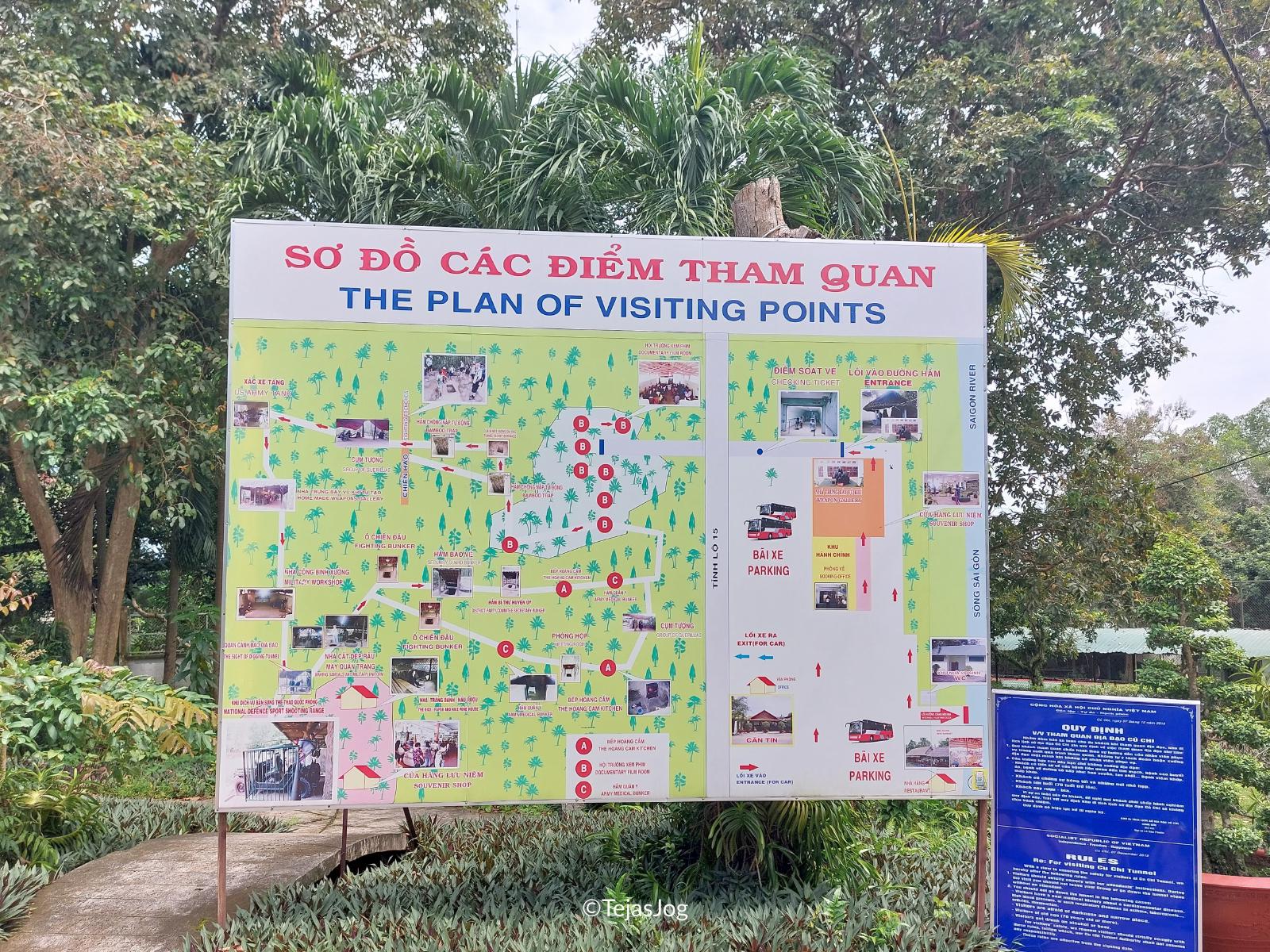
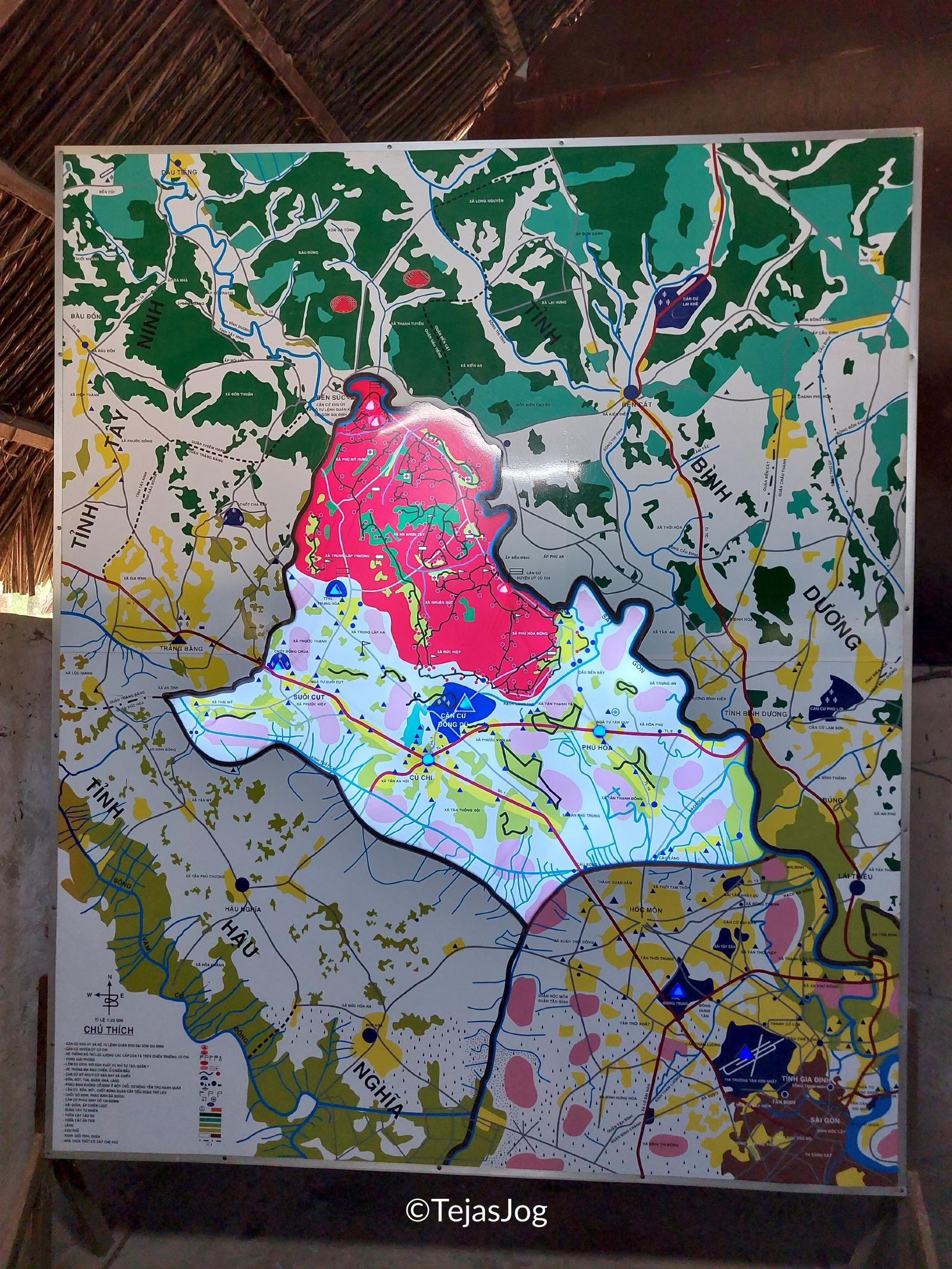
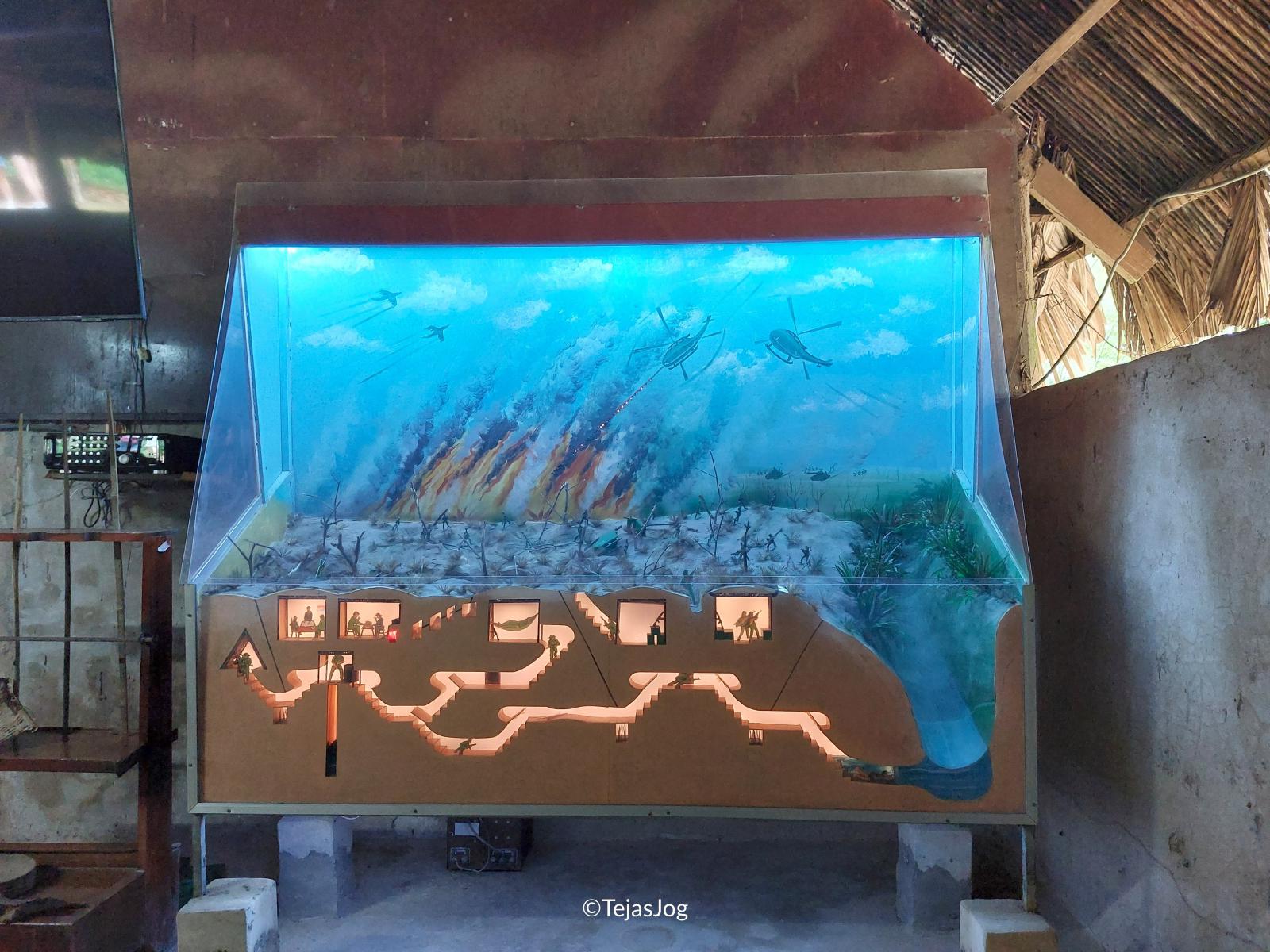
Today we booked the Cu Chi Tunnels half-day tour through Long Hostel. After breakfast, the bus picked us up from the main road right outside. Upon arriving at the site, a large visiting points map and a colored regional map gave a sense of orientation, and a cutaway model illustrated the clever design of the multi-level tunnel system.
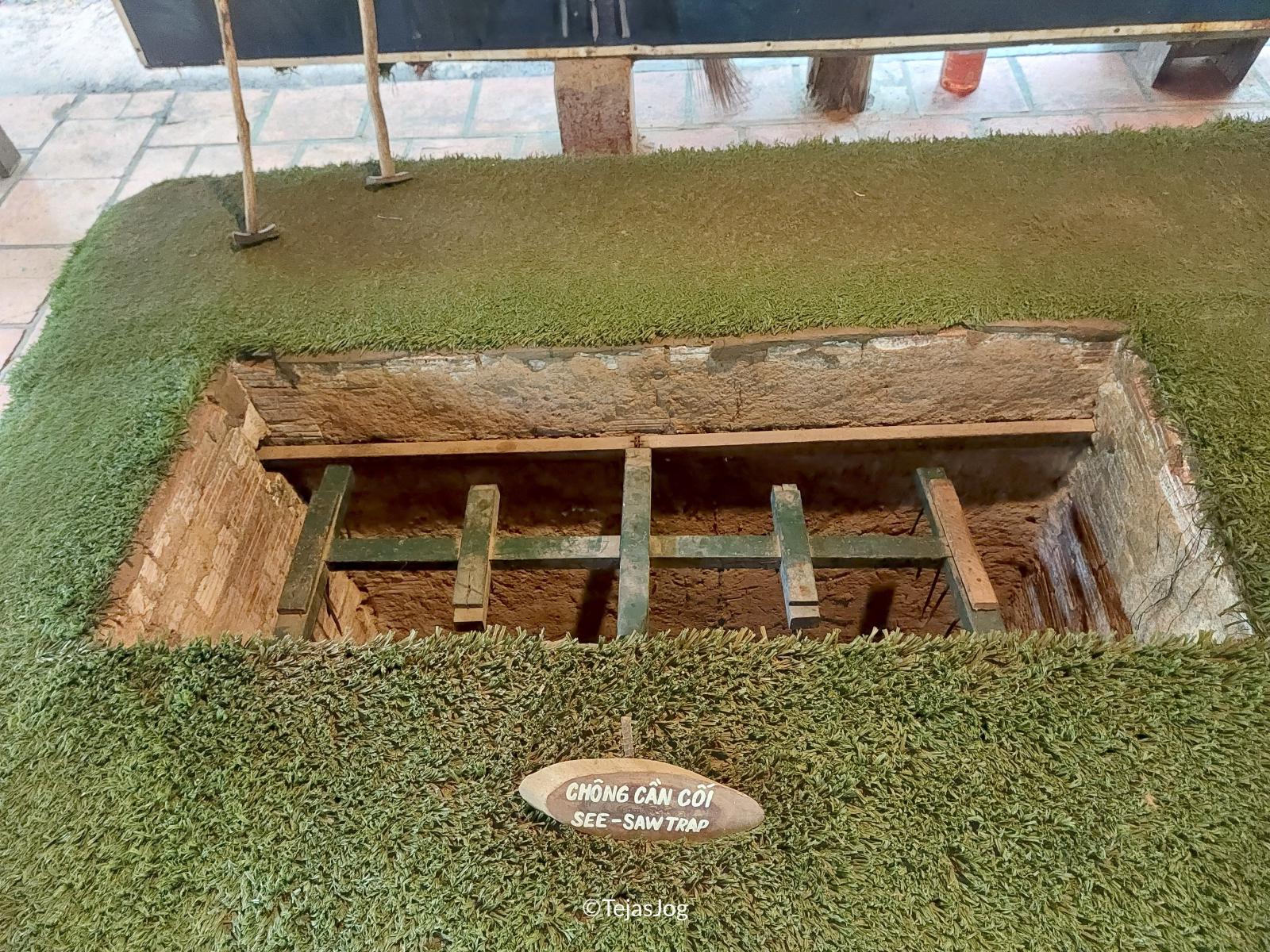
We also saw some of the terrifying defensive measures used. There were demonstrations of the ingenious and brutal traps employed: a see-saw trap, a fish trap, a swinging up trap, a folding chair trap, a window trap, a clipping armpit trap, and a door trap.
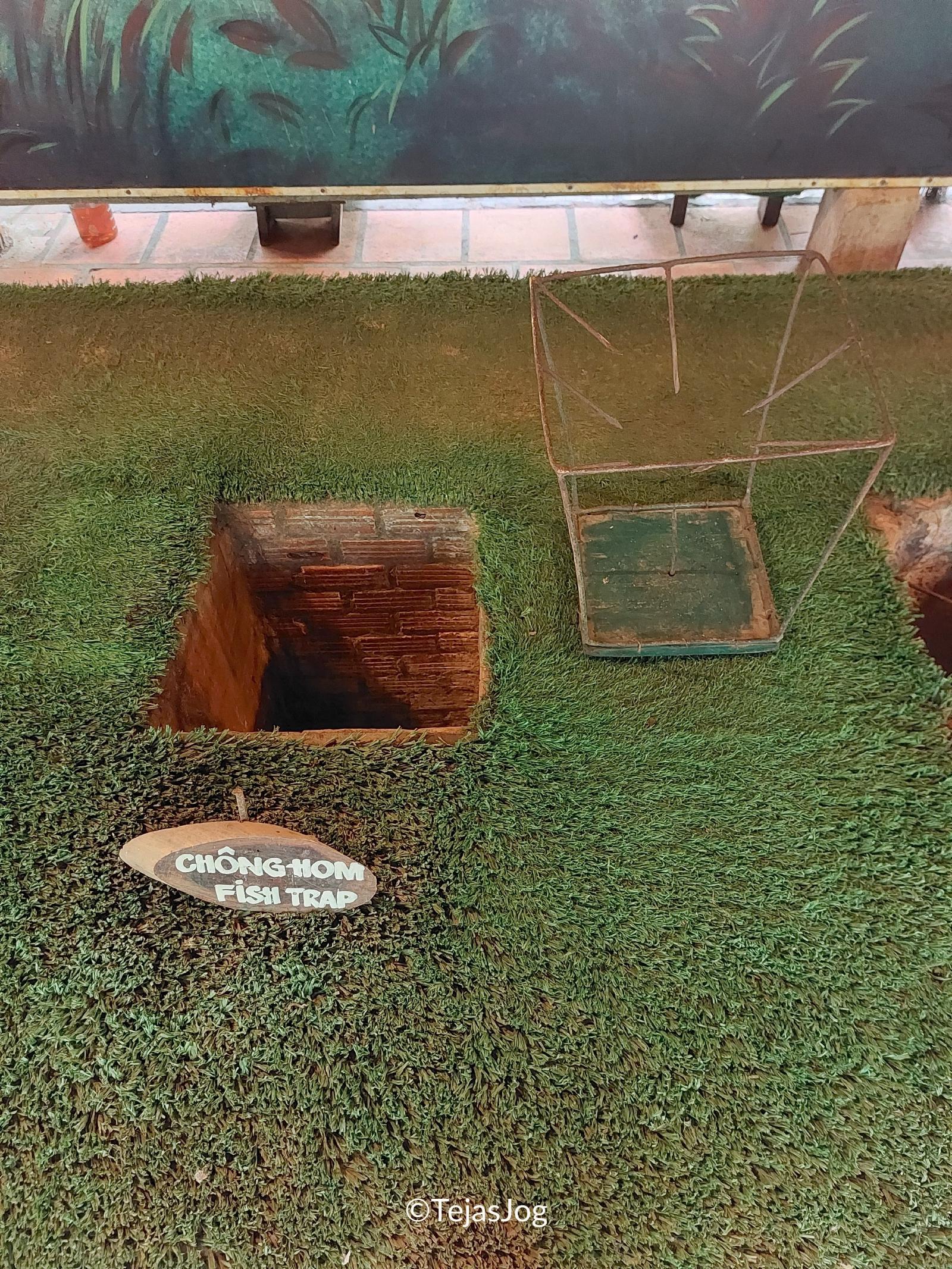
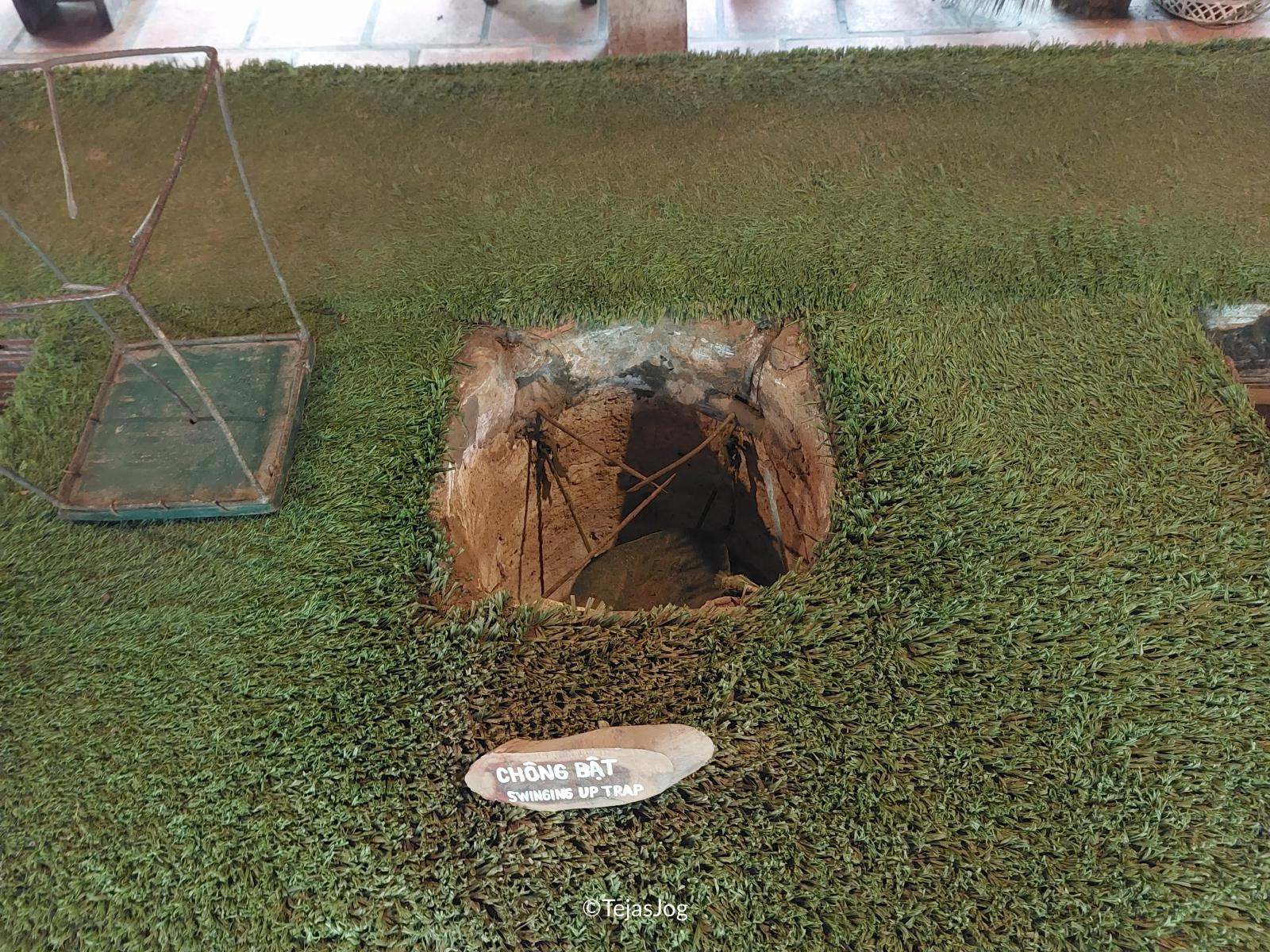
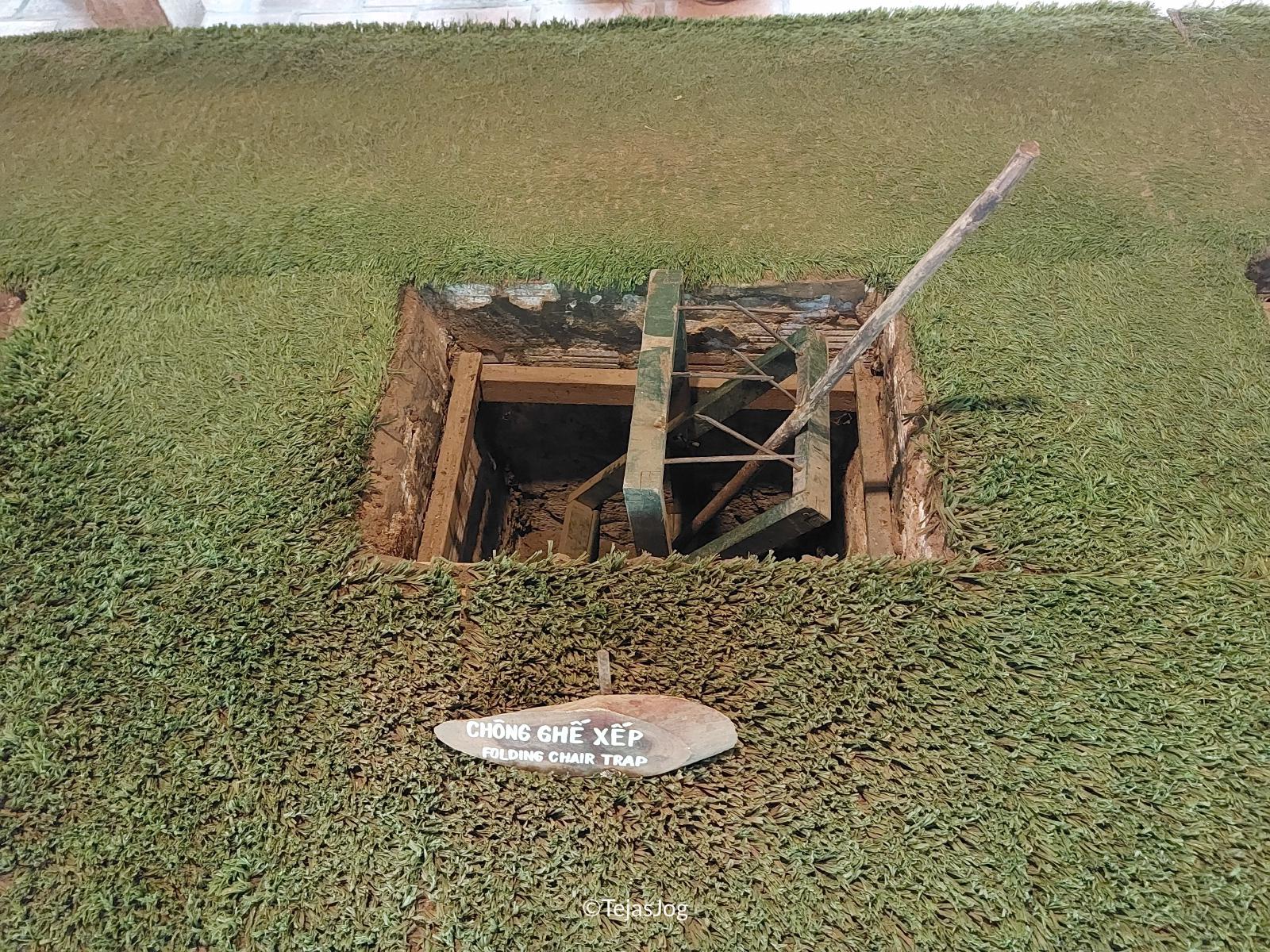
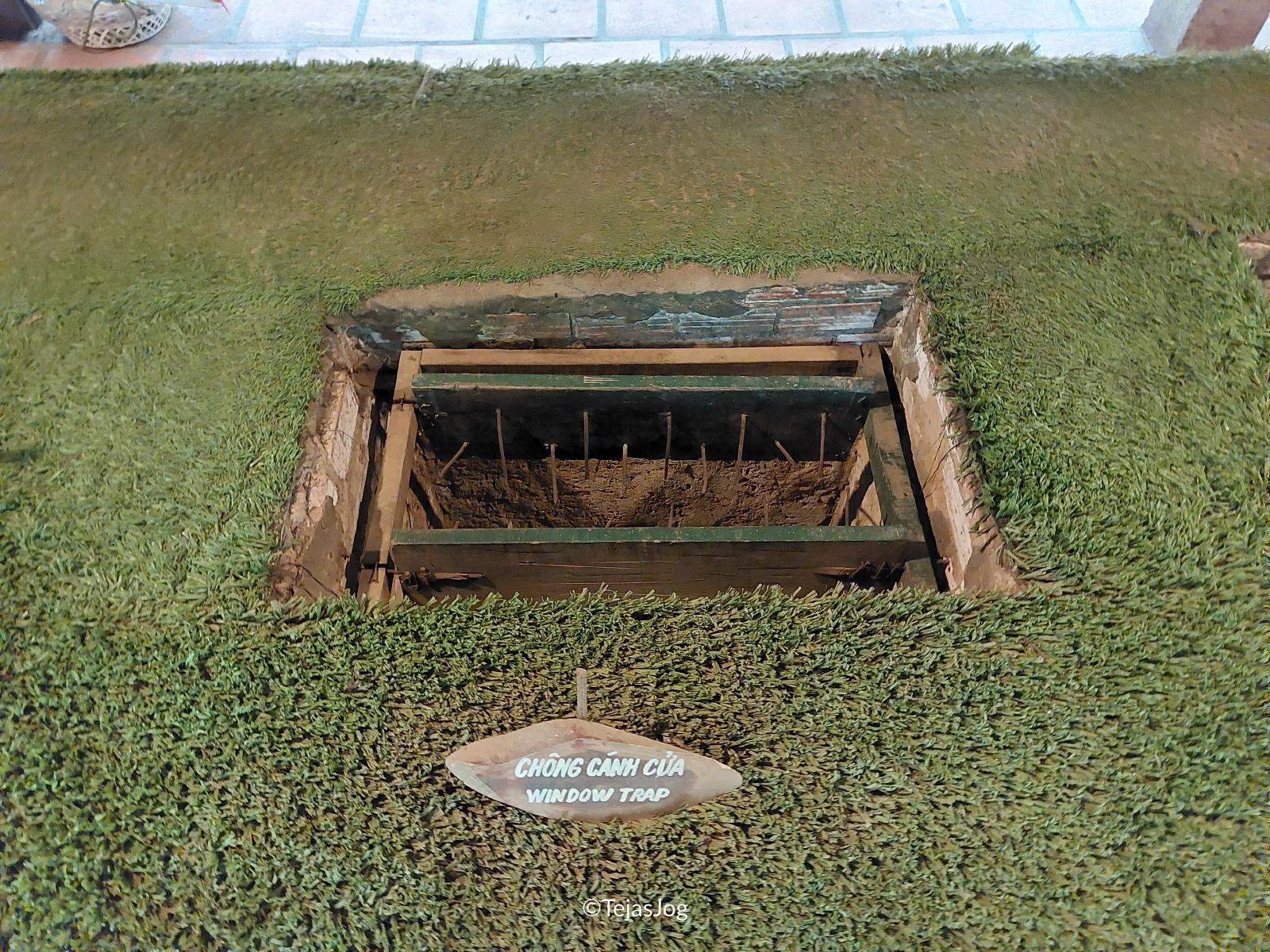
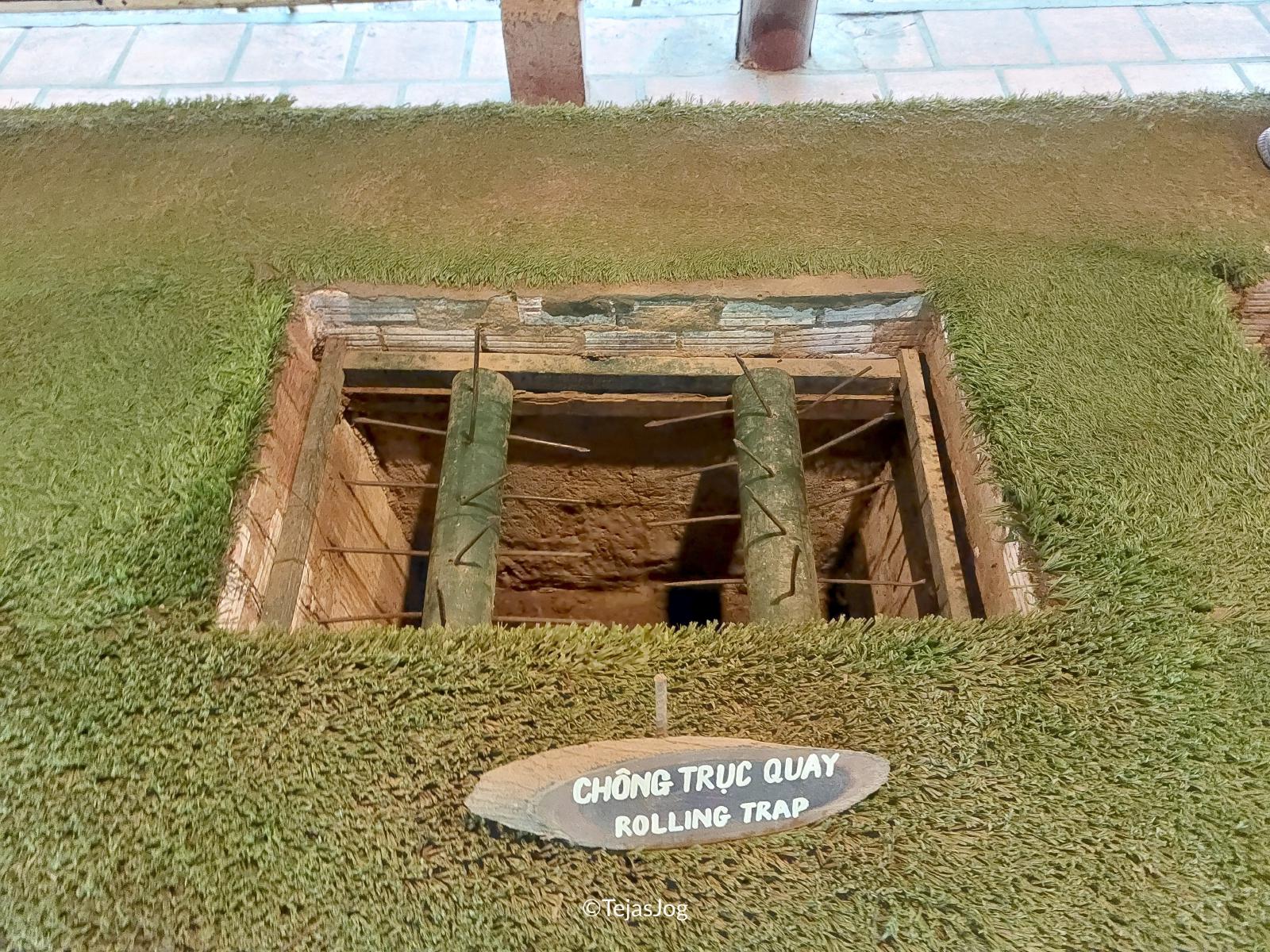
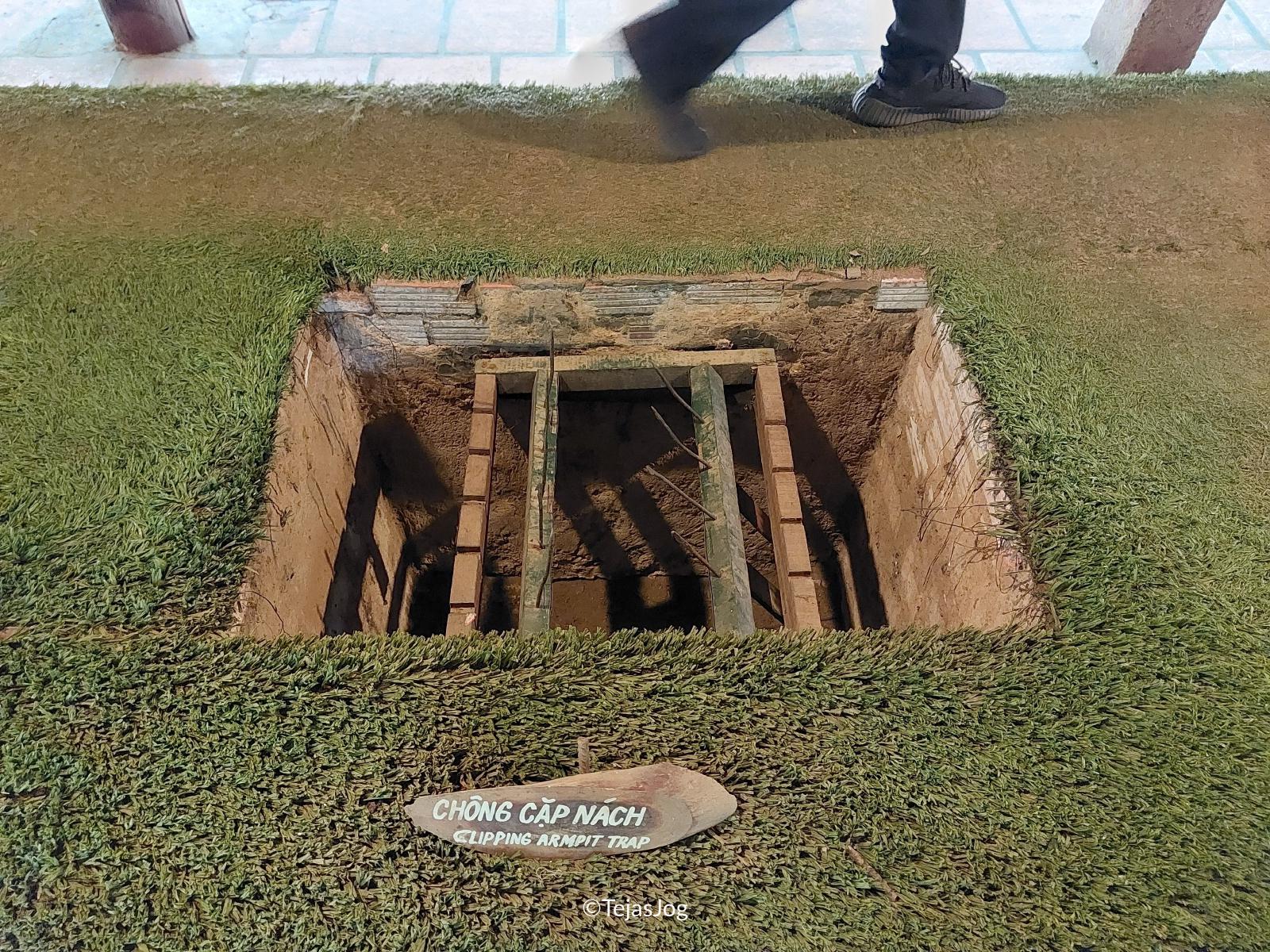
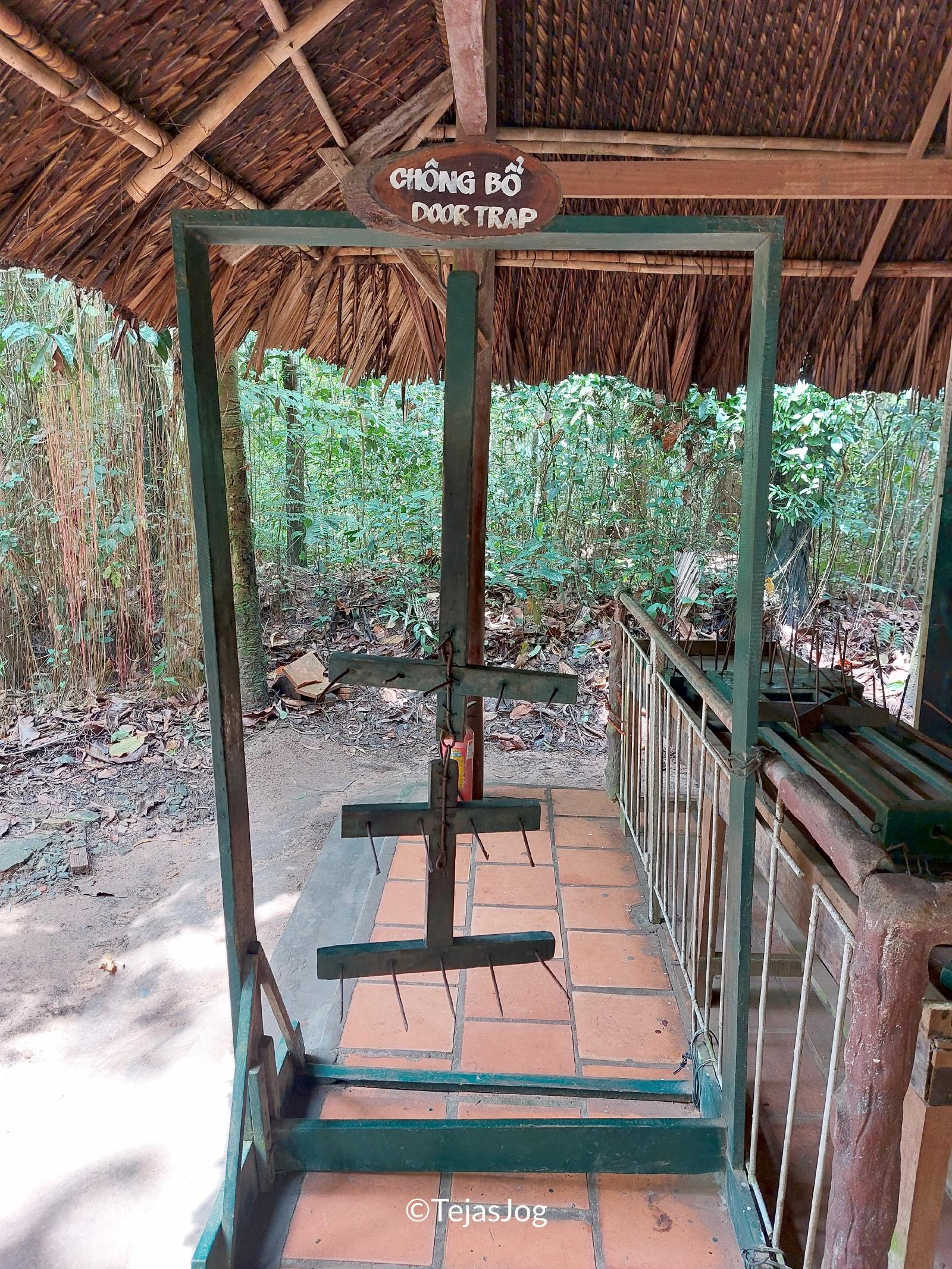
There were lifelike exhibits of Vietnamese revolutionary soldiers. Experiencing the tunnels firsthand was quite an experience! We crawled through a section that was dark, humid, and very tight. We also got to taste boiled cassava with peanut salt, a staple food for the guerrillas during the war.
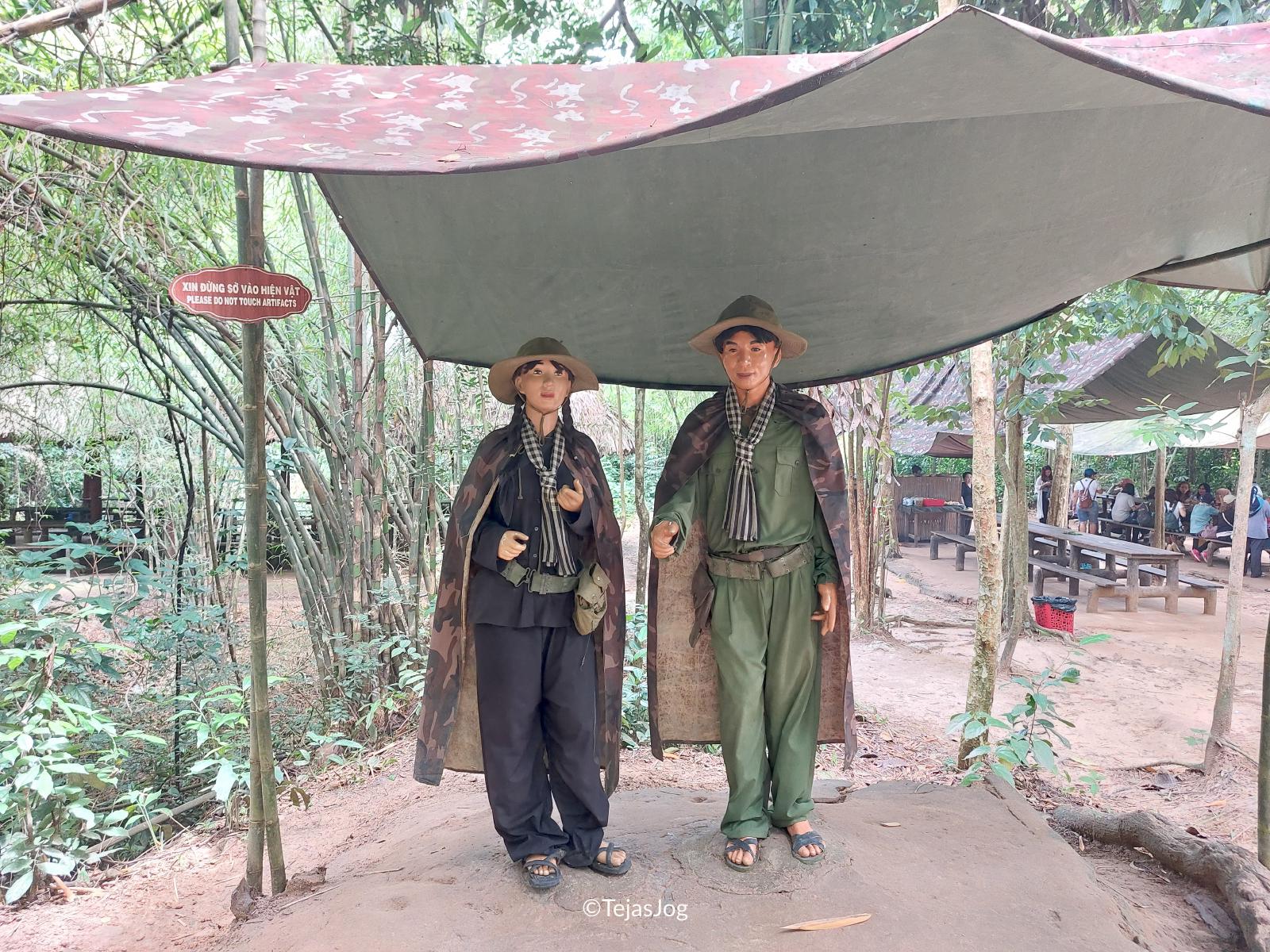
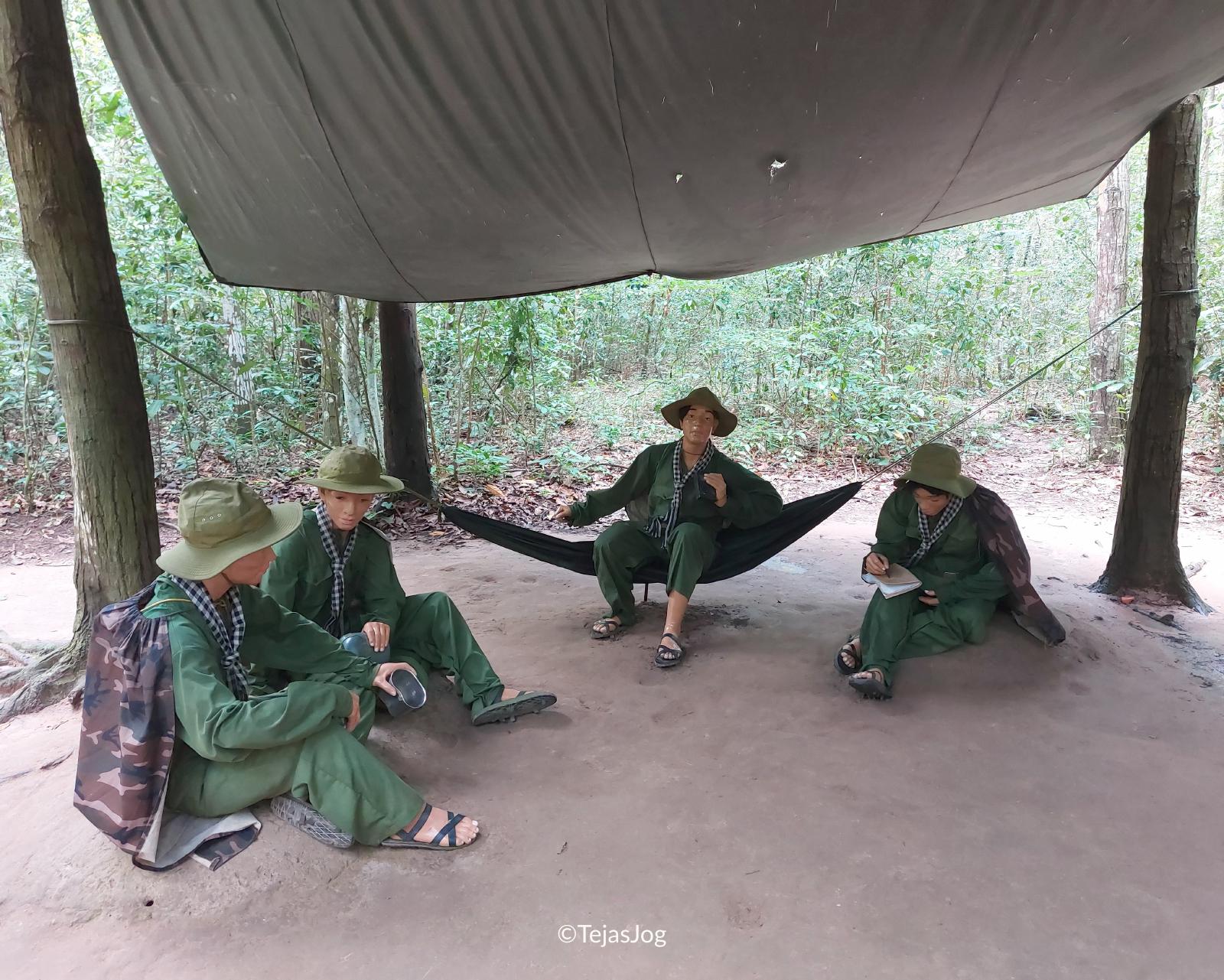
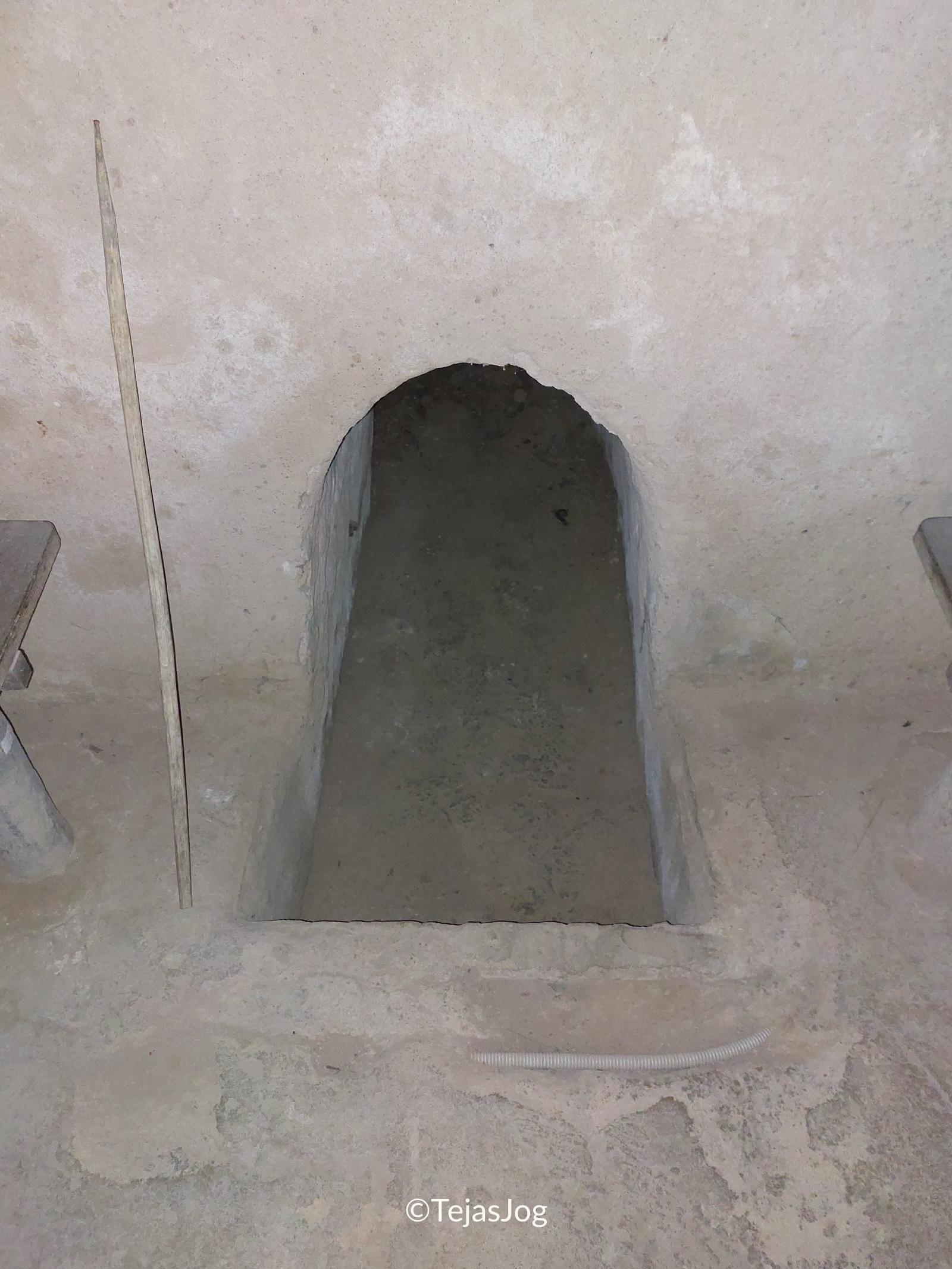
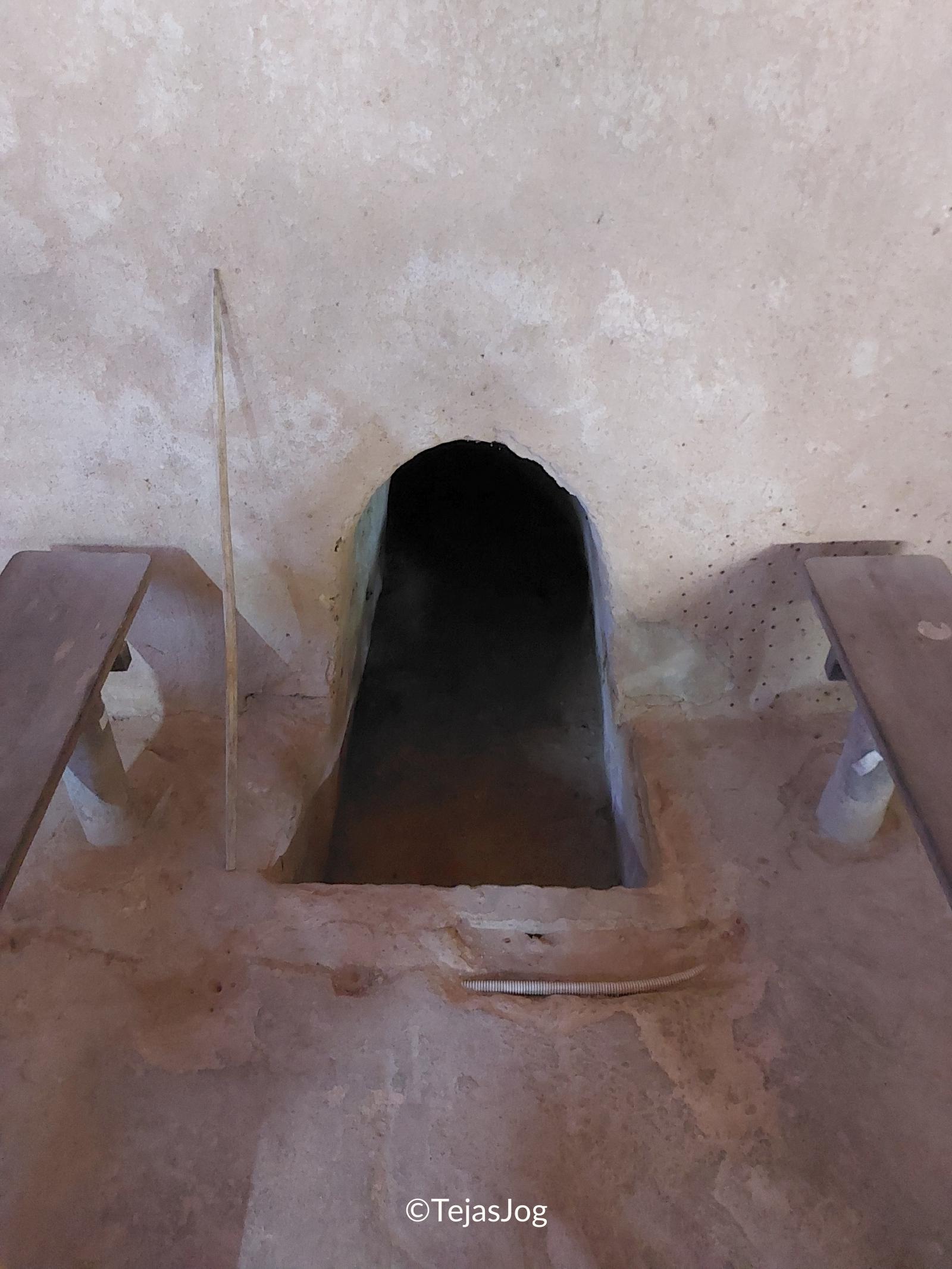
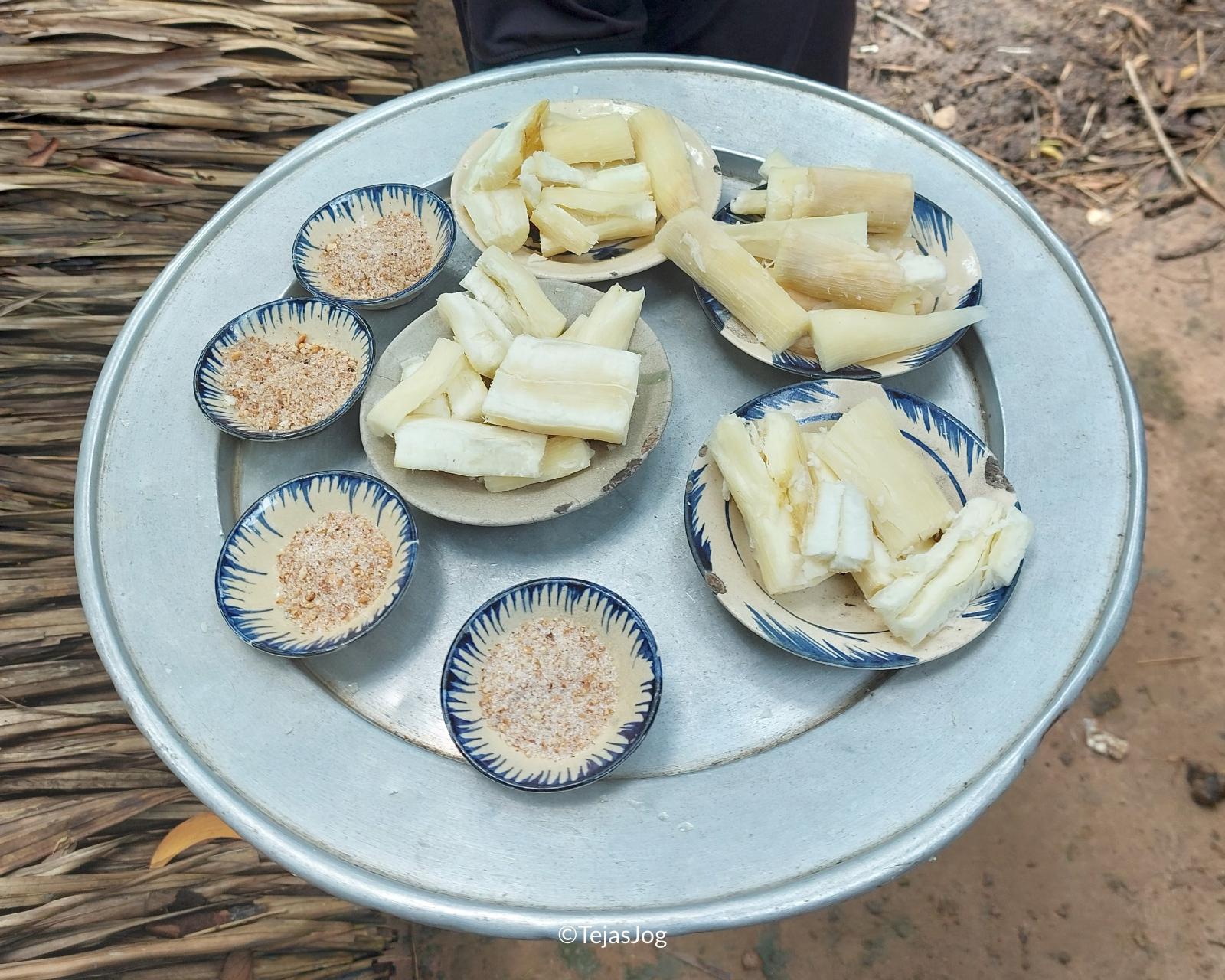
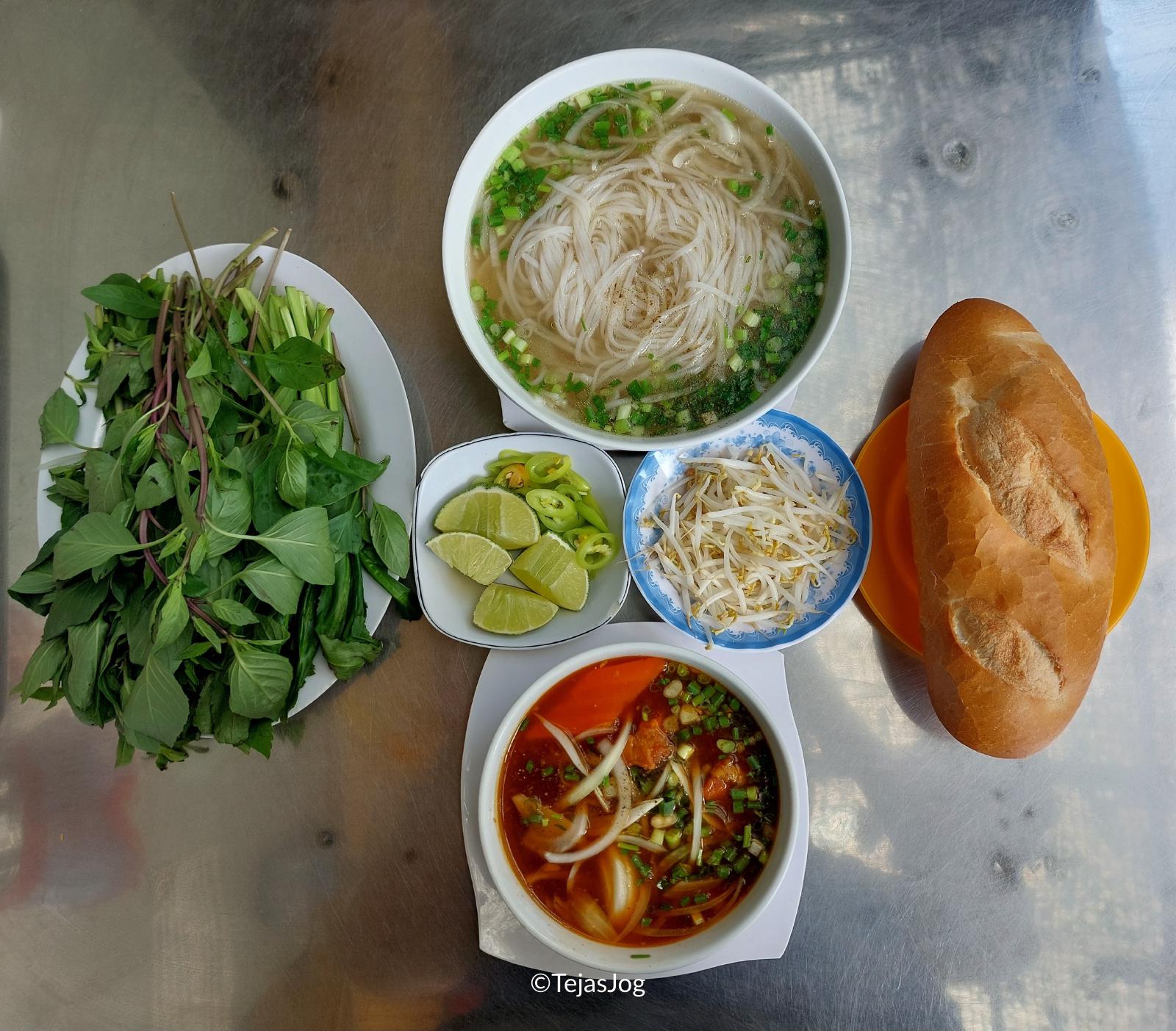
The tour gave us a glimpse into the intense nature of life and the network of tunnels that served as a “subterranean city” for the Viet Cong during the Vietnam War. We took the bus ride back to the city and, after we were dropped off, we walked to the nearby Pho Quynh for lunch, which we enjoyed very much.
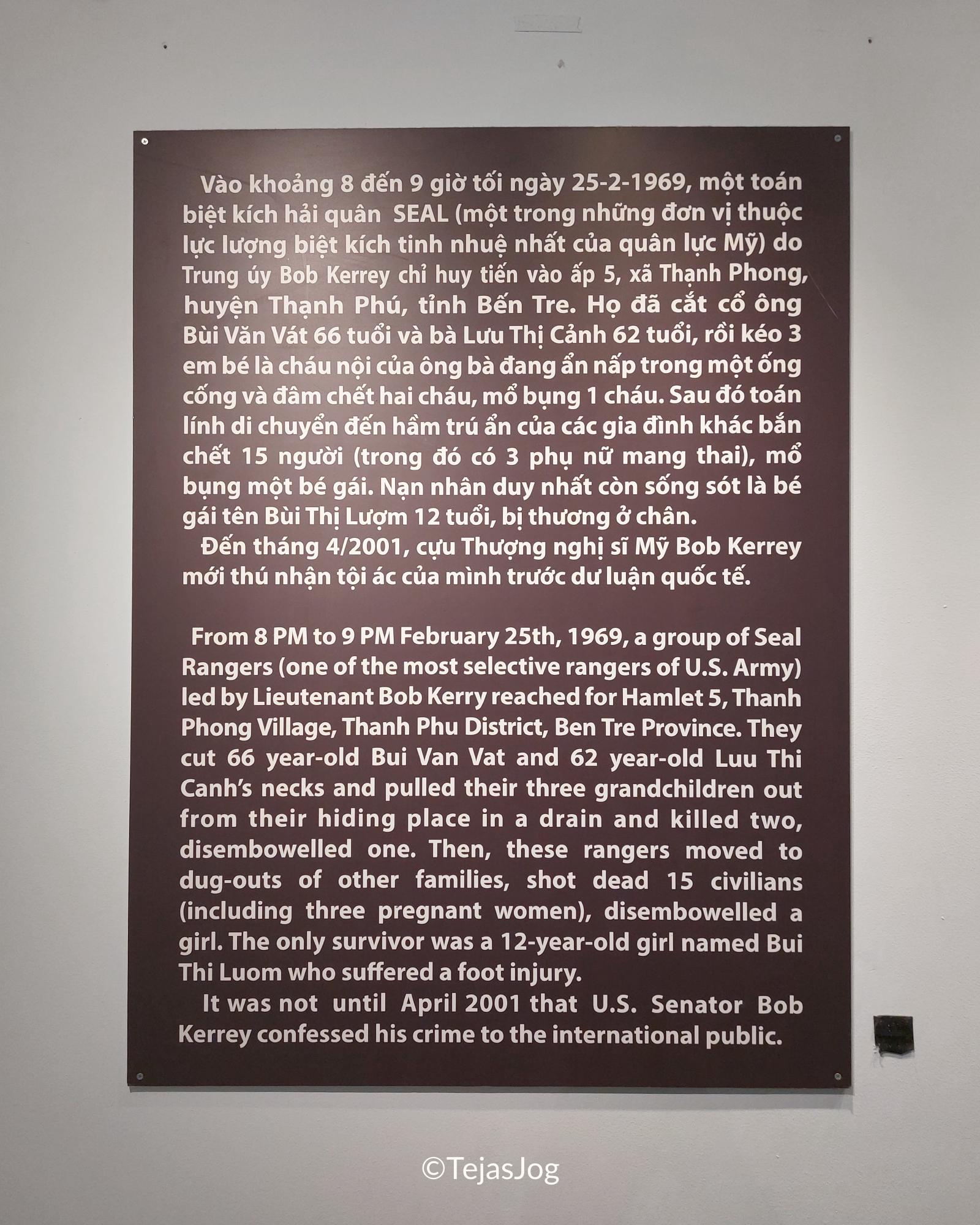
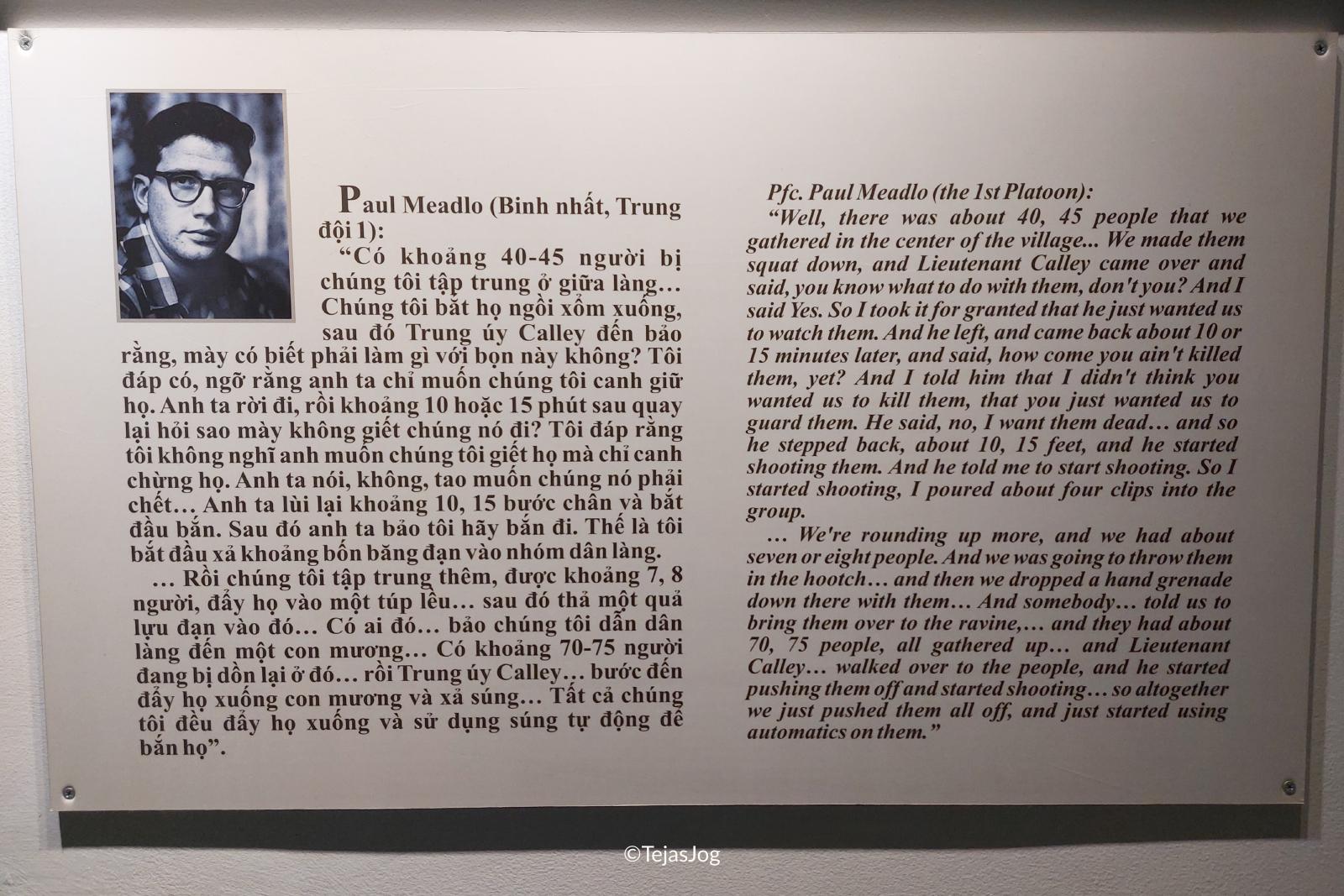
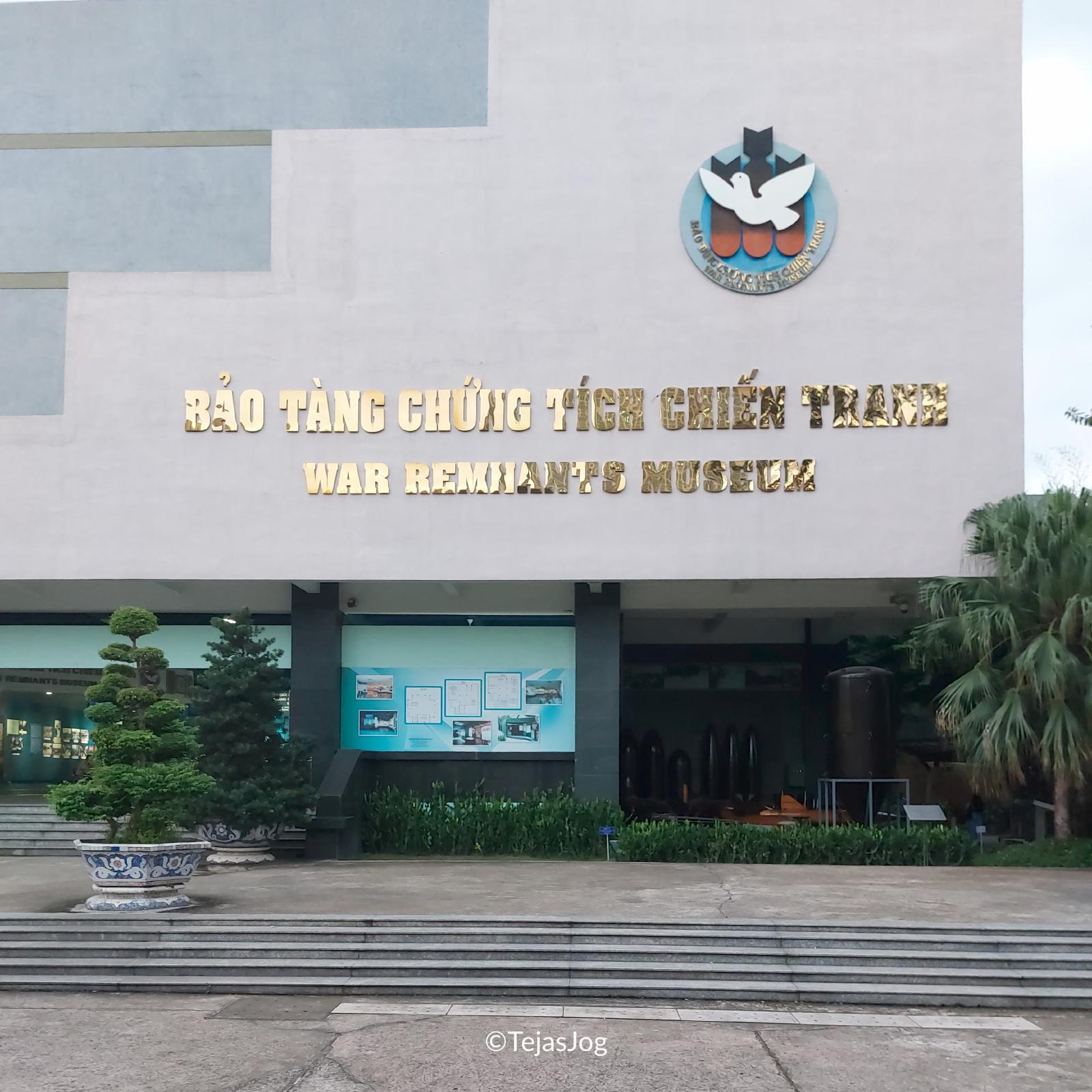
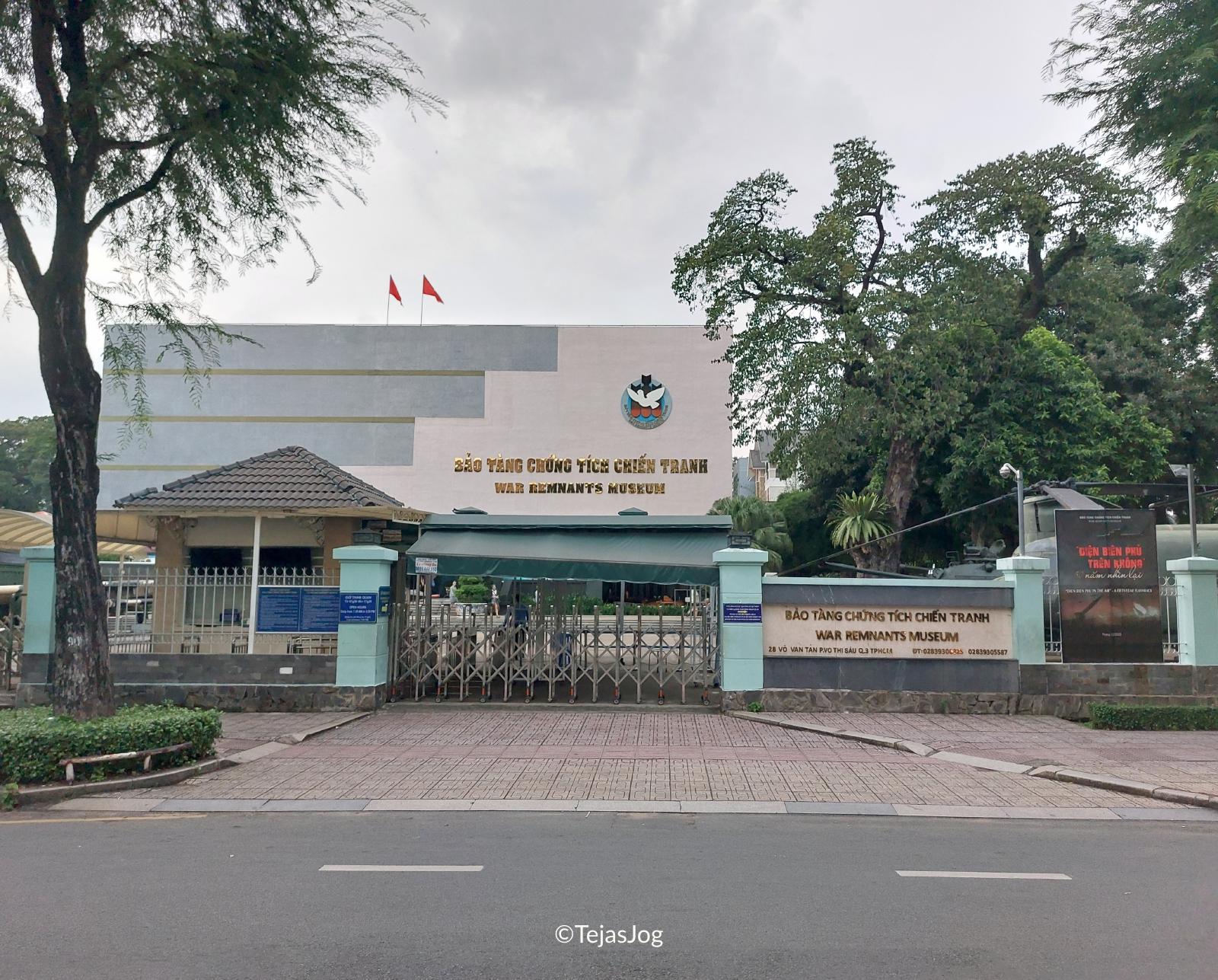
After lunch, we visited the War Remnants Museum. It was an exploration of the legal and ethical dimensions of the war. Some of the displays highlighted the voices of dissent from within the U.S. and the international community.
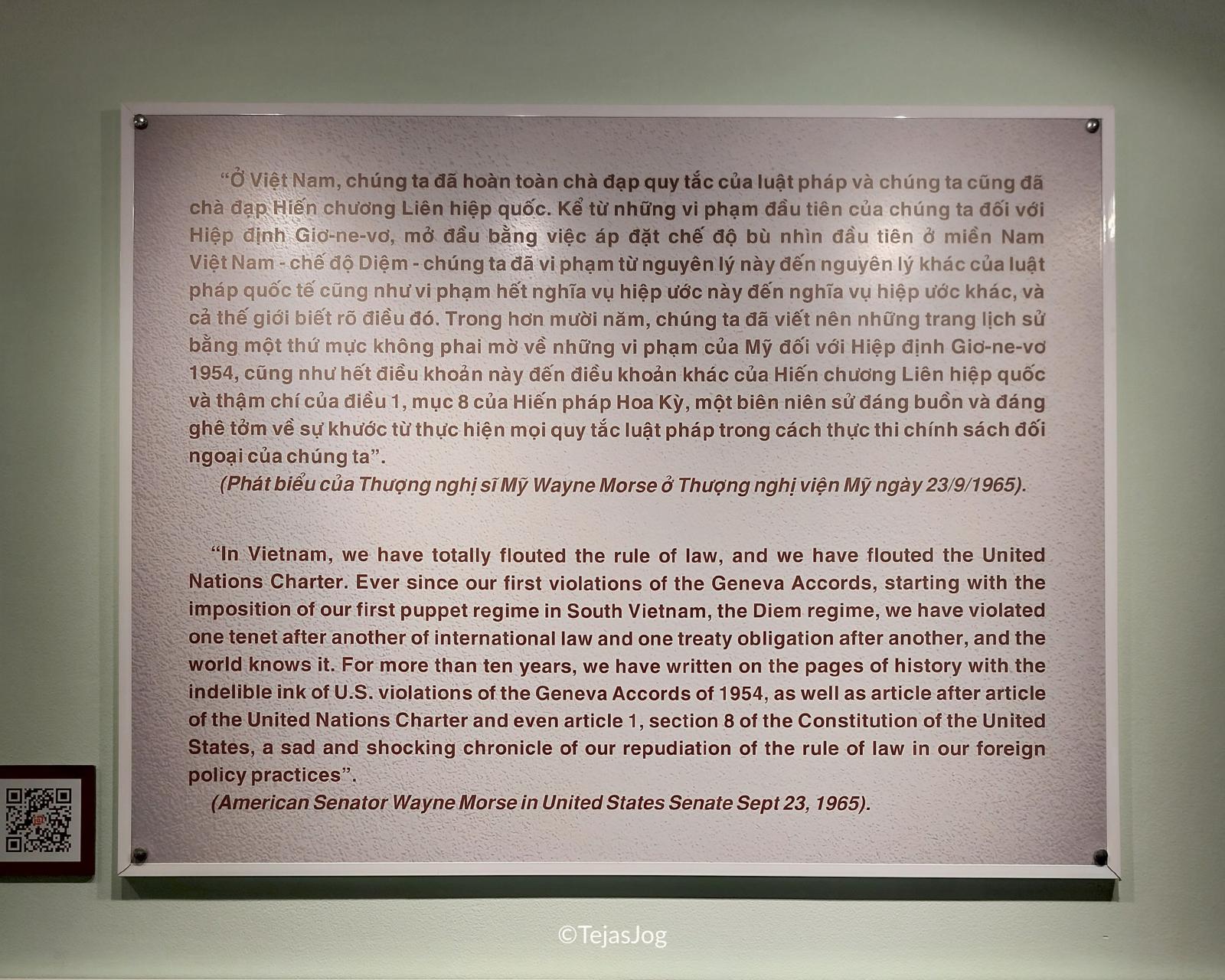
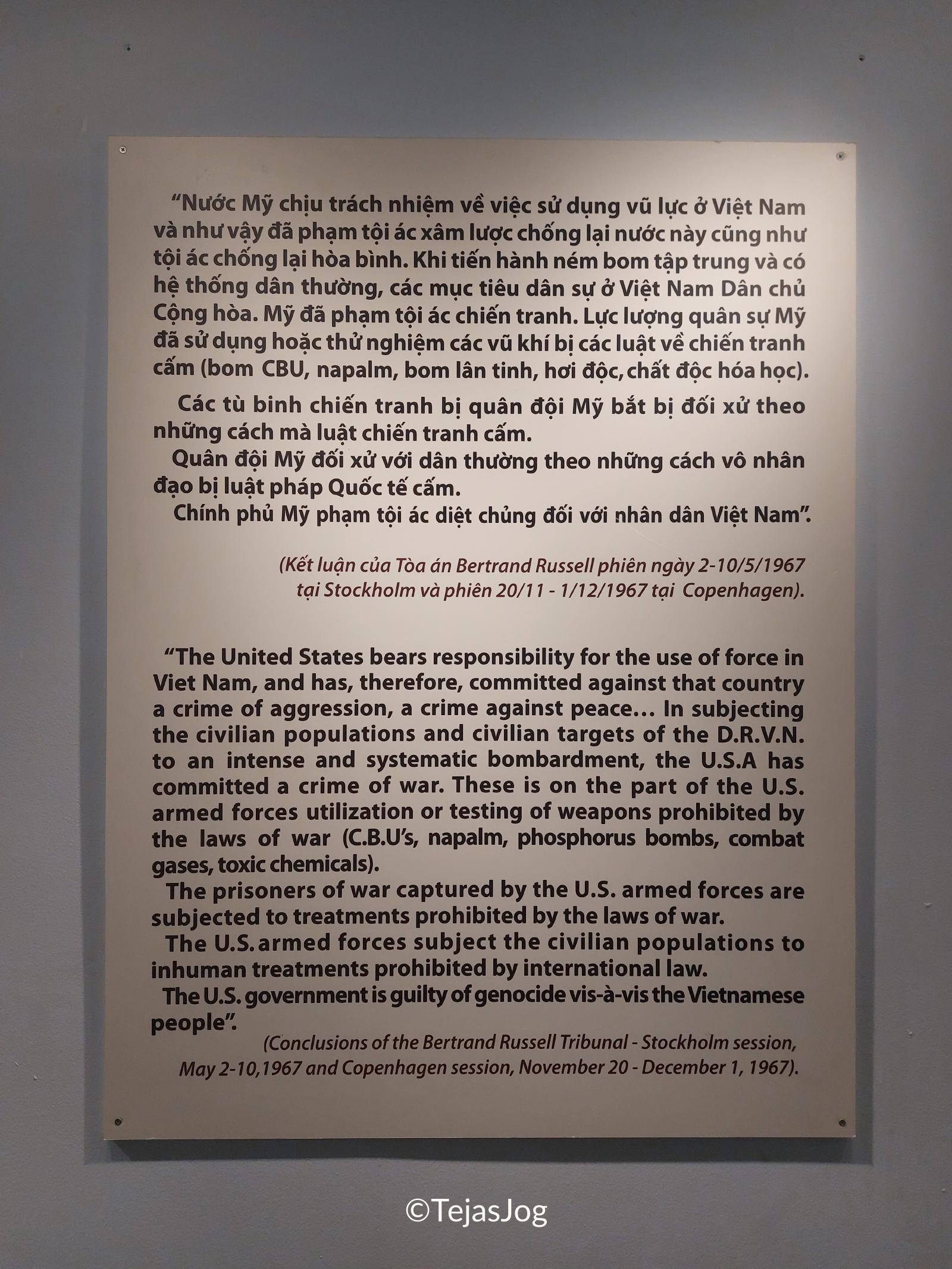
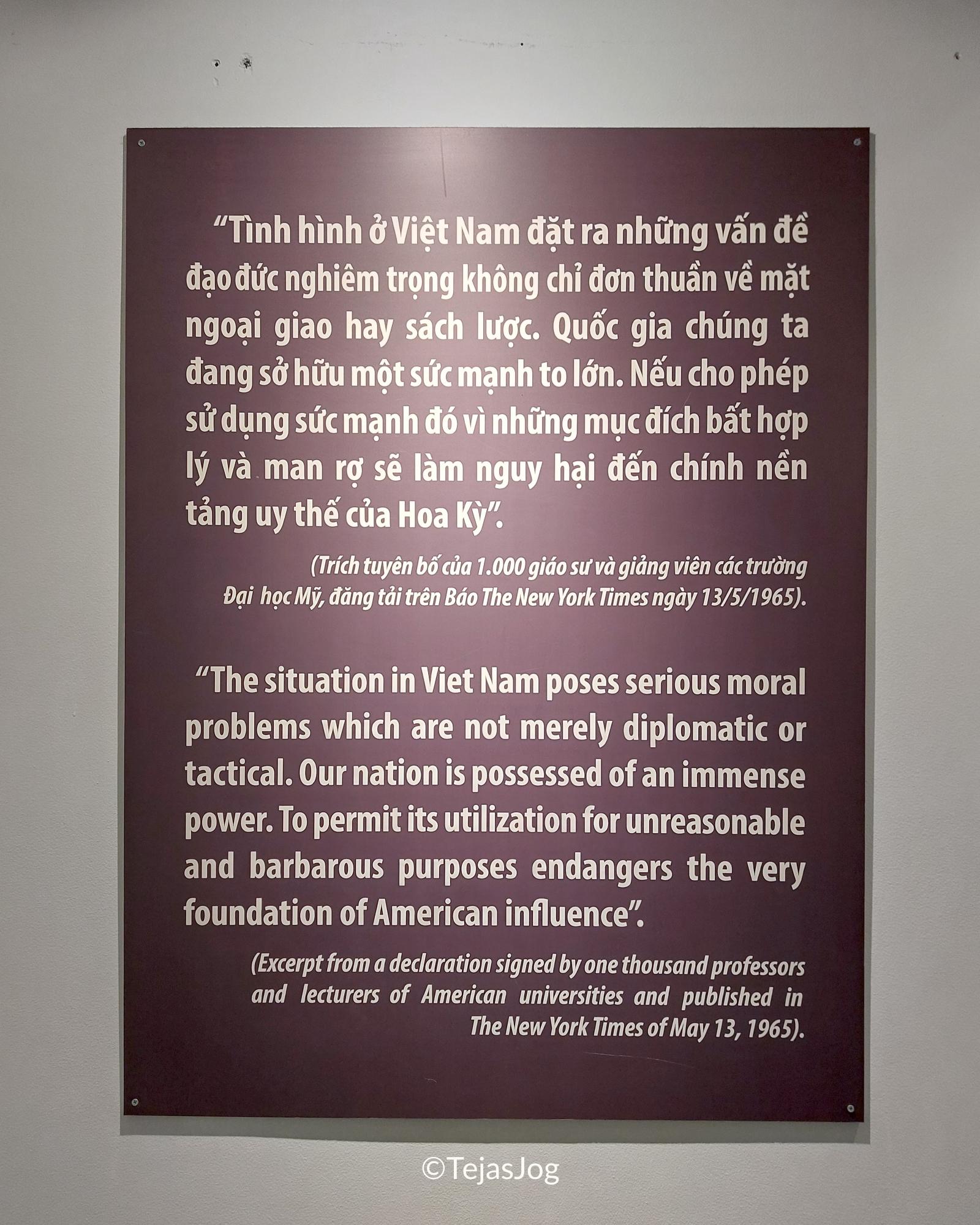
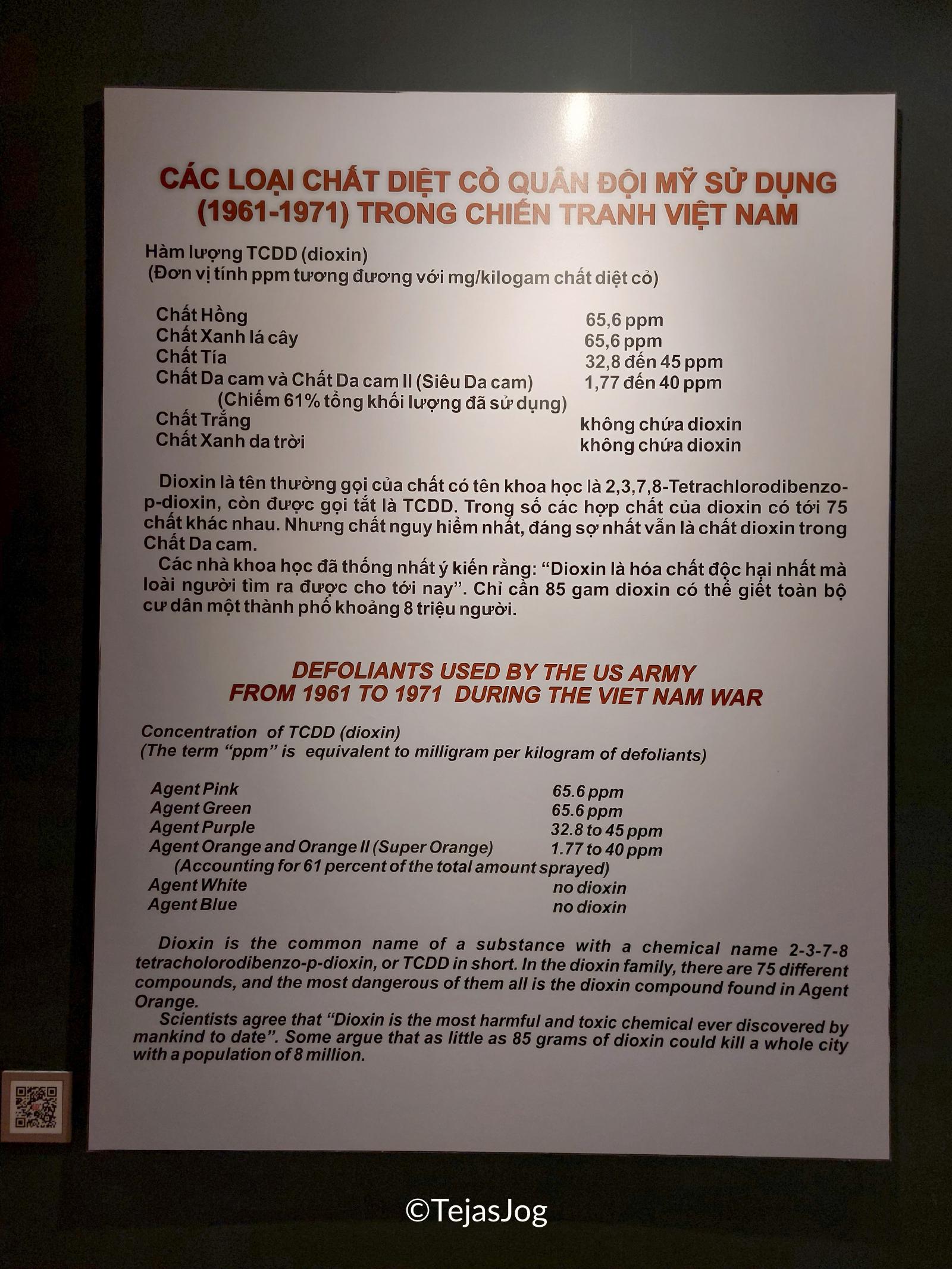
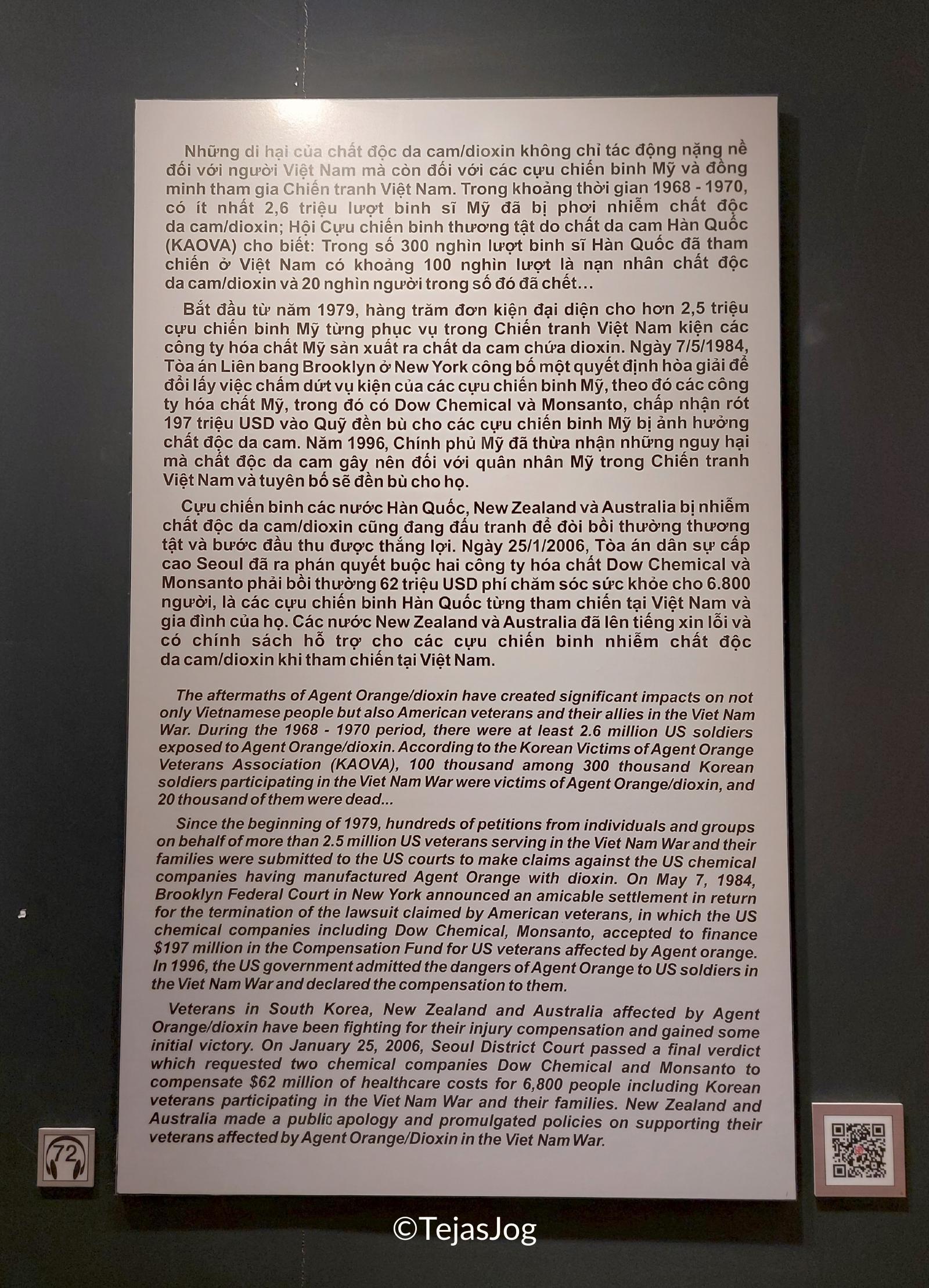
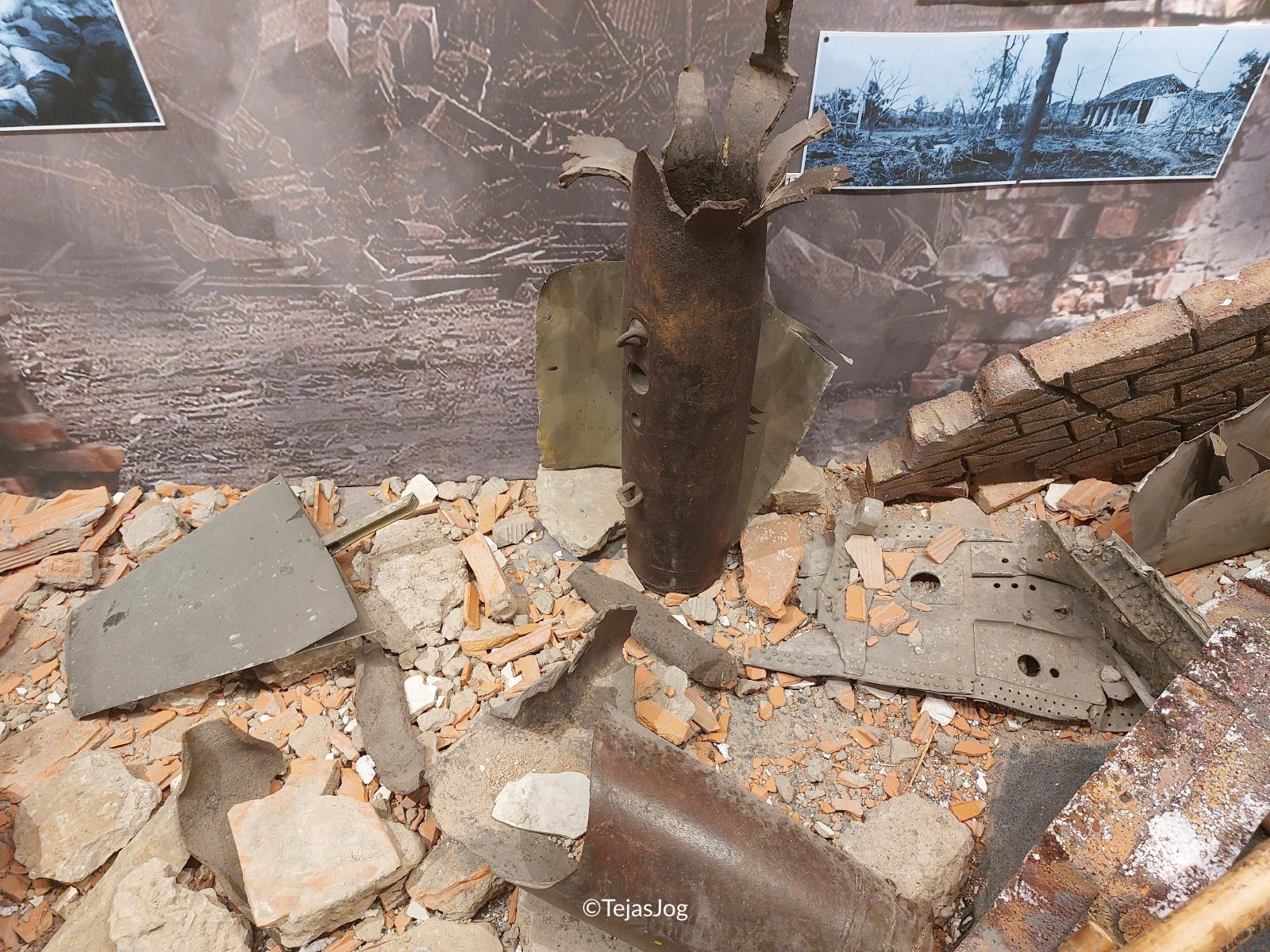
A portion of the museum was dedicated to chemical warfare, detailing the use of various defoliants. The long-term health impacts were documented on information panels. Nearby, shrapnel and unexploded ordnance were displayed.
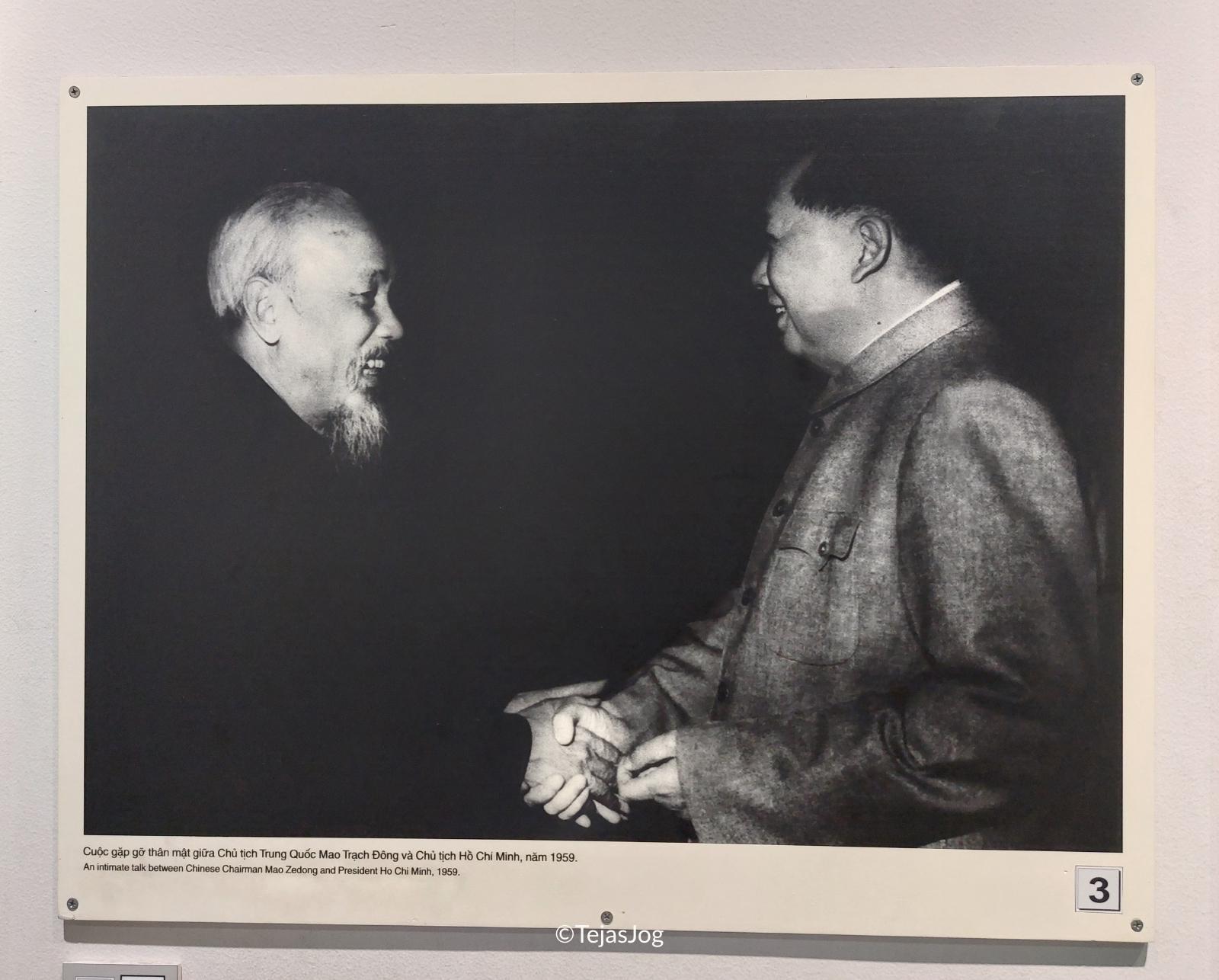
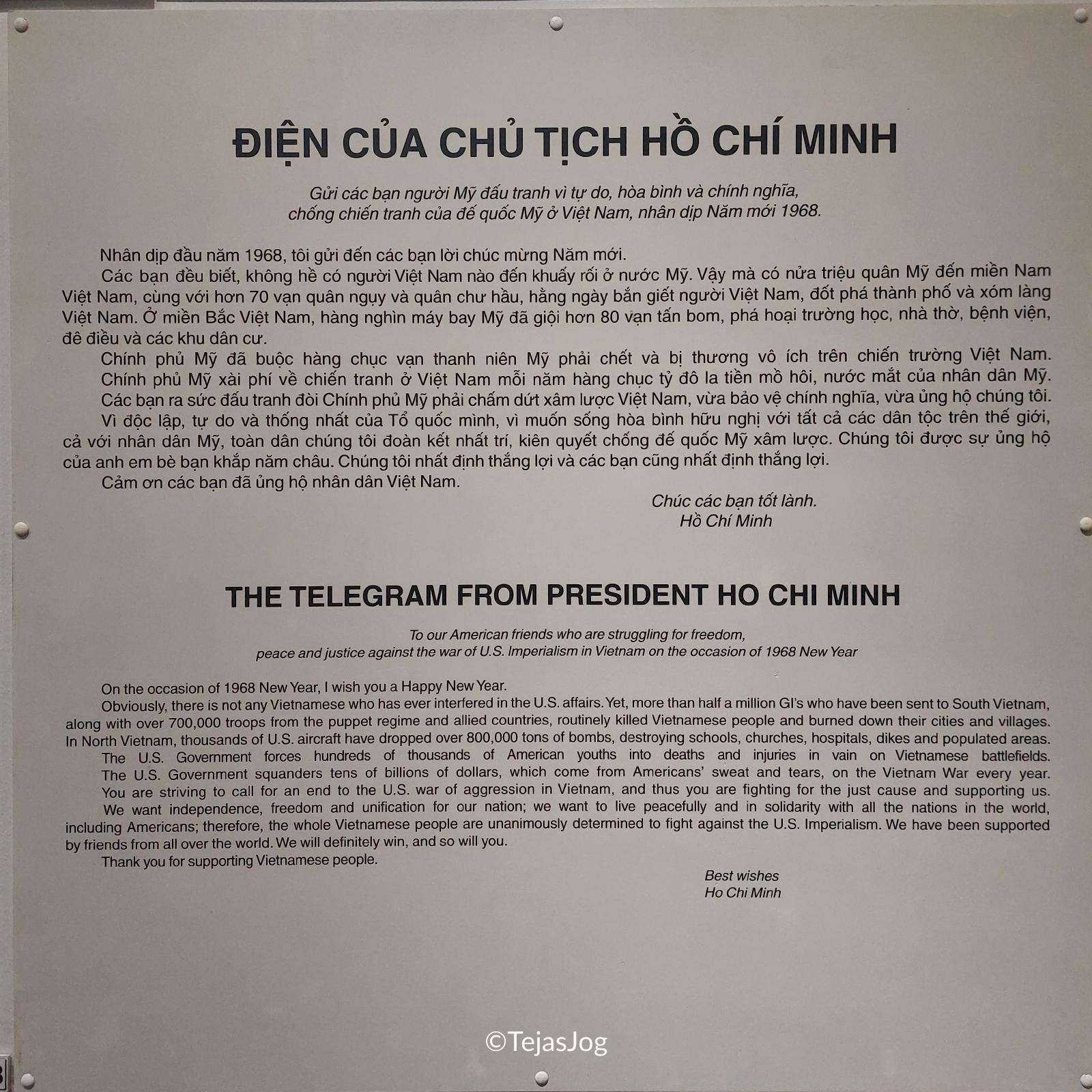
There were artifacts of international diplomacy and outreach on display, like a 1959 photograph of Ho Chi Minh and Mao Zedong and a 1968 telegram from President Ho Chi Minh addressed to “American friends.”
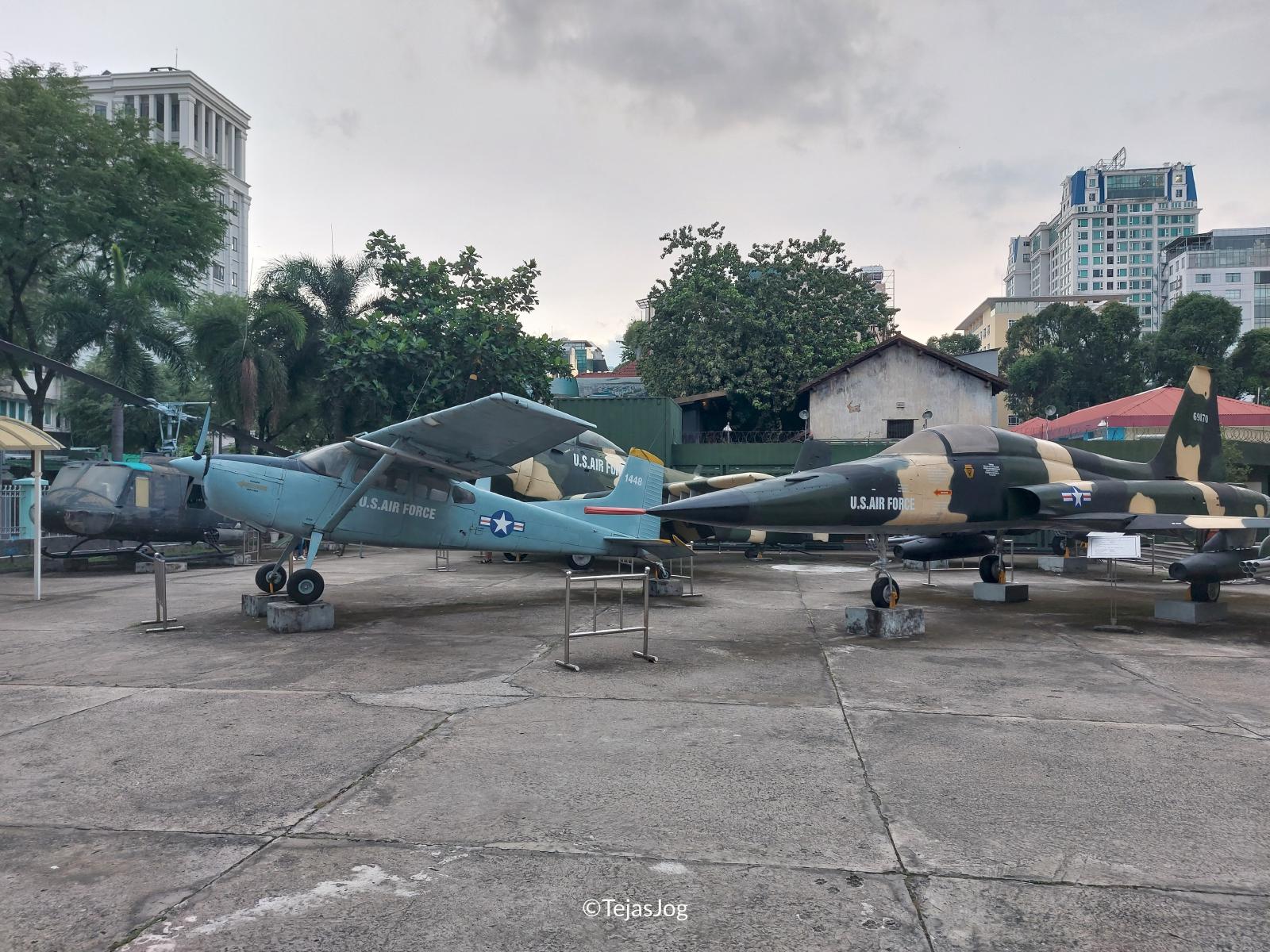
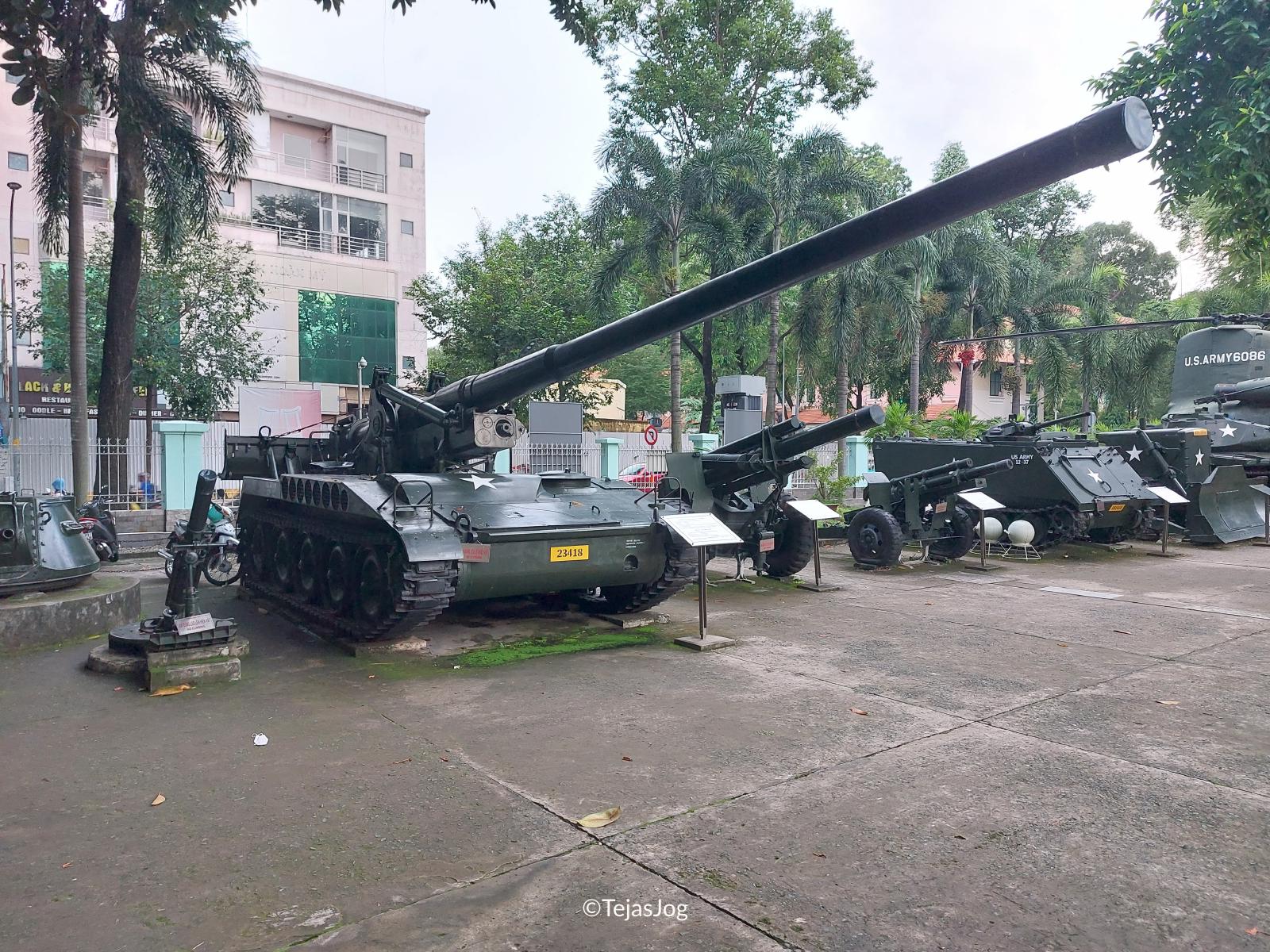
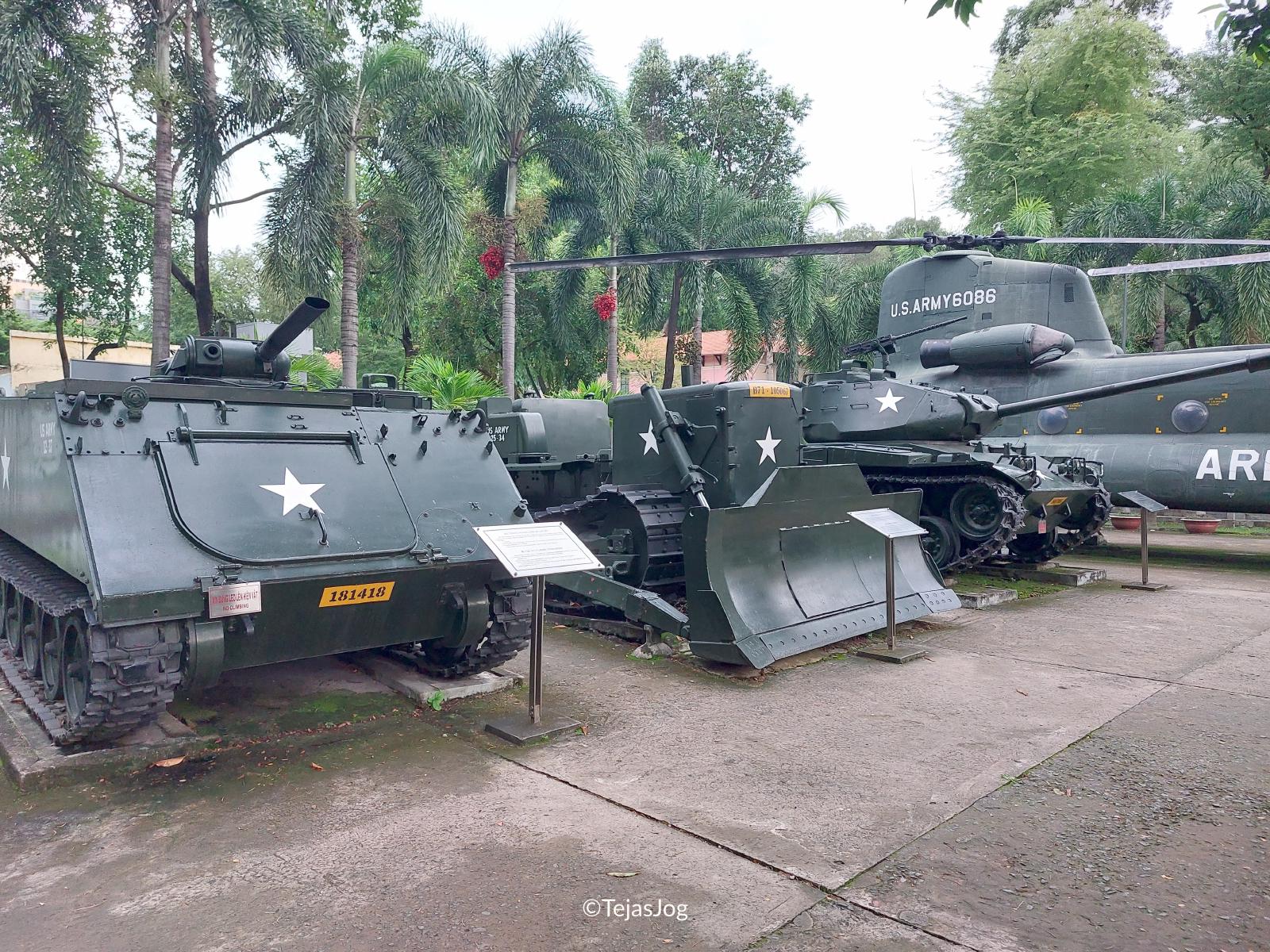
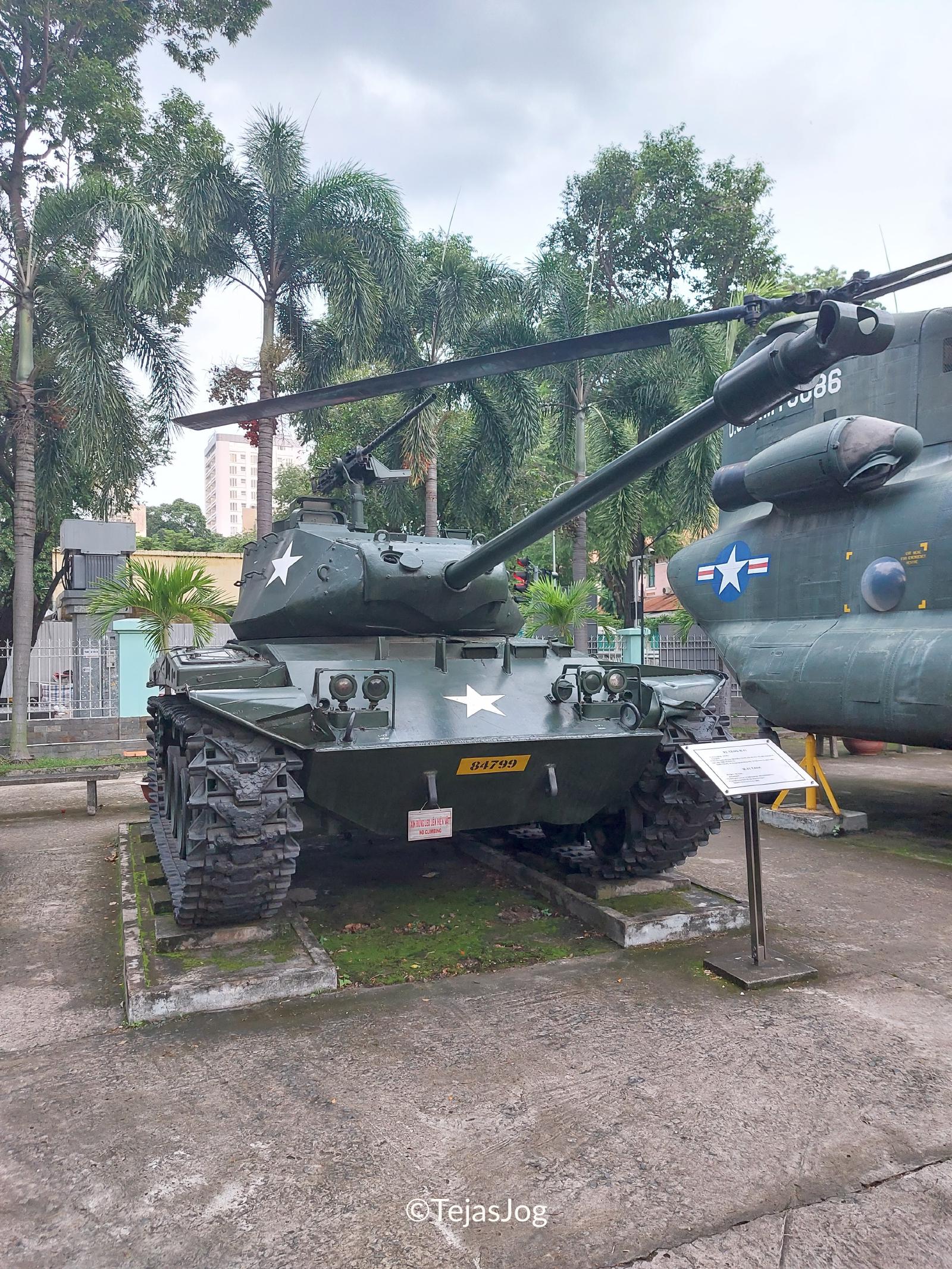
There was an extensive outdoor display of captured military equipment. The aerial assets collection included a variety of aircraft used during the conflict, ranging from transport helicopters to tactical fighter jets and light reconnaissance planes.
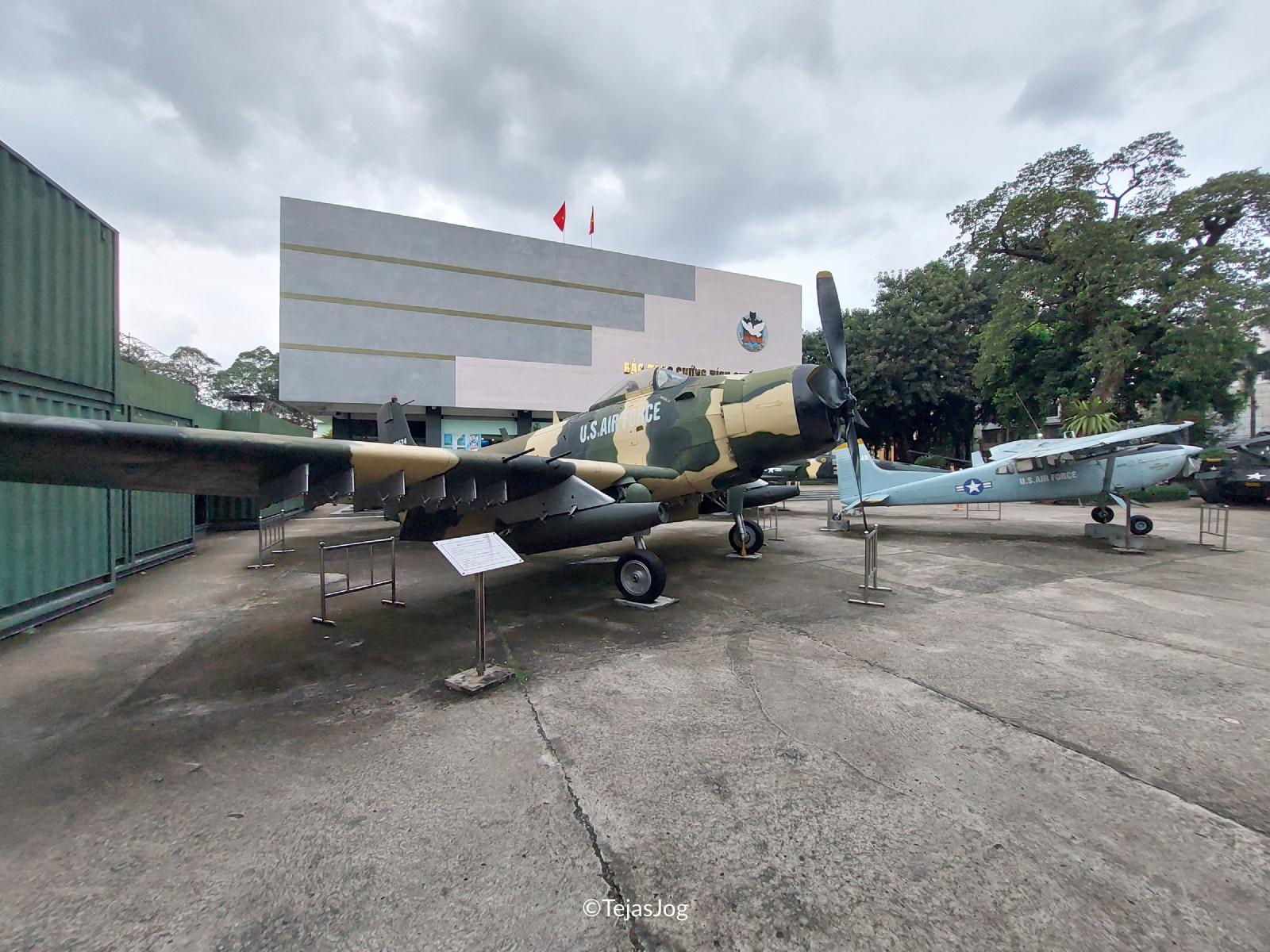
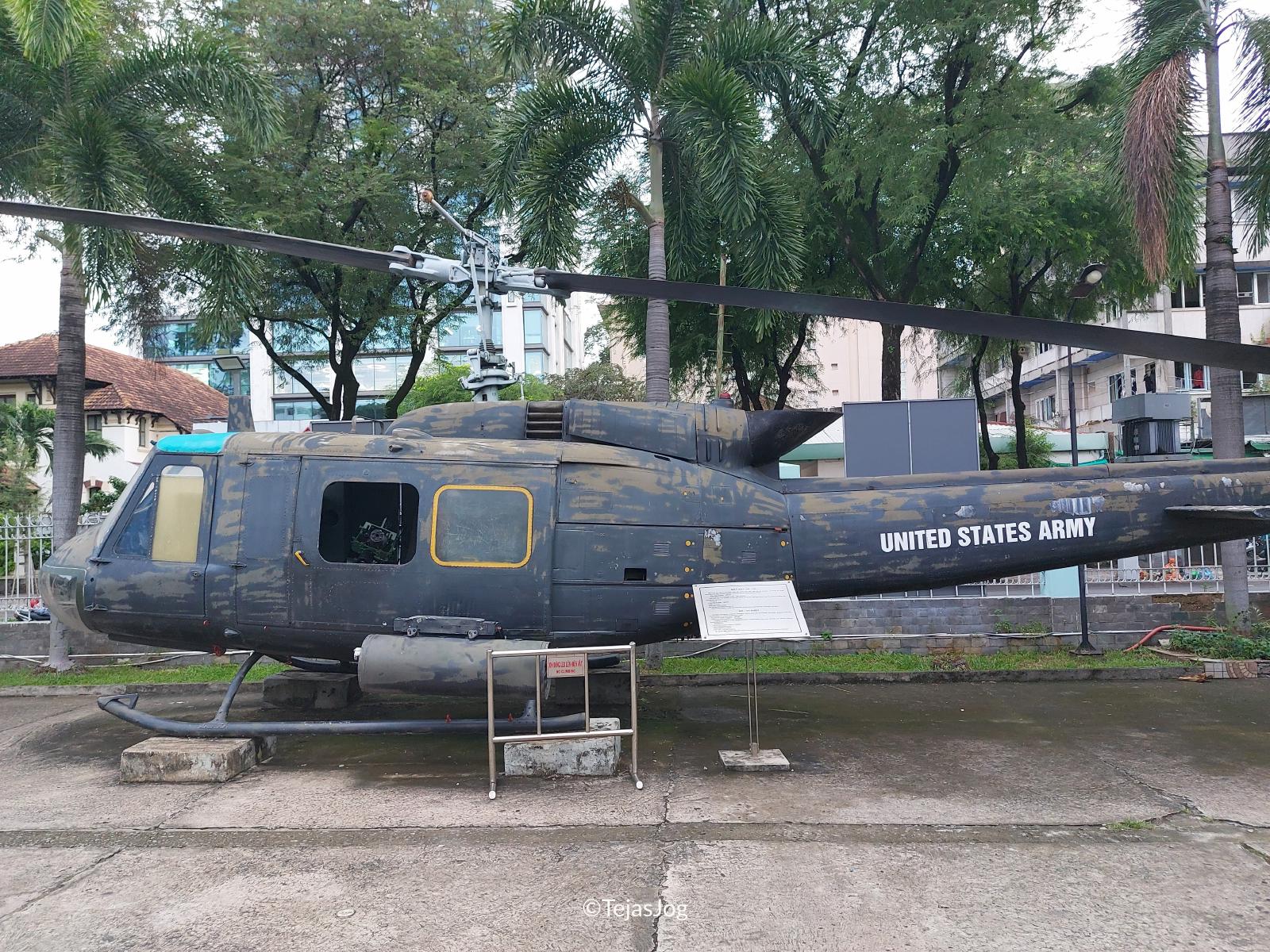
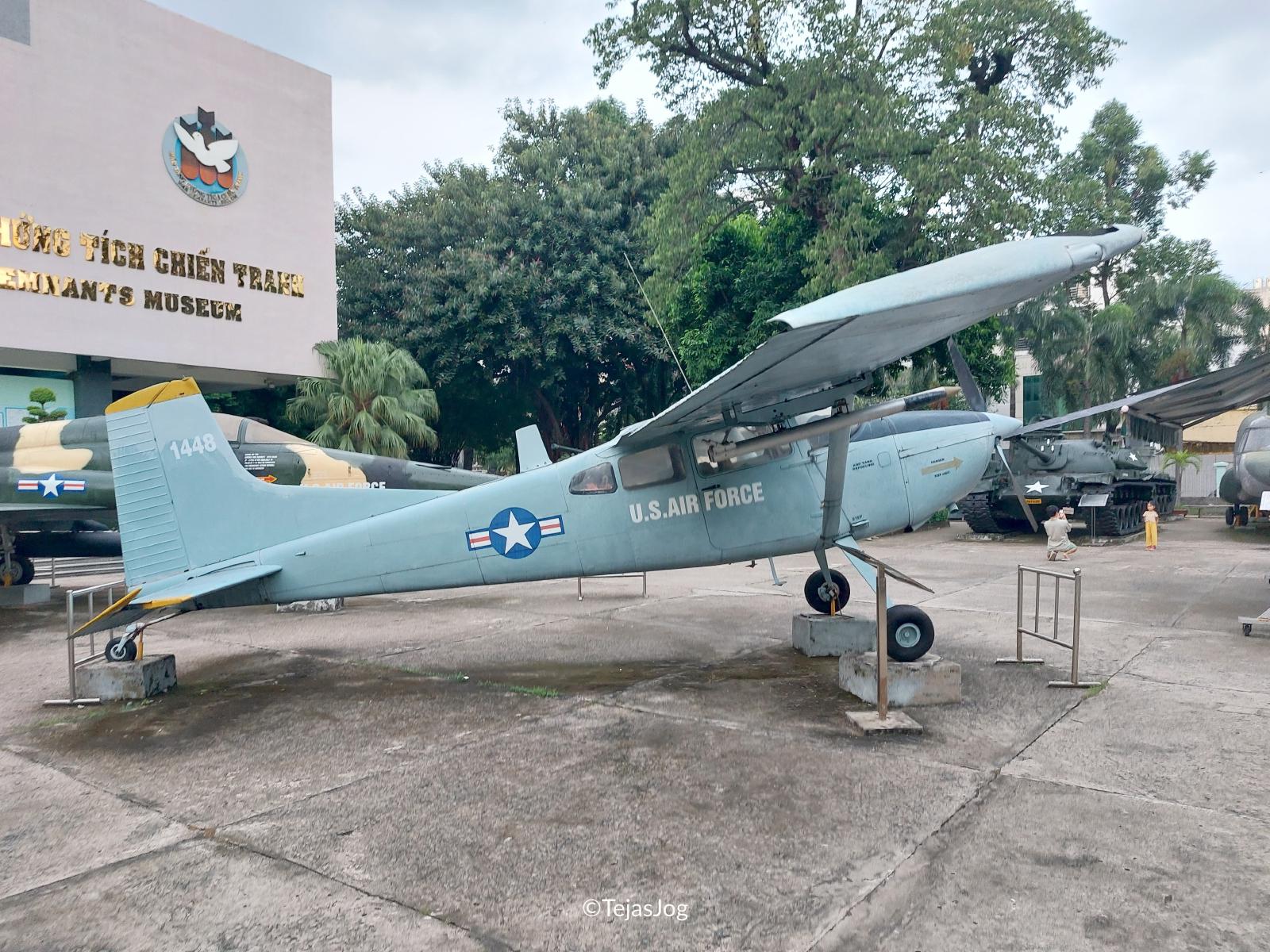
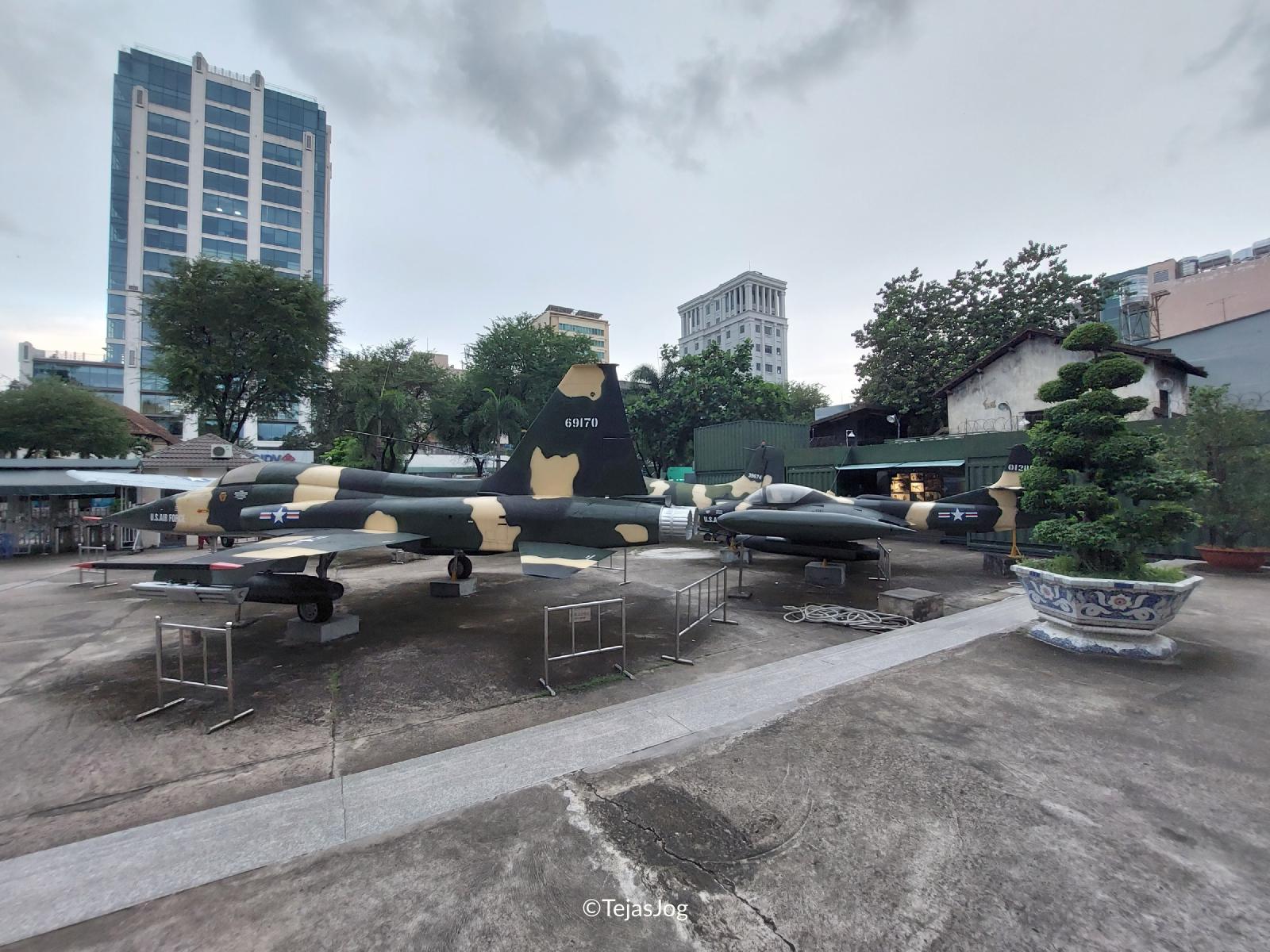
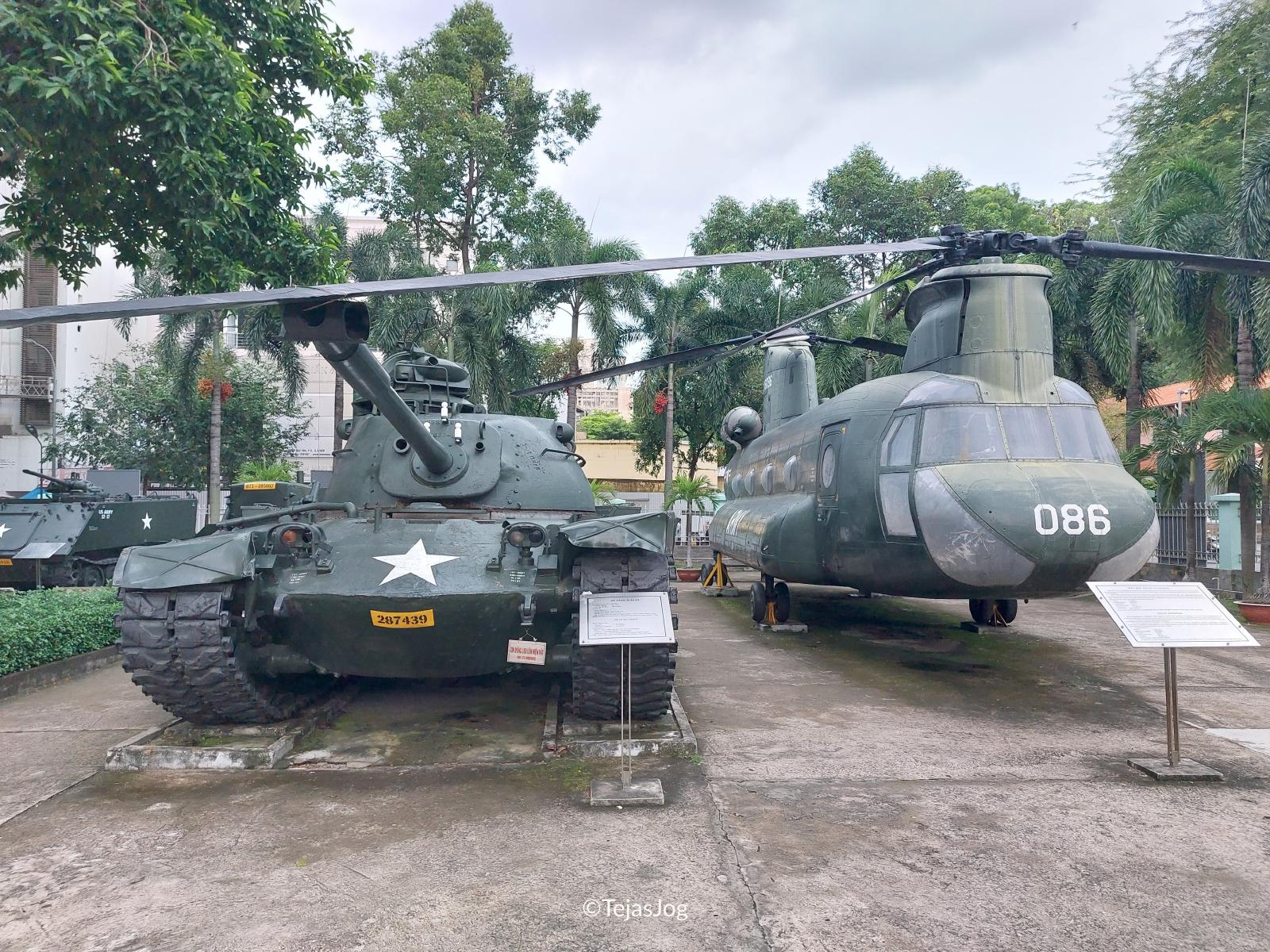
The ground combat vehicles and equipment showcased heavy warfare machinery featuring tanks, armored personnel carriers, and massive self-propelled howitzers.
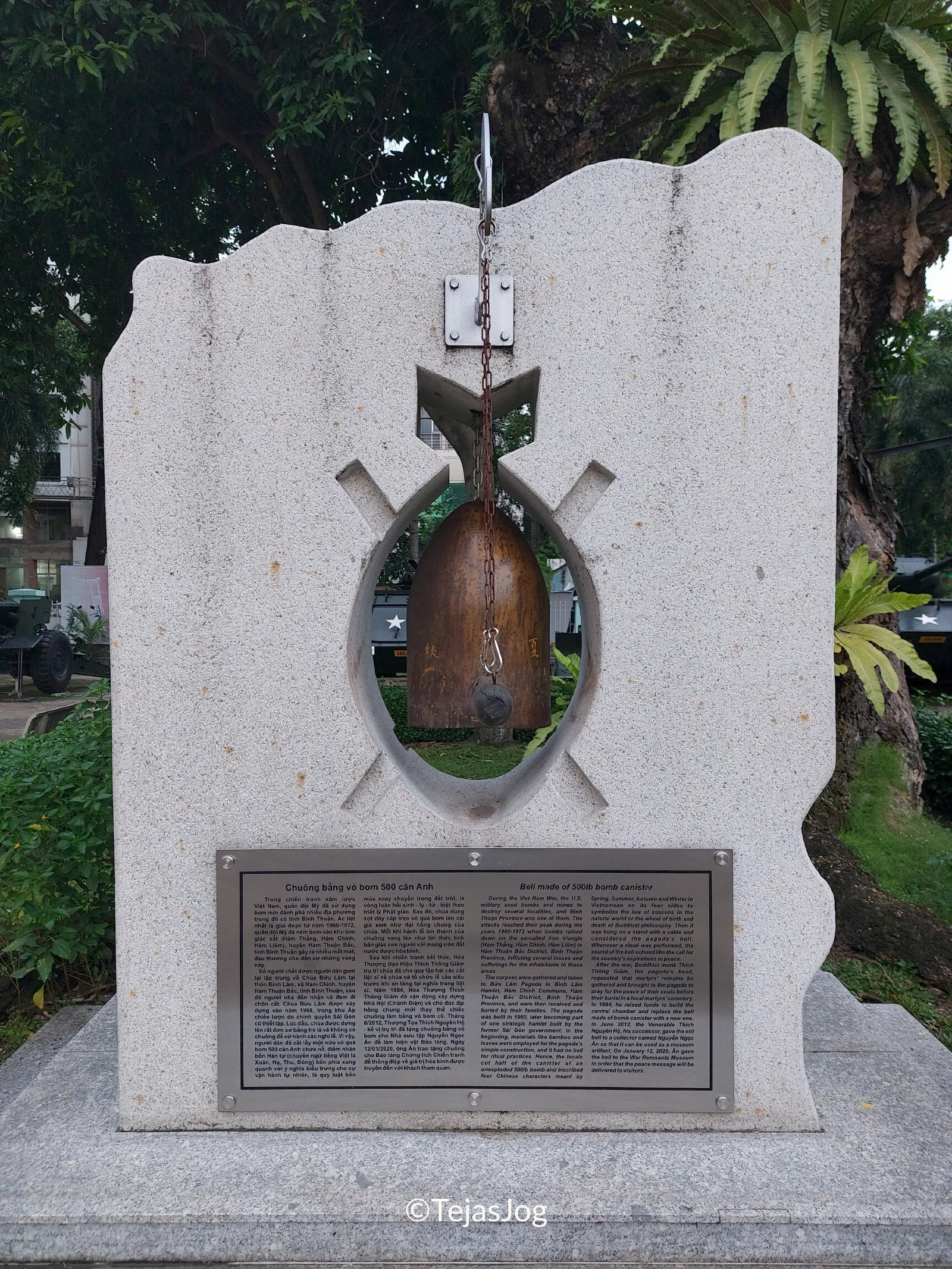
As we were finishing seeing all the exhibits, we saw a bell made from a bomb canister—turning a weapon of destruction into an object of prayer and peace. With that, we wrapped up this heavy visit and made our way back to the Long Hostel.
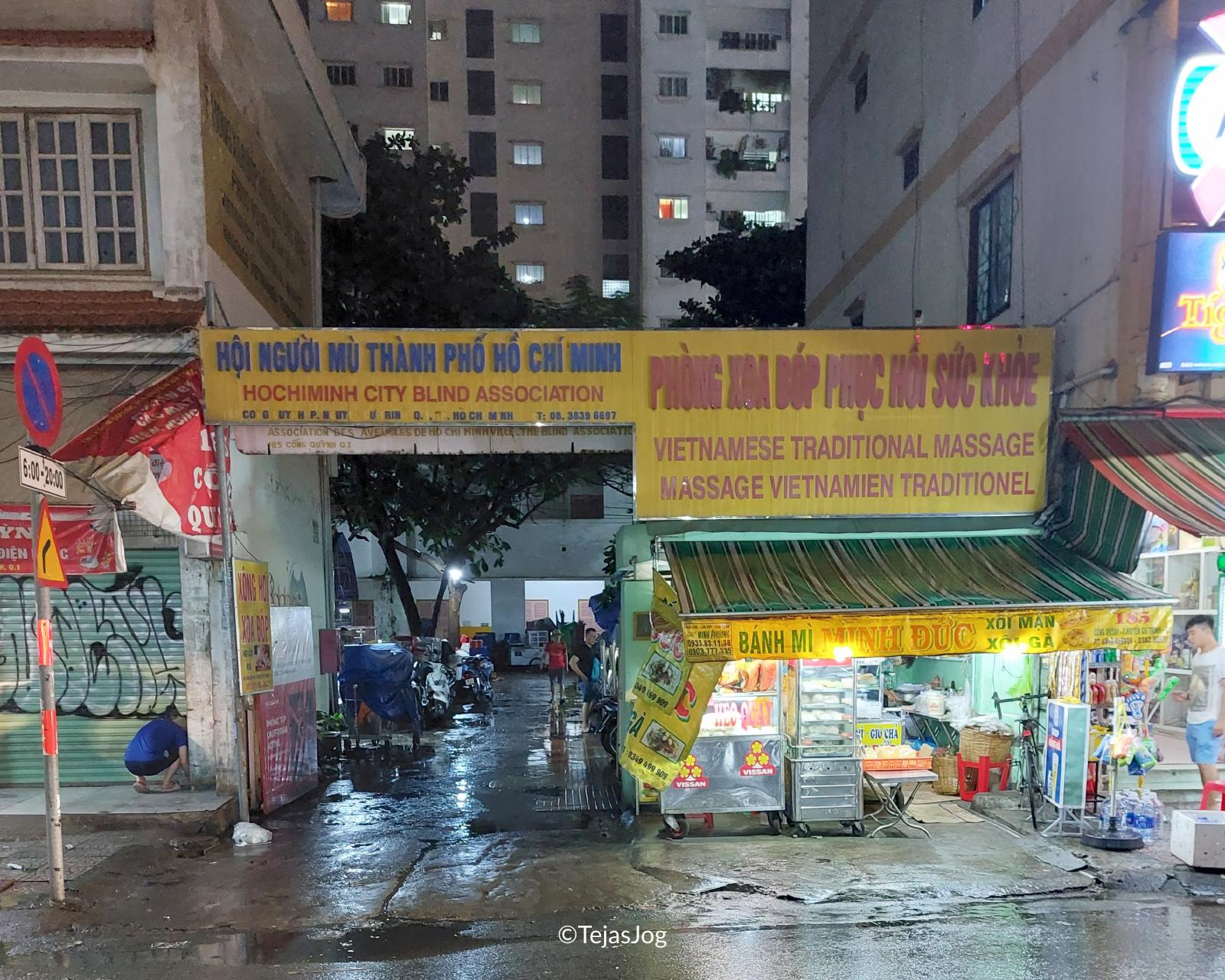
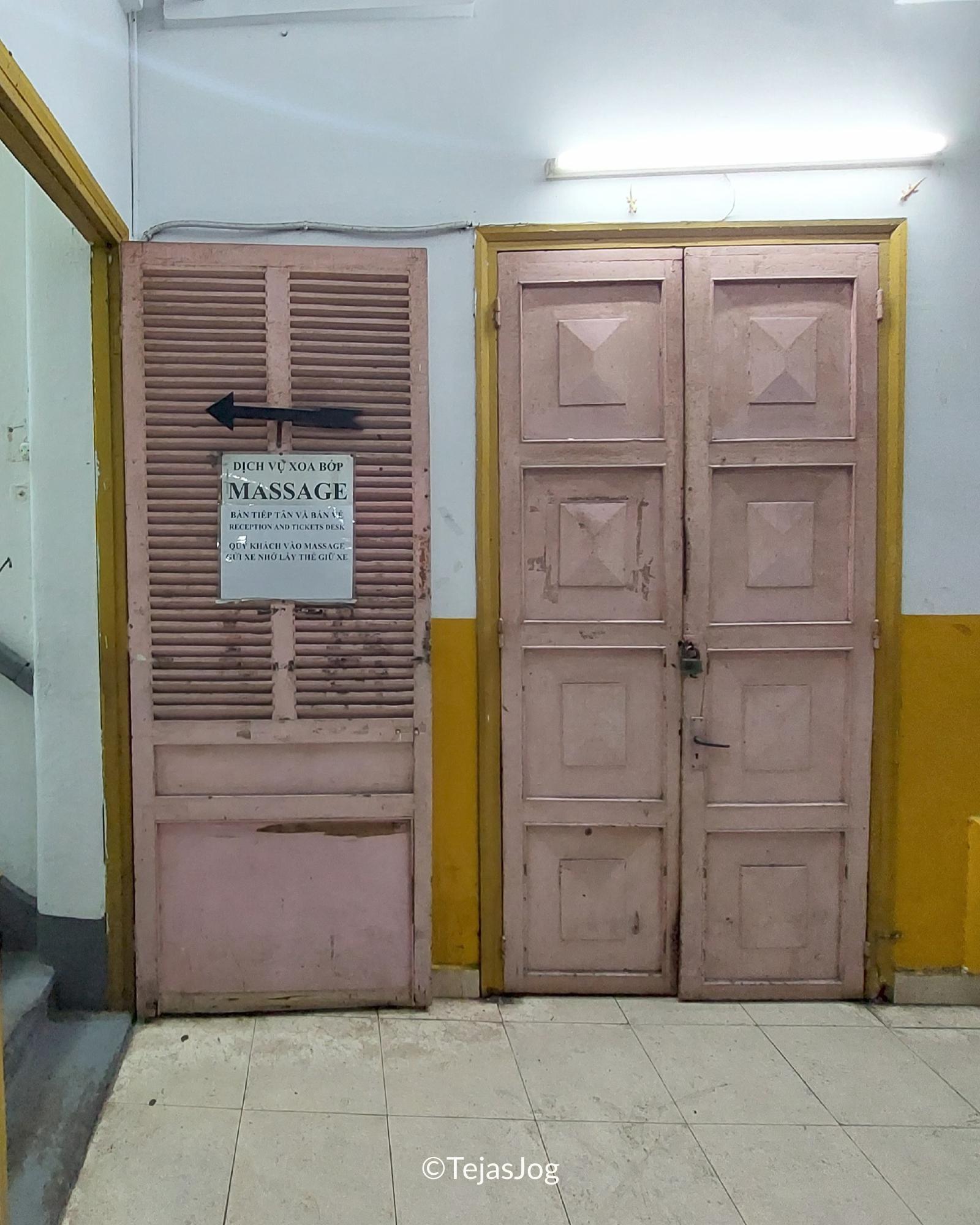
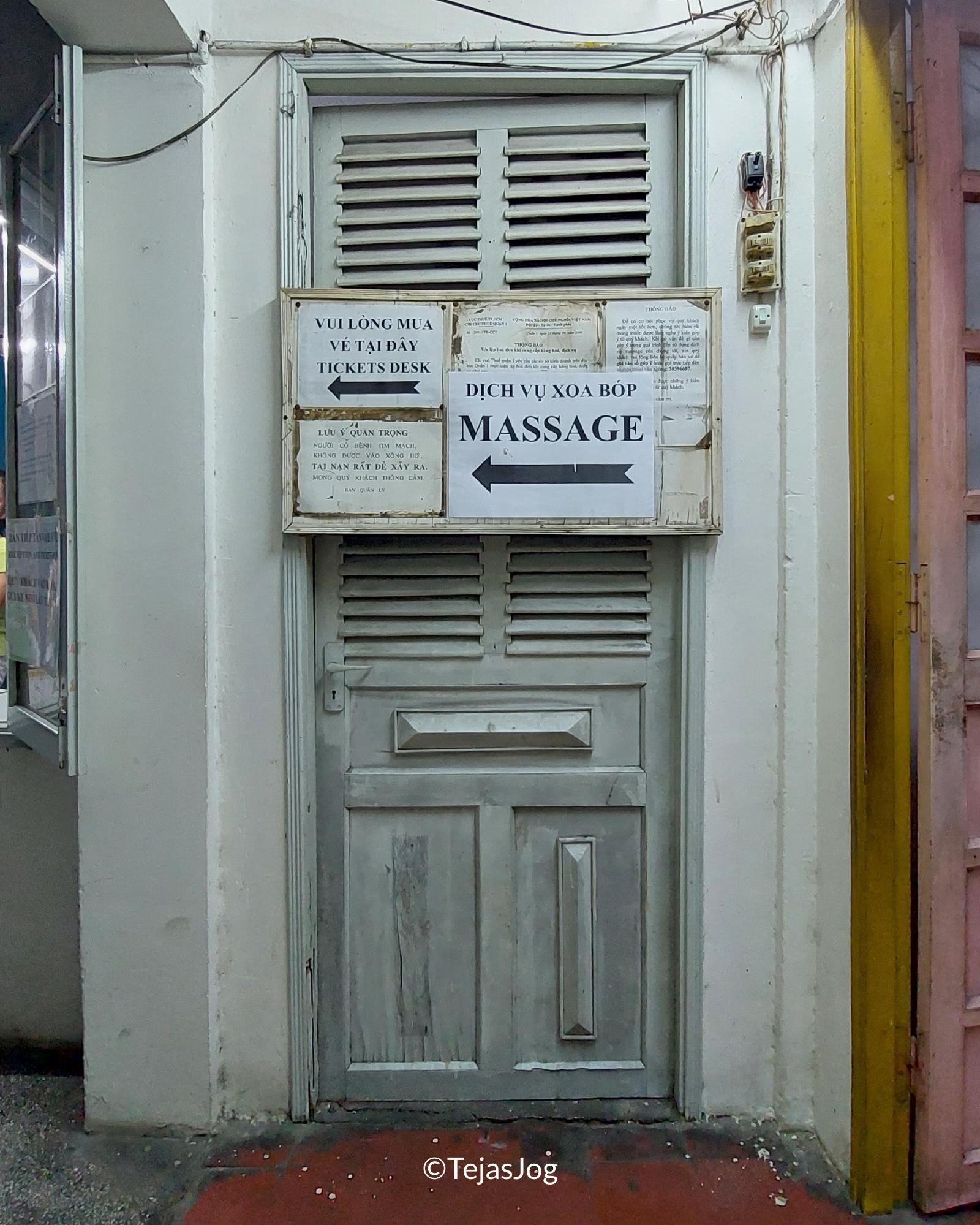
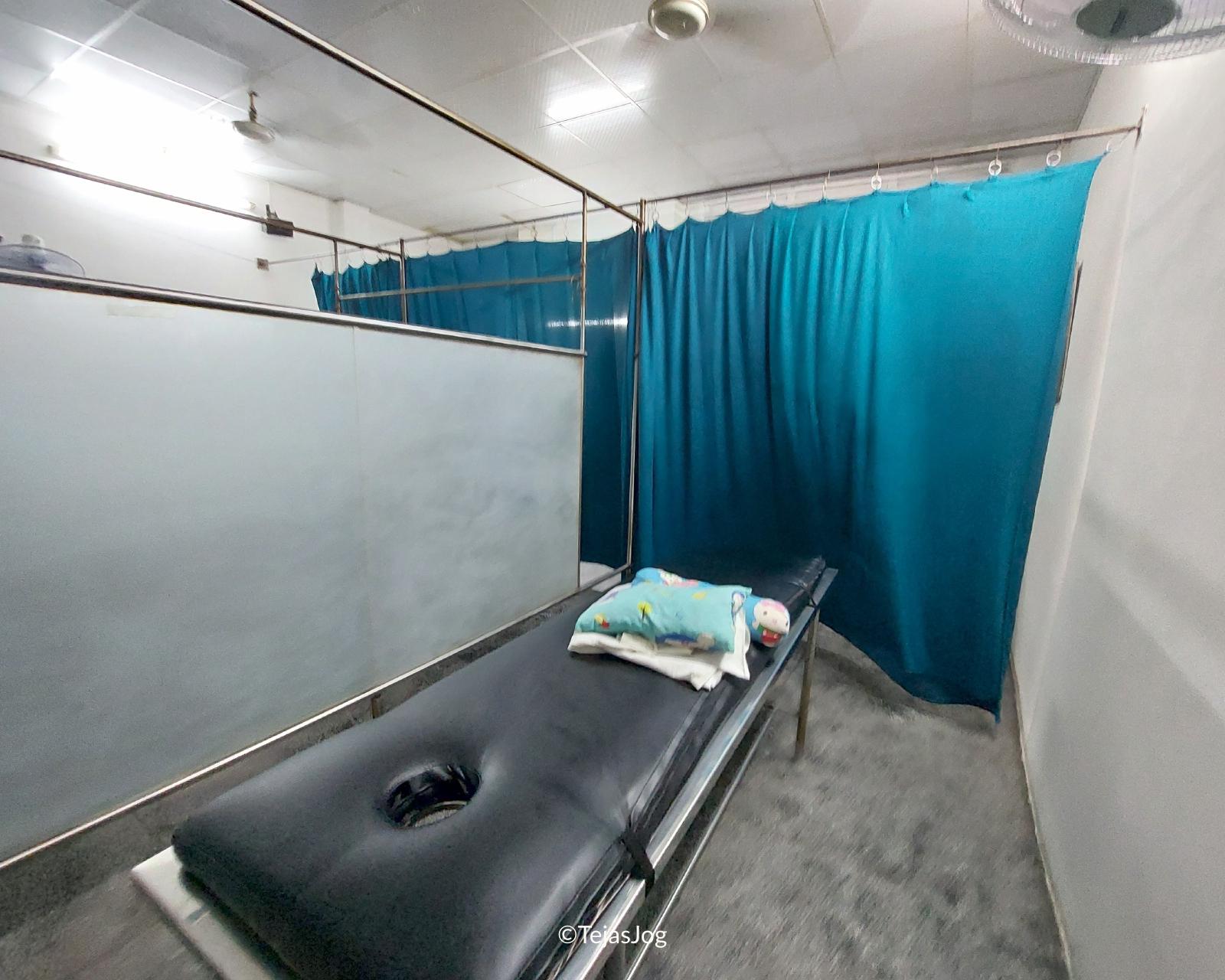
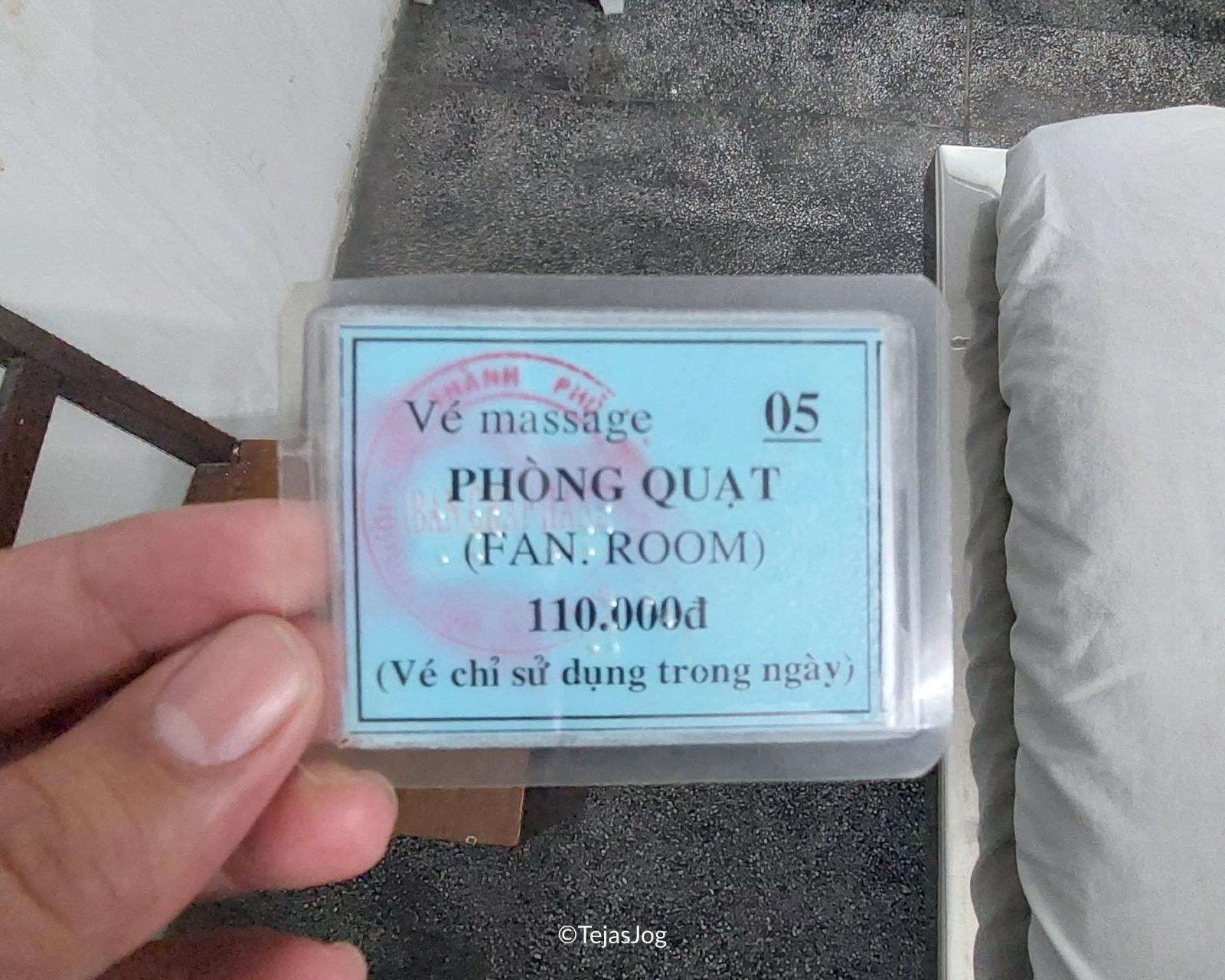
Later in the evening, I visited the Blind Massage Institute, which was a short walk away from the Long Hostel. It provides employment opportunities for the visually impaired while offering therapeutic services to the public in a minimalistic and no-frills setting. A visually impaired therapist was assigned to me for my massage; he was professional and well-trained.
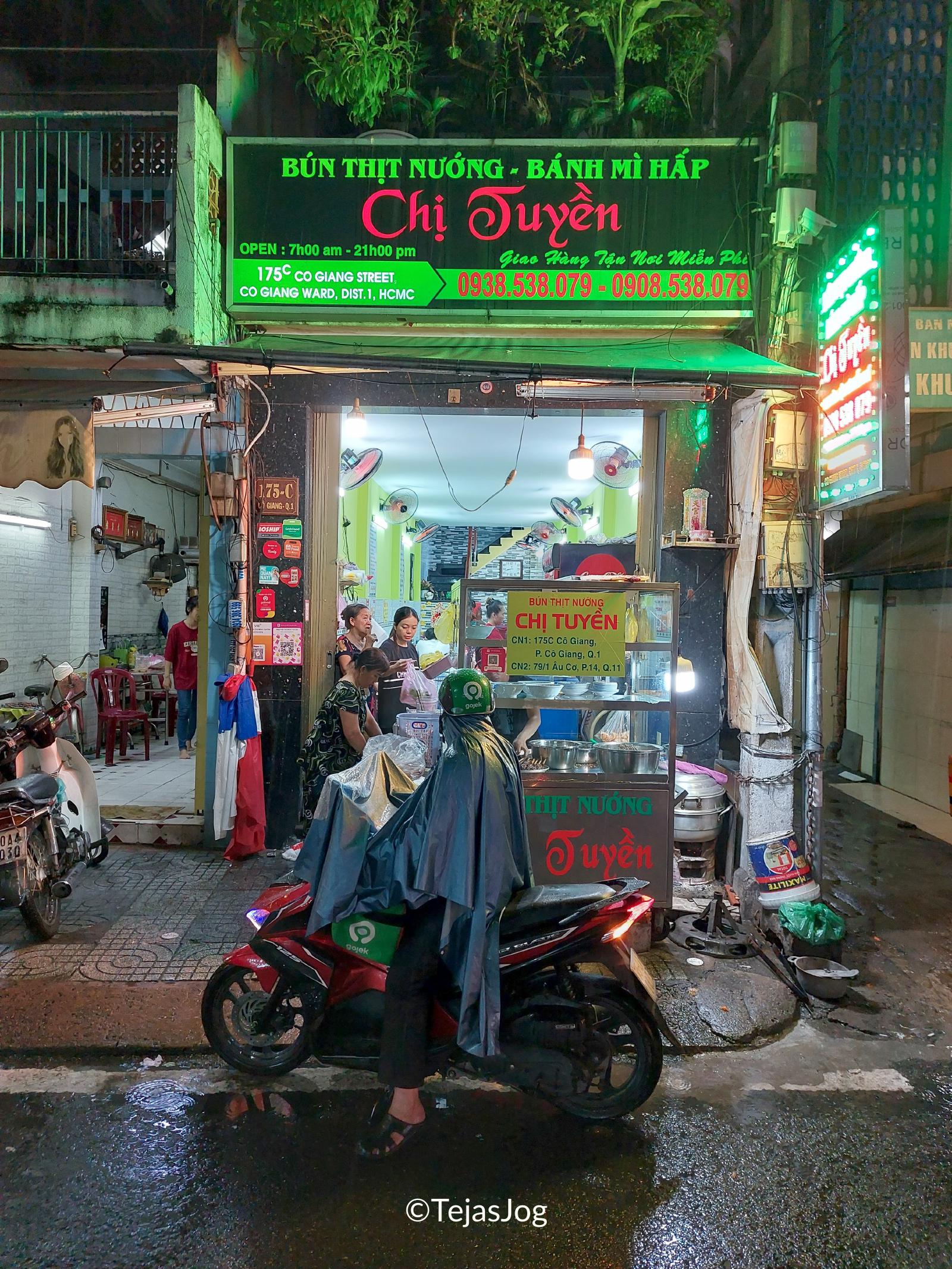
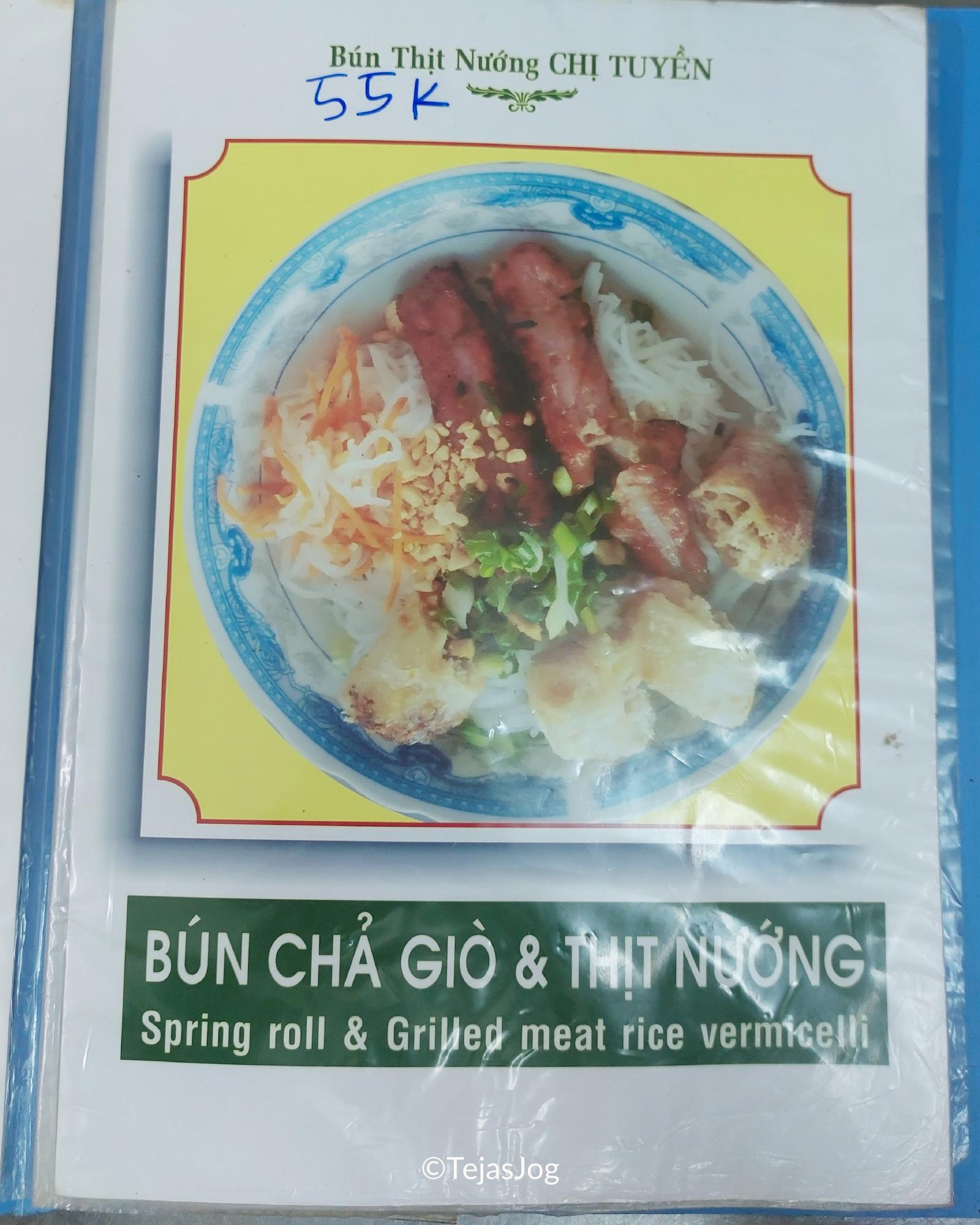
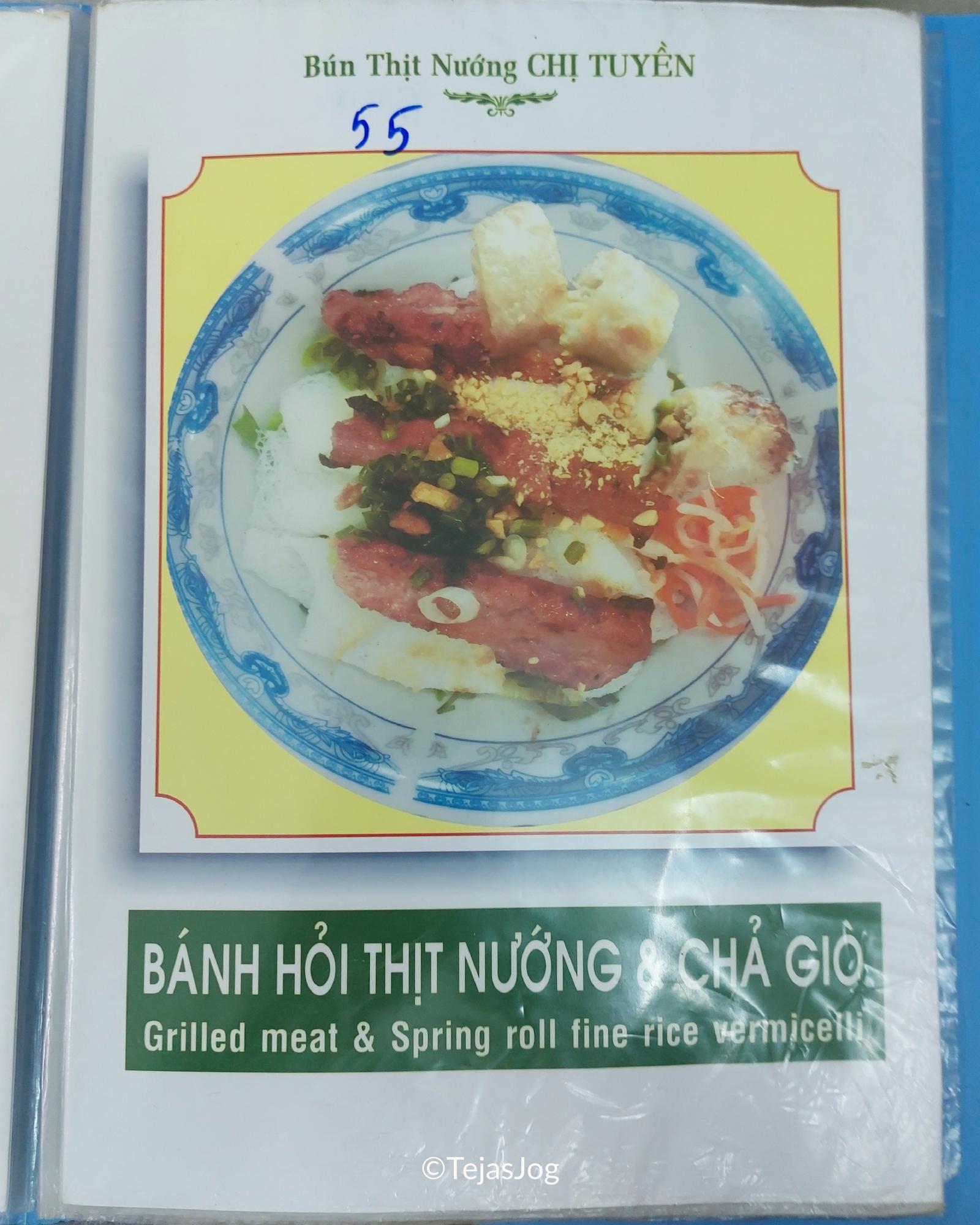
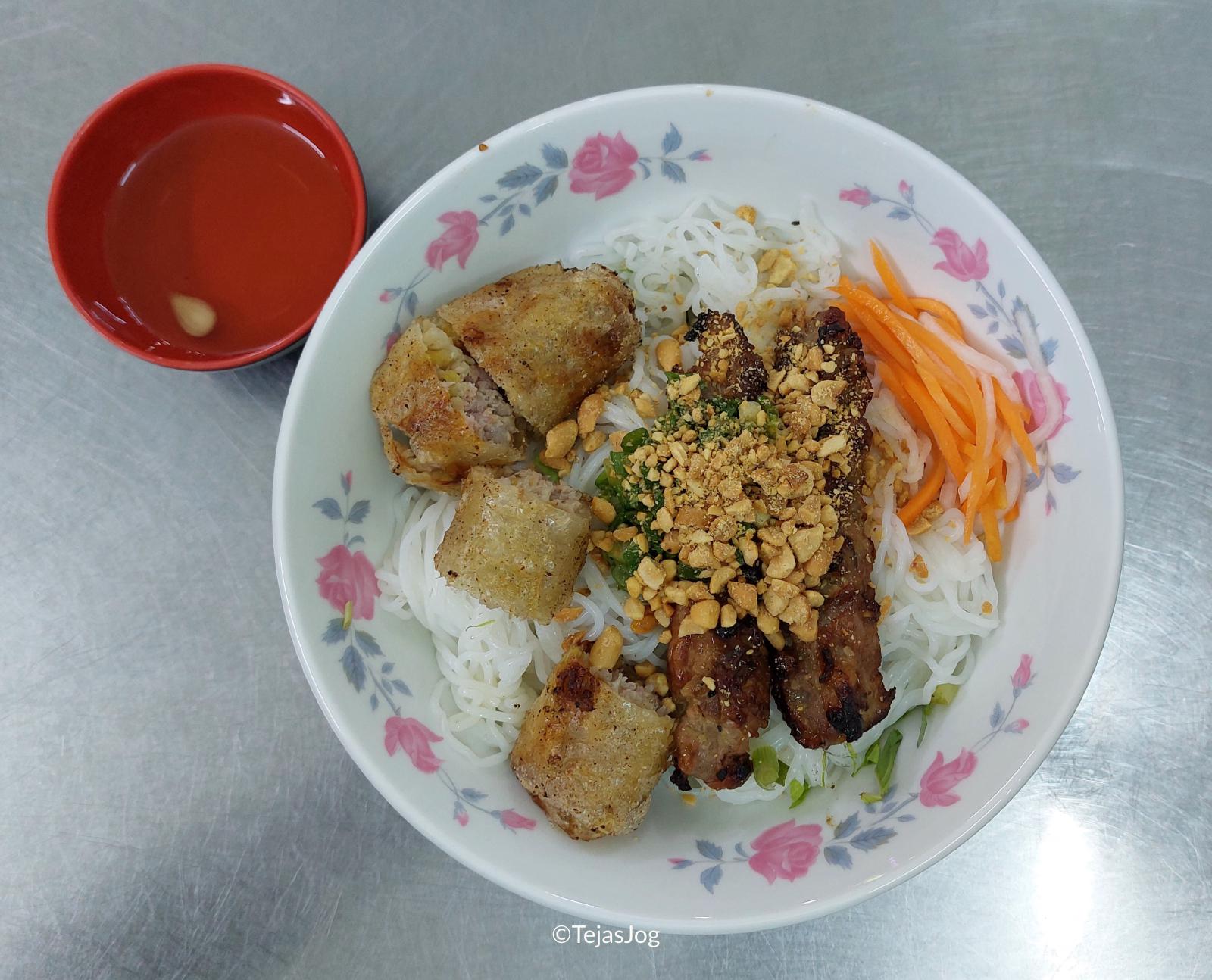
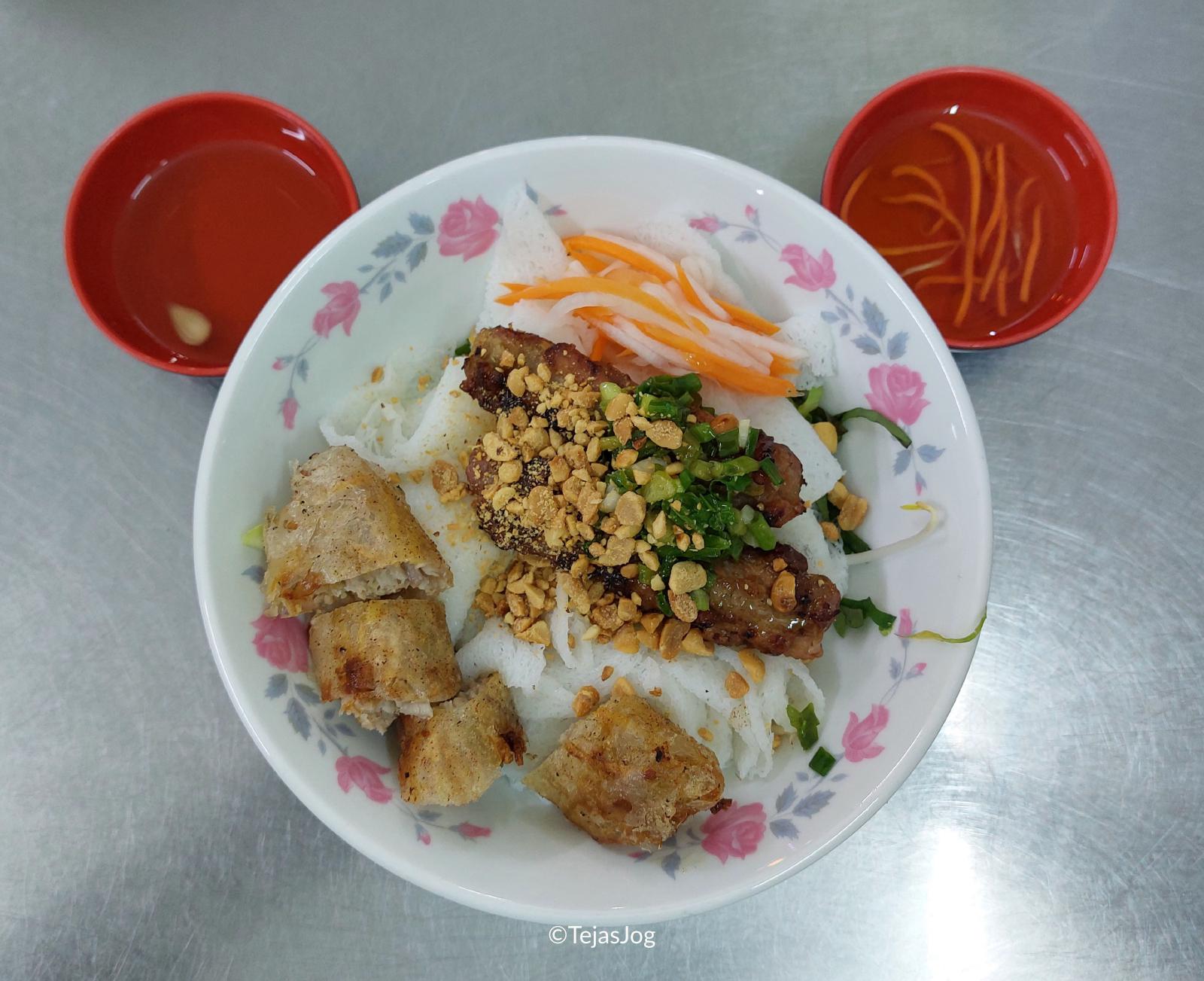
We wrapped up our day by going to Bún Thịt Nướng Chị Tuyền for dinner. It was a nice local place, not touristy. The food was well prepared. We had dinner there and then walked back to Long Hostel.
🚍 Mekong River Day Tour from Ho Chi Minh
🍽️ Nhà hàng sinh thái Việt Nhật
🍽️ Bún Thịt Nướng Chị Tuyền
🛏️ Long Hostel