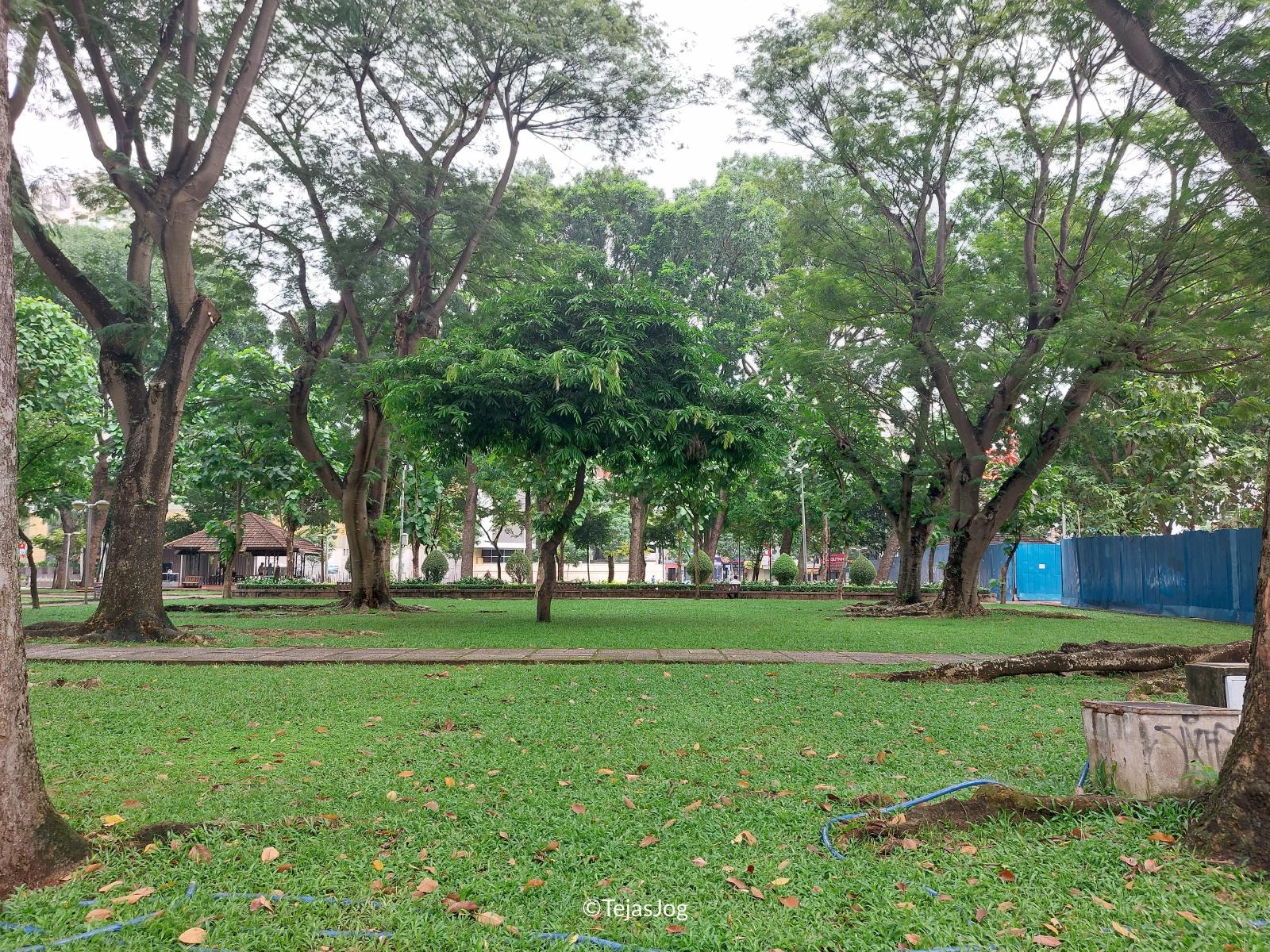
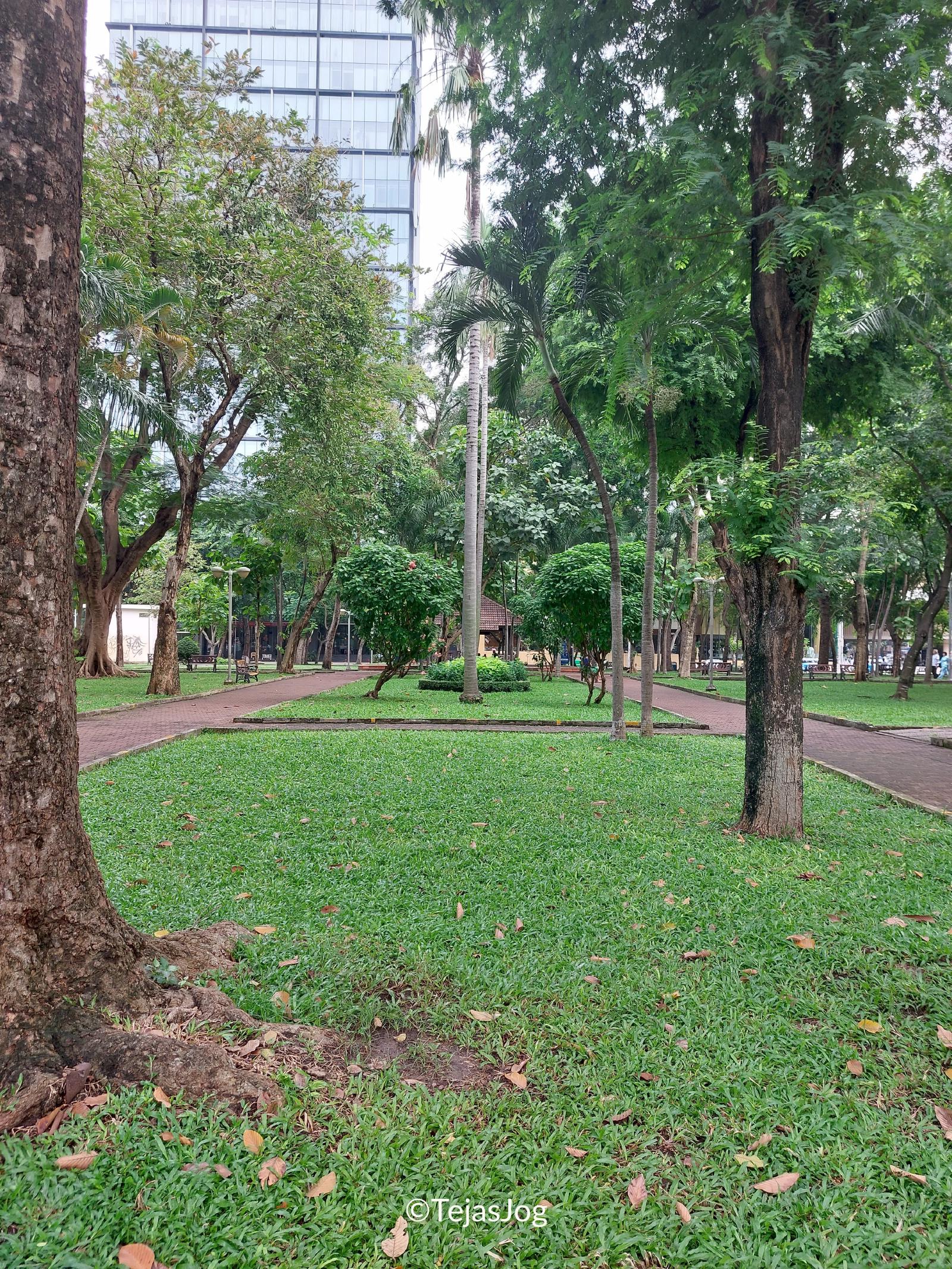
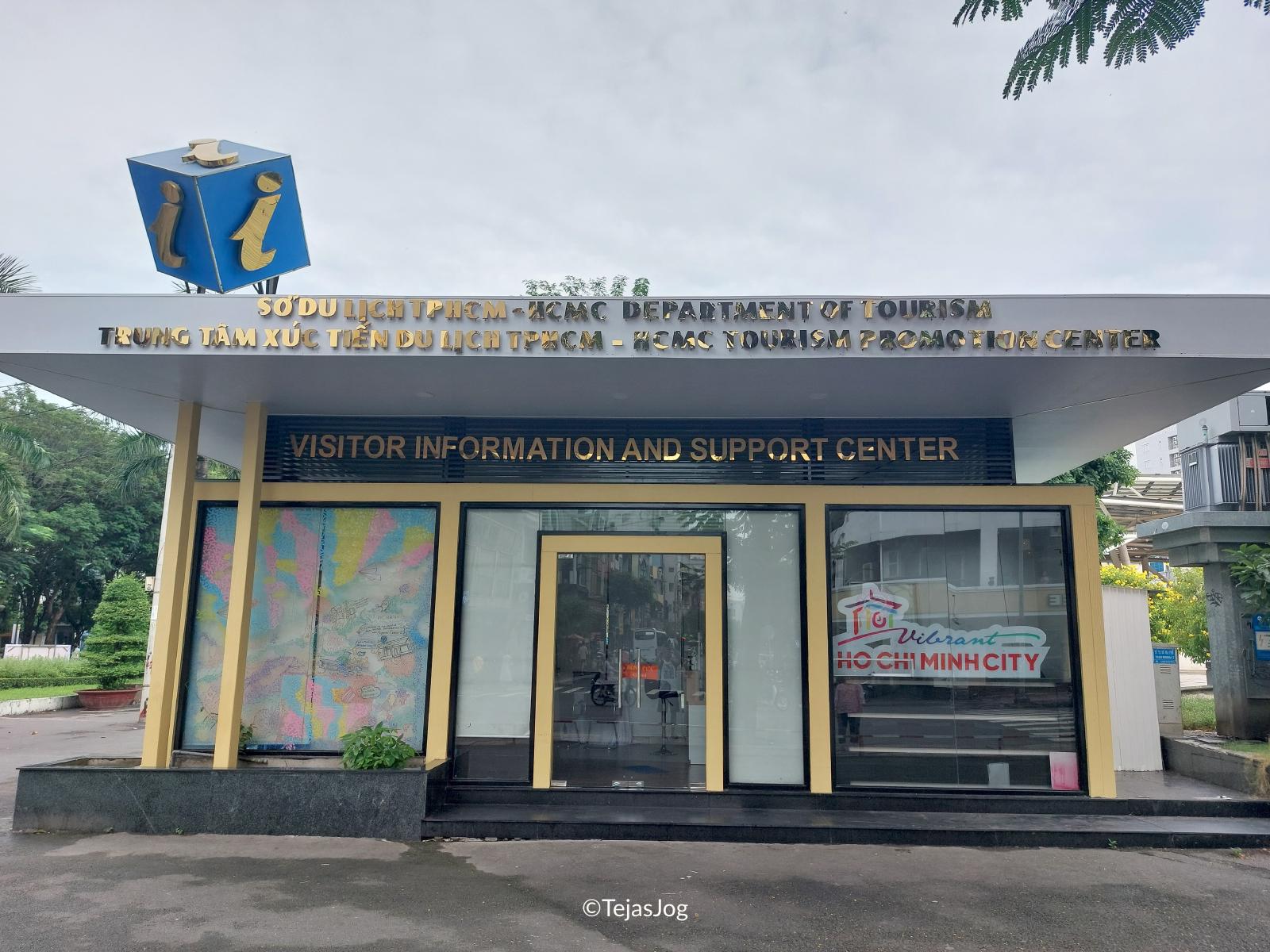
We started the day with breakfast and then a leisurely walk in Saigon Central Park. We also saw the HCMC Visitor Information and Support Center there.
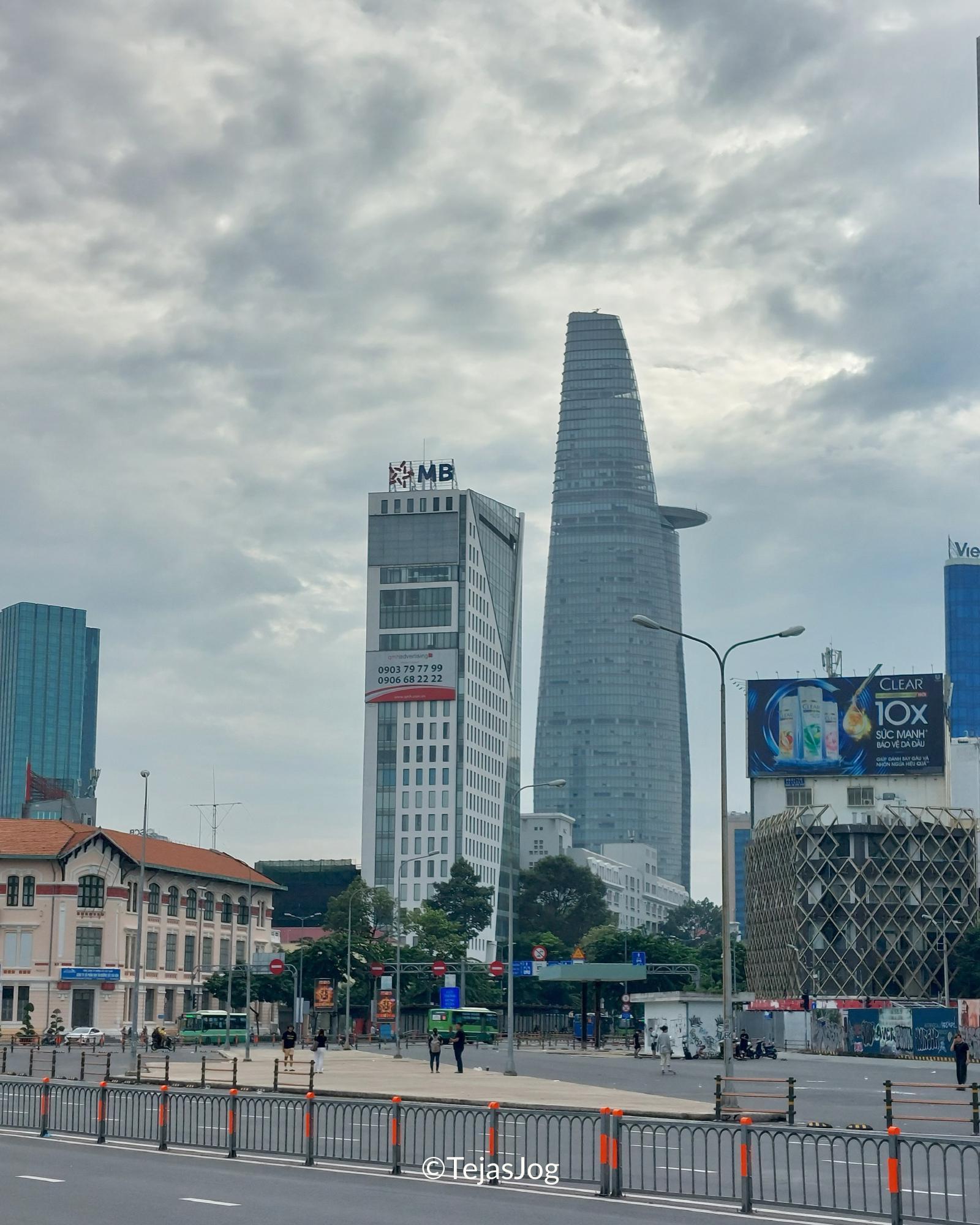
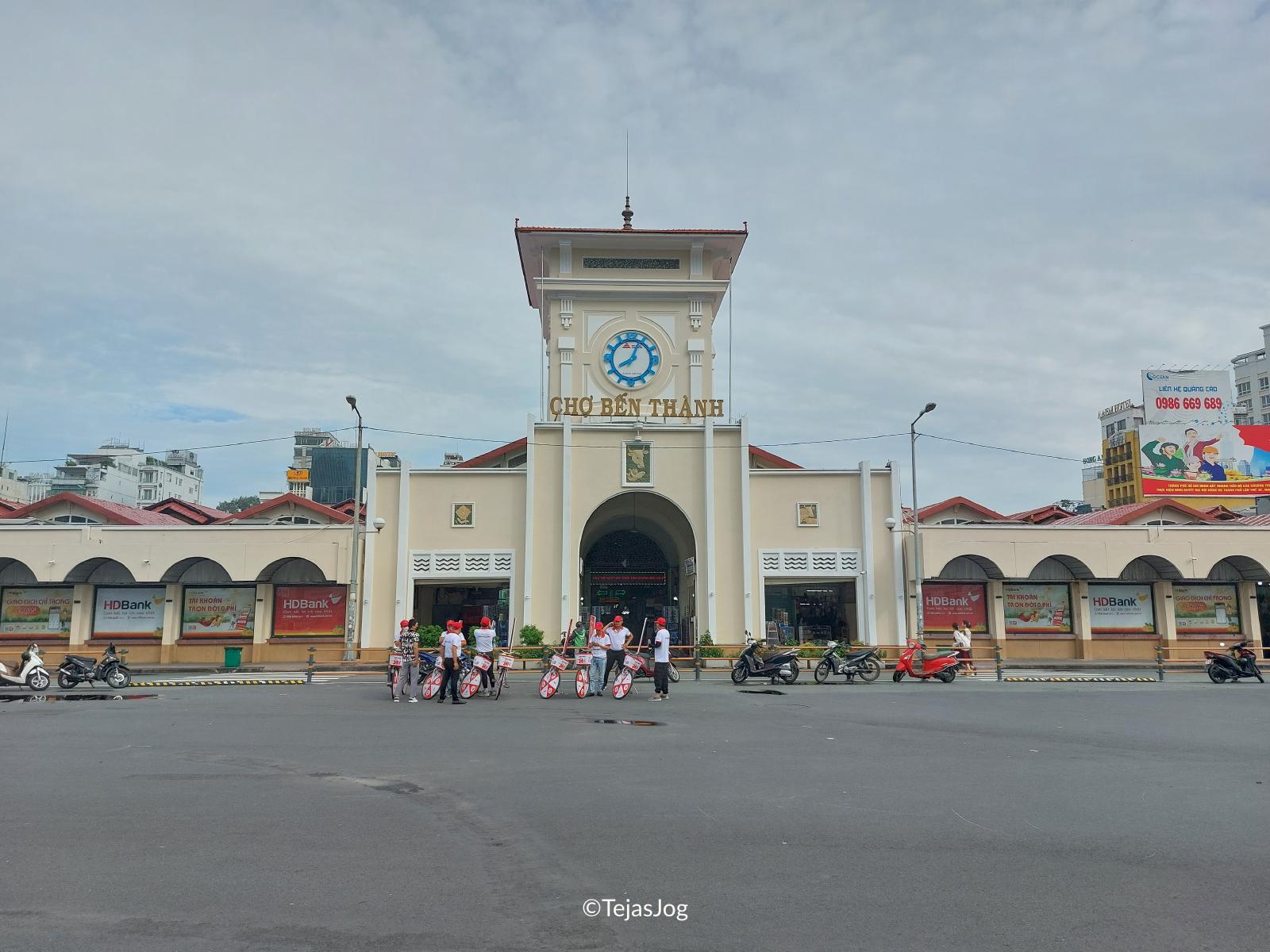
We saw the Military Bank Building with the “MB” logo and red star on top, and the Bitexco Financial Tower, the second-tallest building in the city. We continued to walk past the Ben Thanh Market, a historic landmark and one of the most famous traditional markets in Ho Chi Minh City.
We spent some time at the Statue of Ho Chi Minh. Designed by Vietnamese painter and sculptor Lam Quang Noi, the monument is meant to reflect the leader’s humble and approachable image.
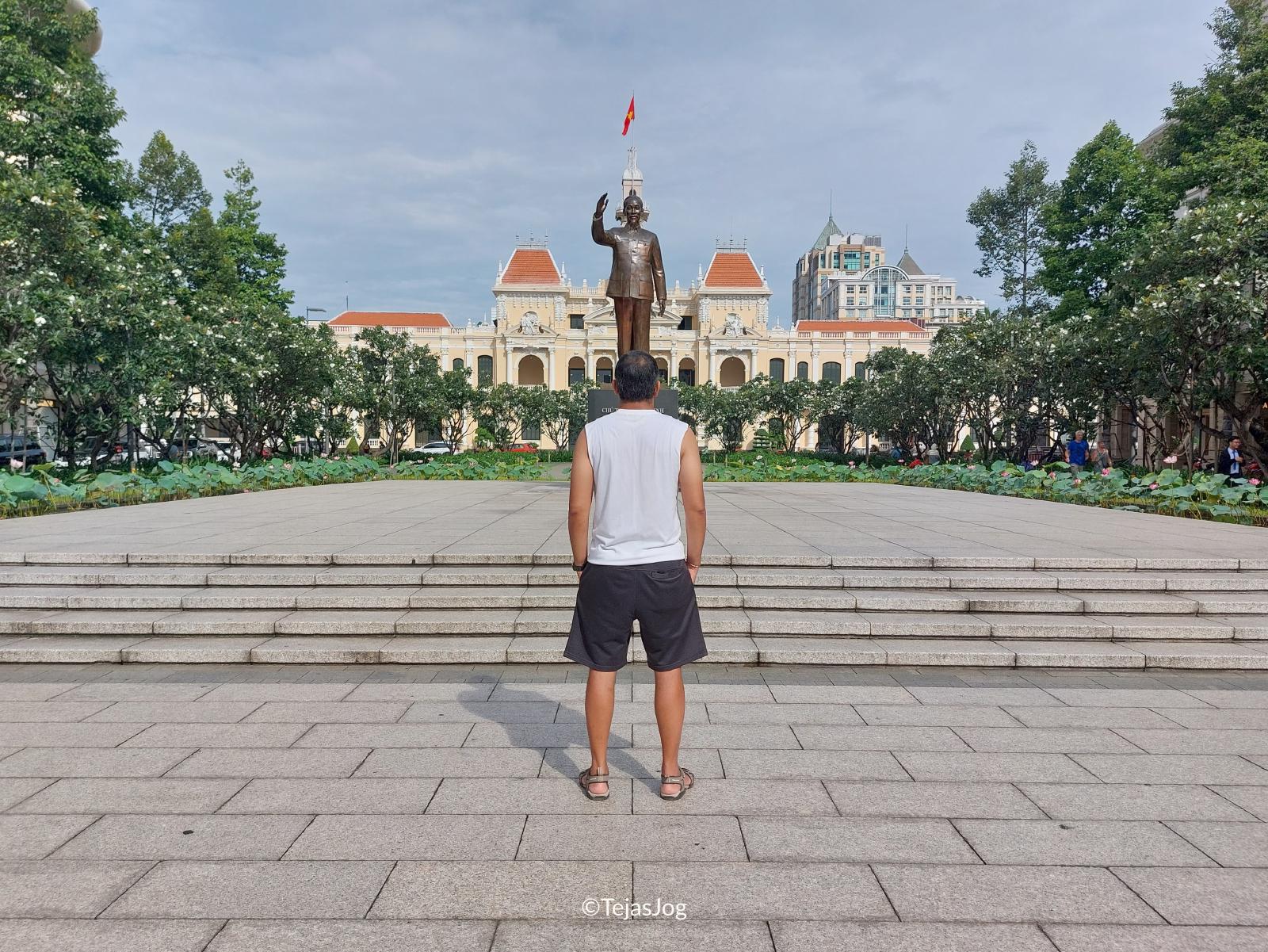
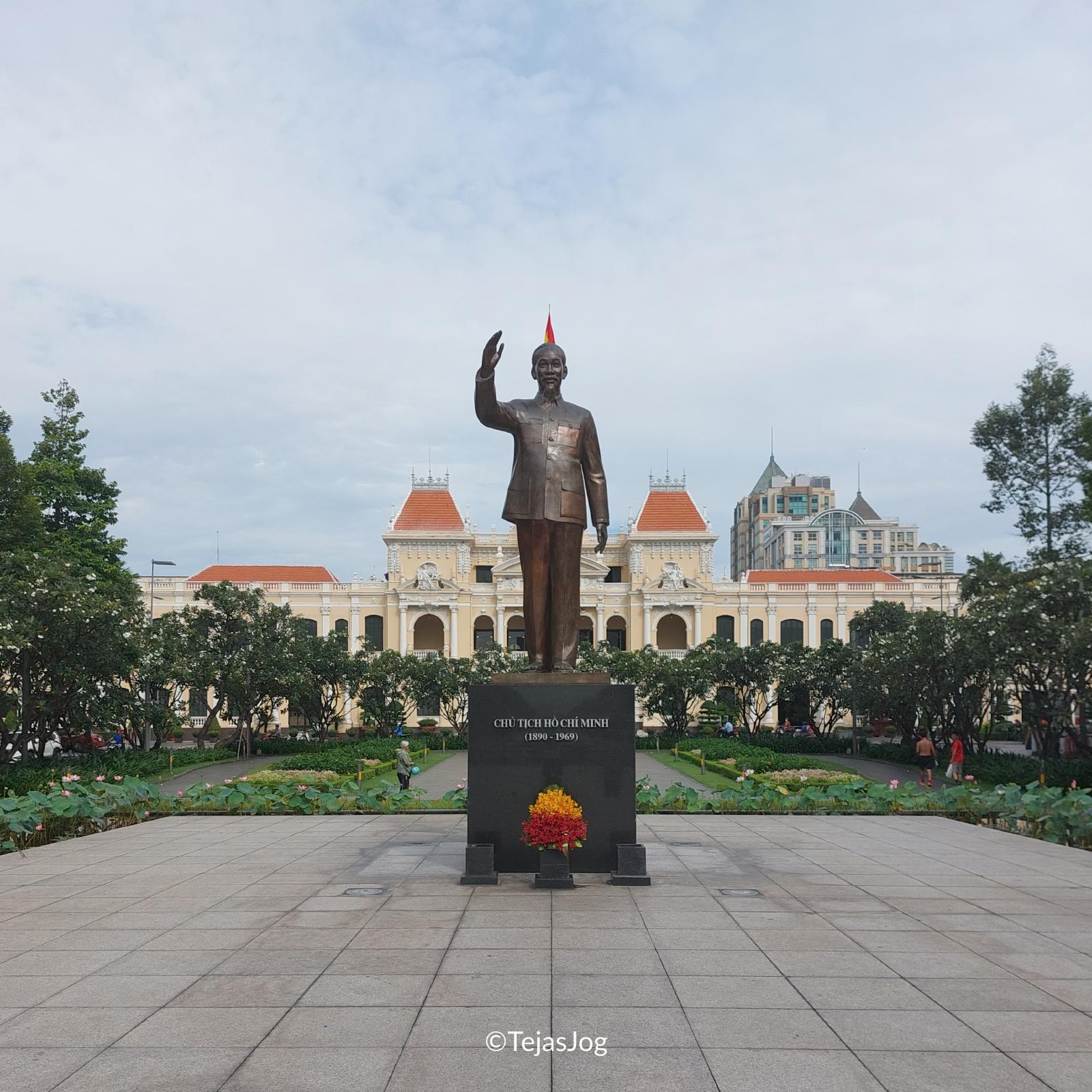
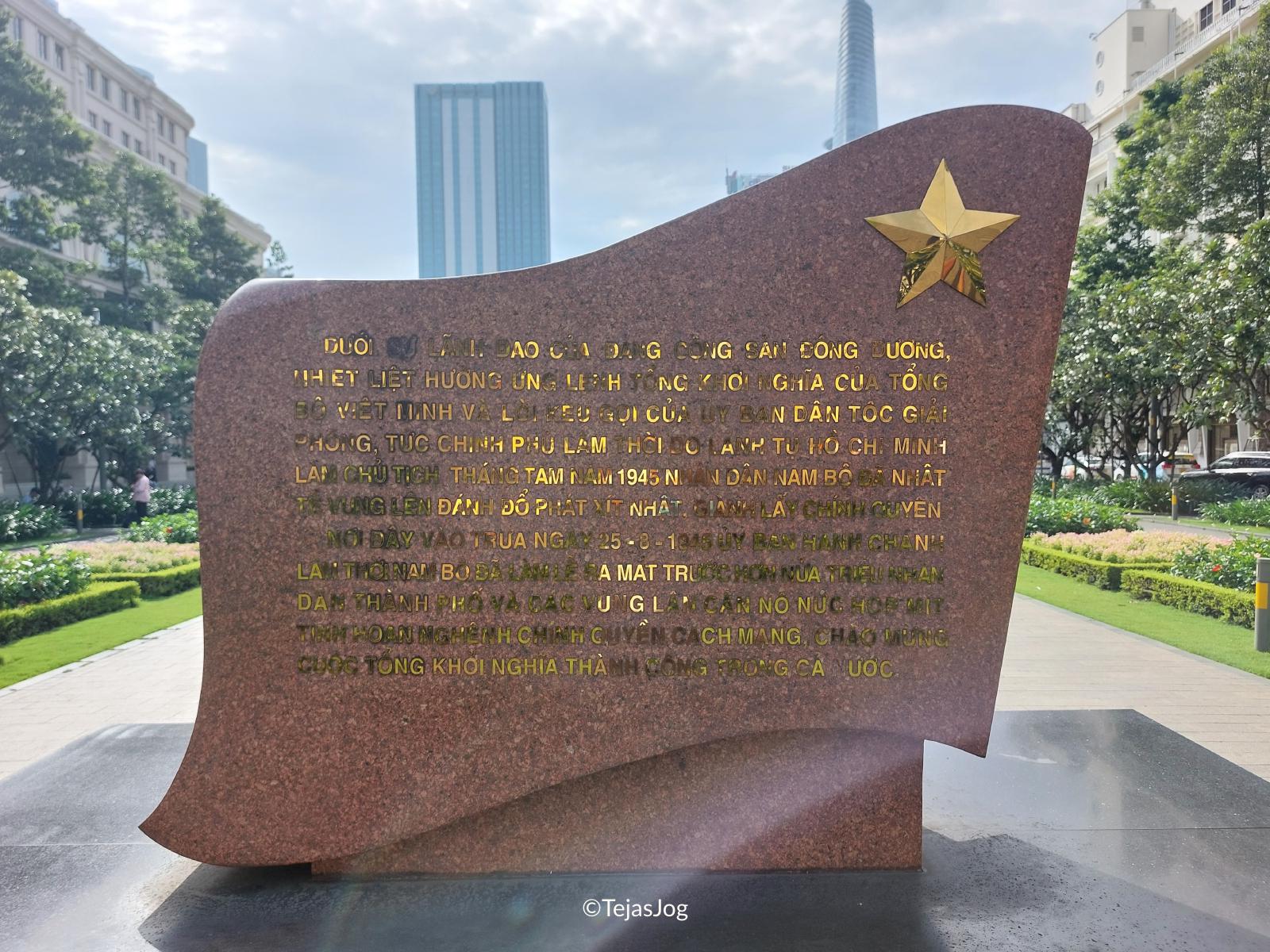
A historical plaque located here marks the spot where revolutionary forces declared they had seized control of Saigon from Japanese occupation, following the collapse of the French colonial administration earlier in 1945. The People’s Committee of Hồ Chí Minh City building was right behind this.
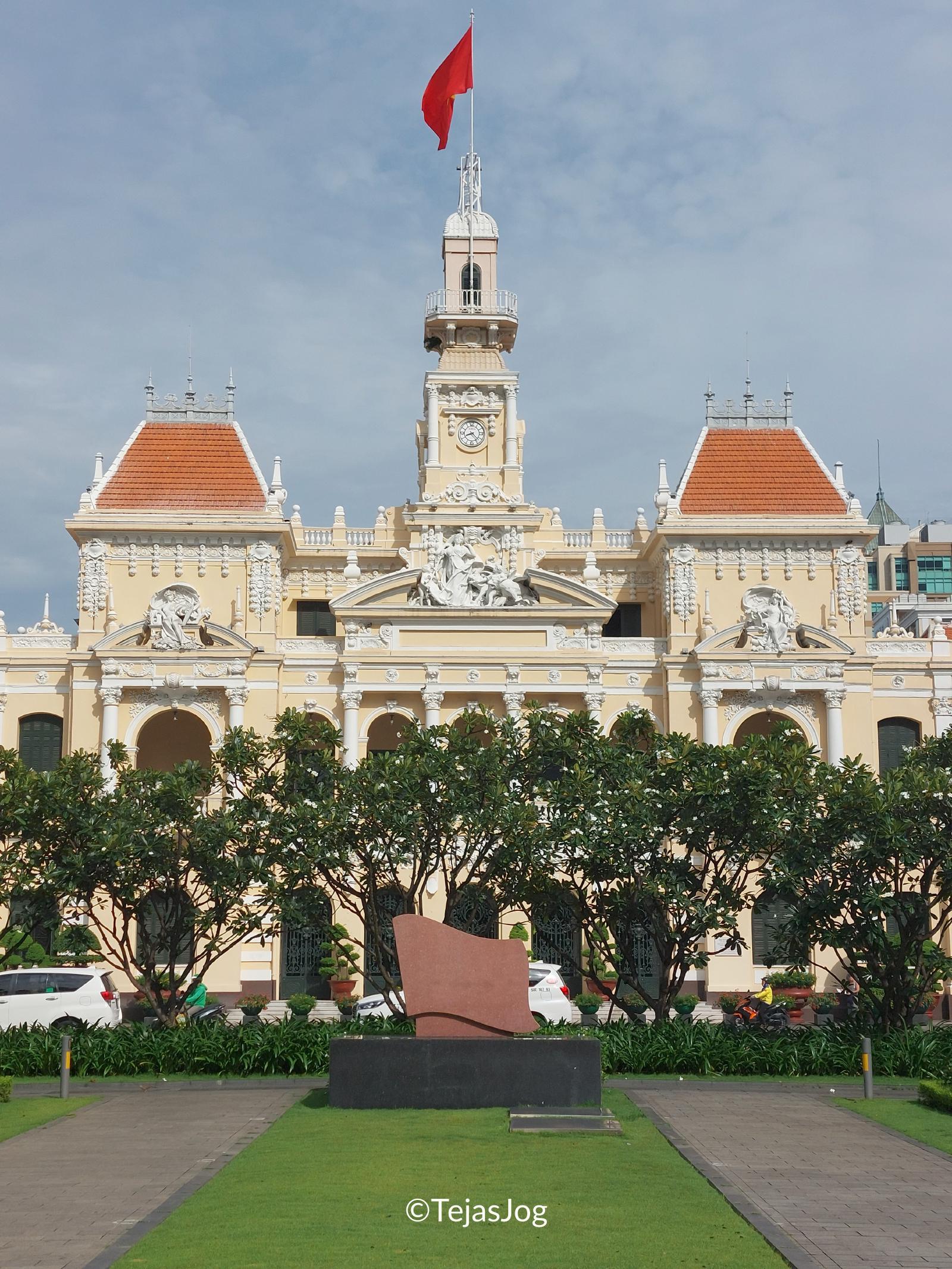
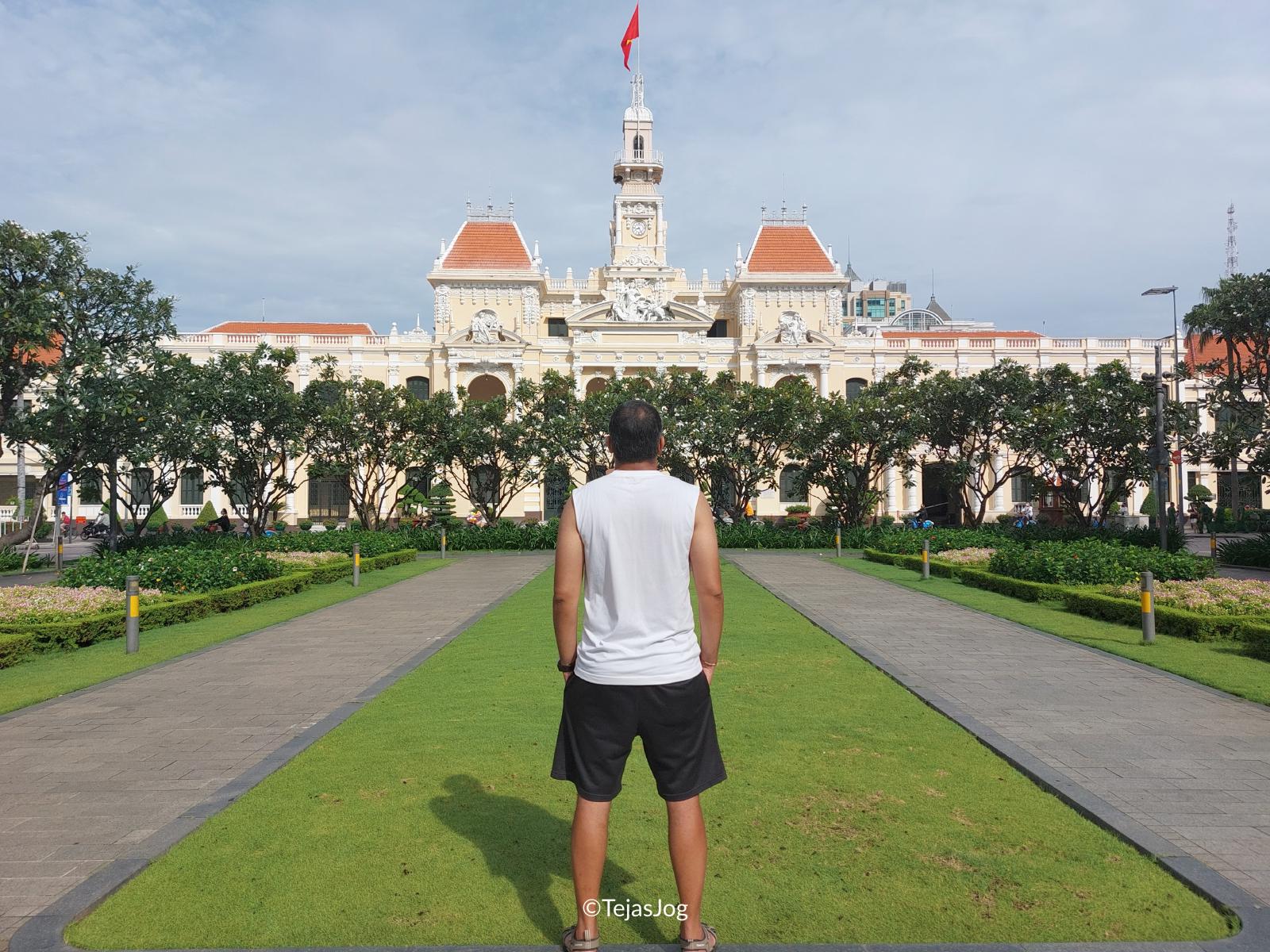
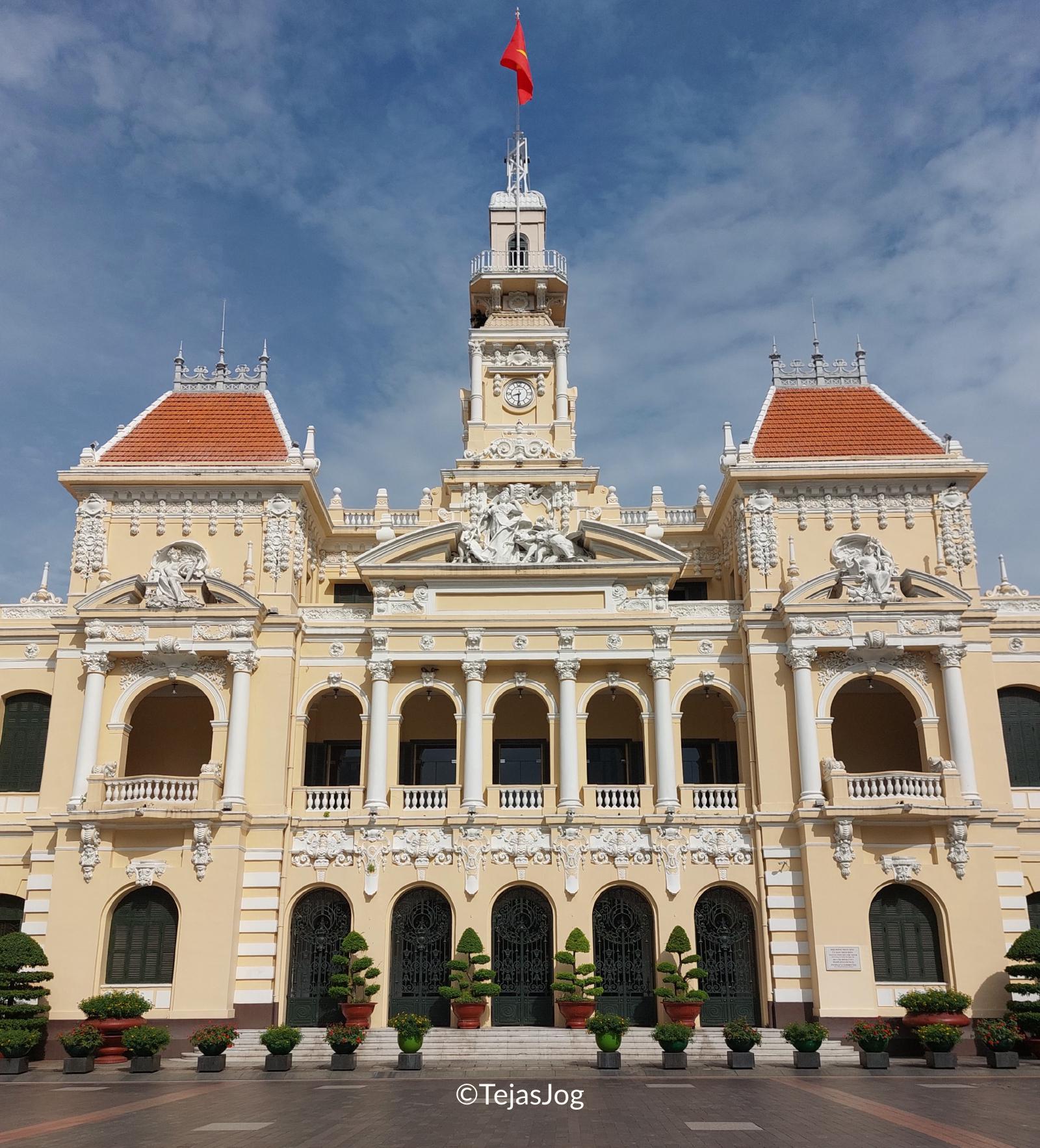
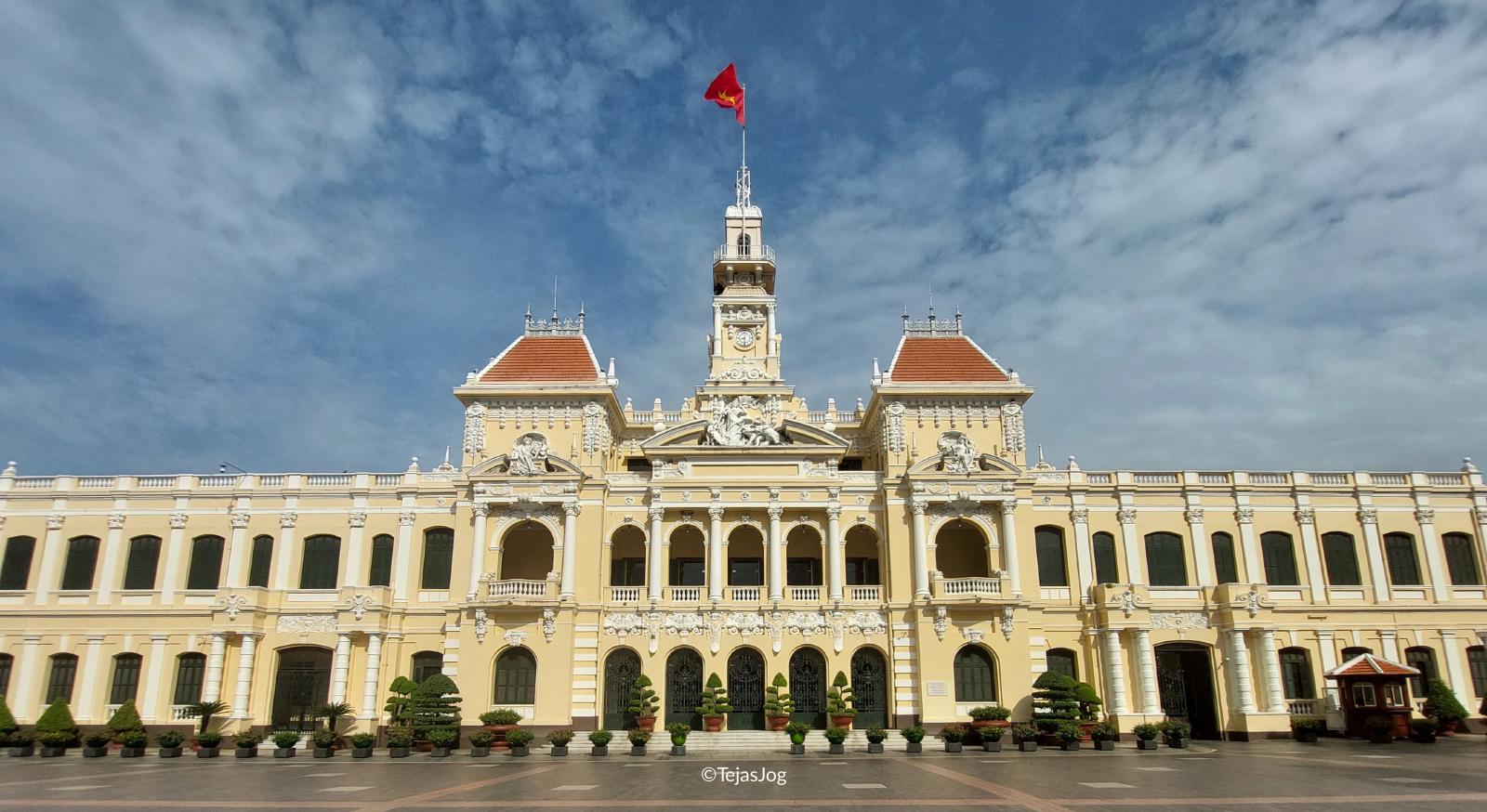
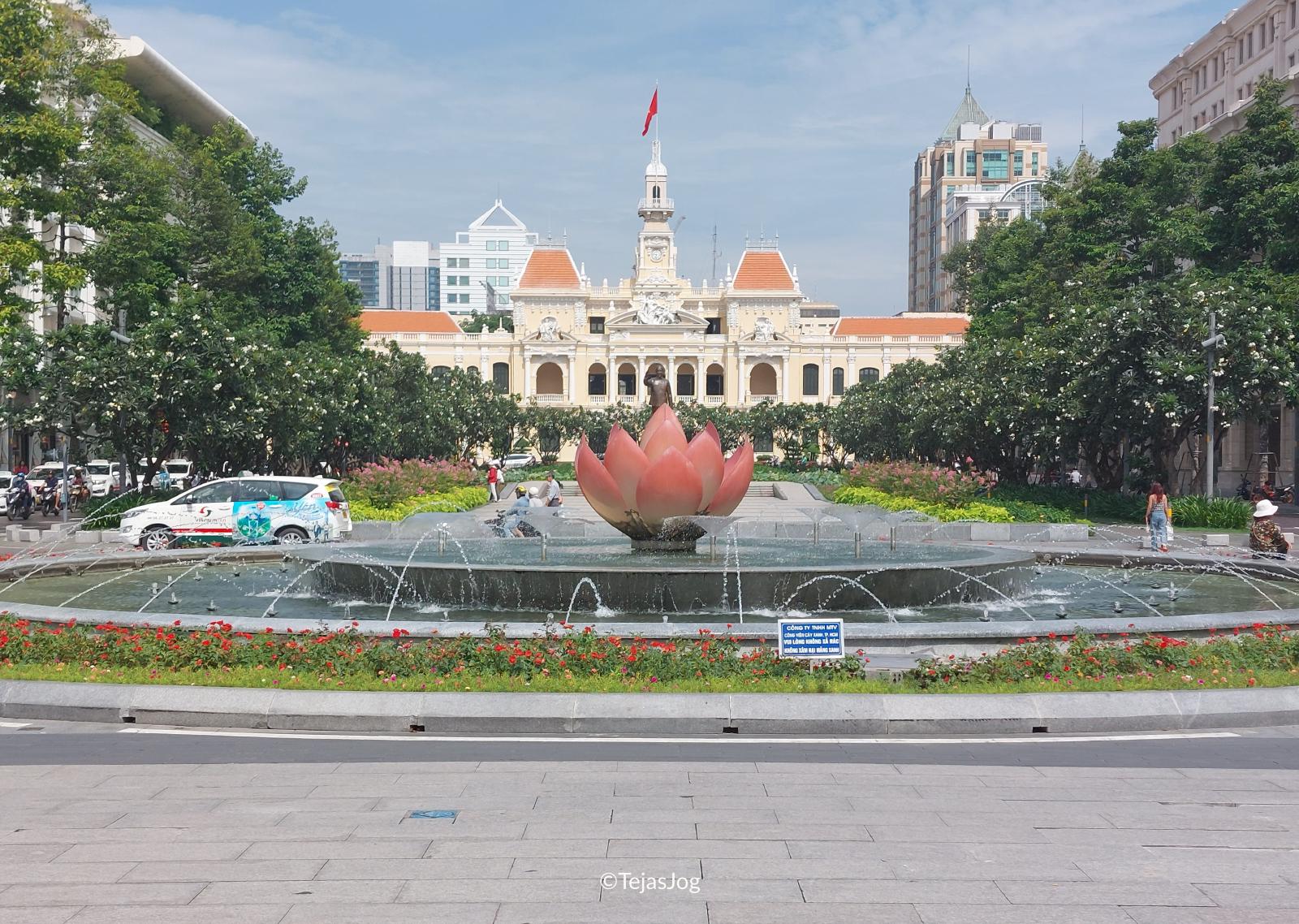
The Ho Chi Minh City People’s Committee Building, one of the most iconic and photographed landmarks in the city, was a premier example of French colonial architecture, specifically designed in the Renaissance revival style. It now serves as the administrative headquarters for the People’s Committee of Ho Chi Minh City.
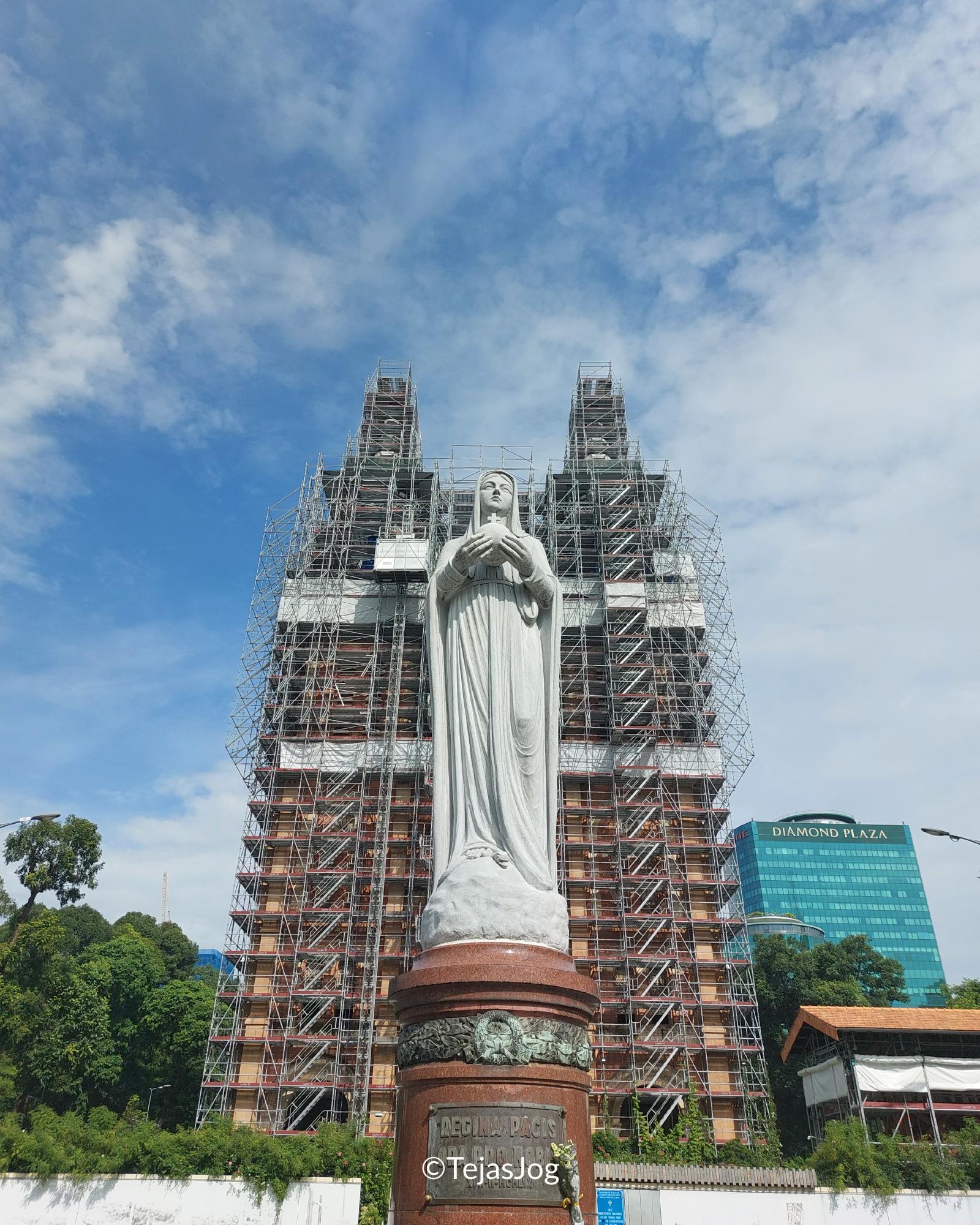
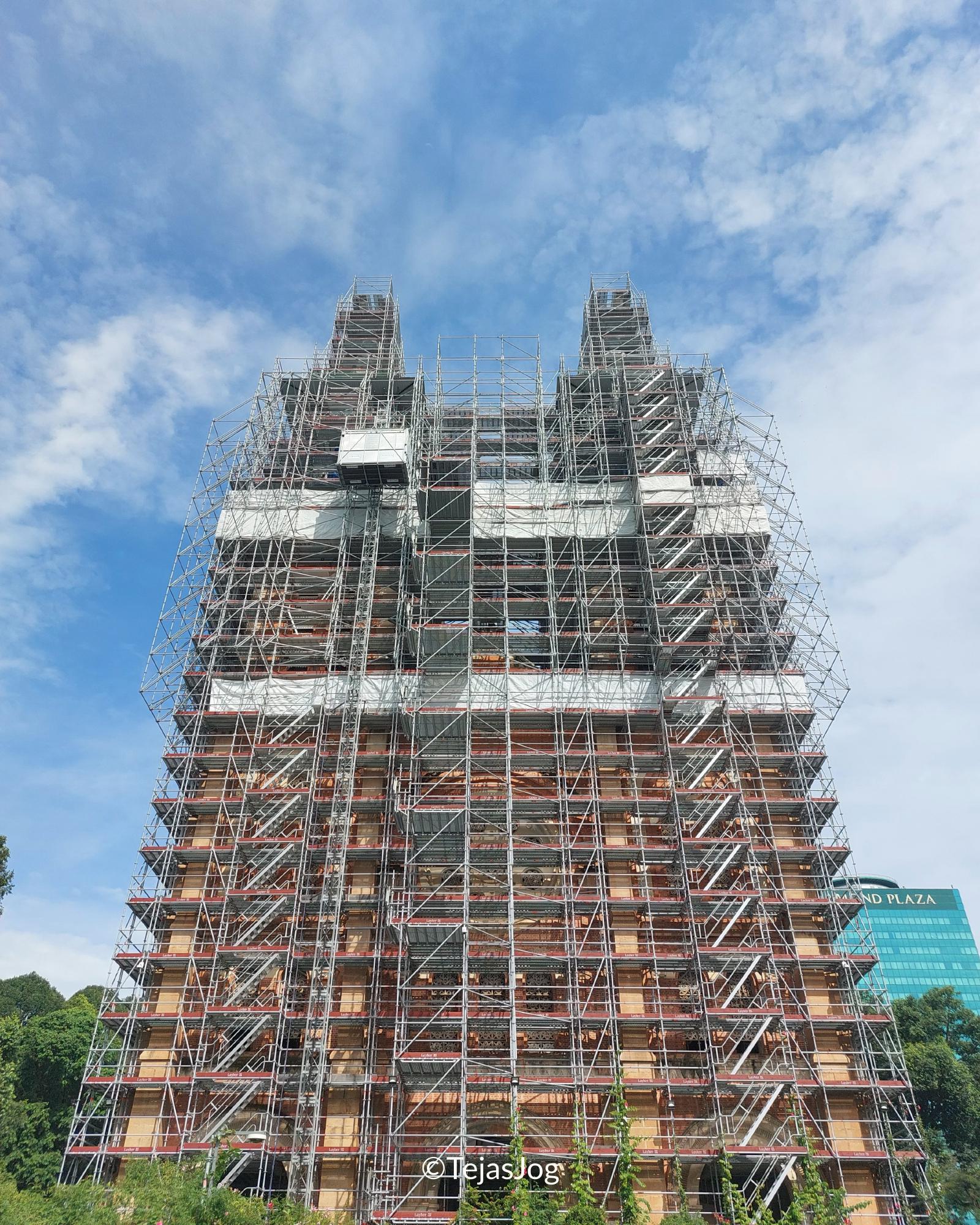
We walked to see the Notre Dame Cathedral of Saigon, one of the most significant religious and historical landmarks in Ho Chi Minh City. Unfortunately, it was being restored and was covered in scaffolding from top to bottom. The Our Lady of Peace Statue stood in the center of the small park in front of the cathedral.
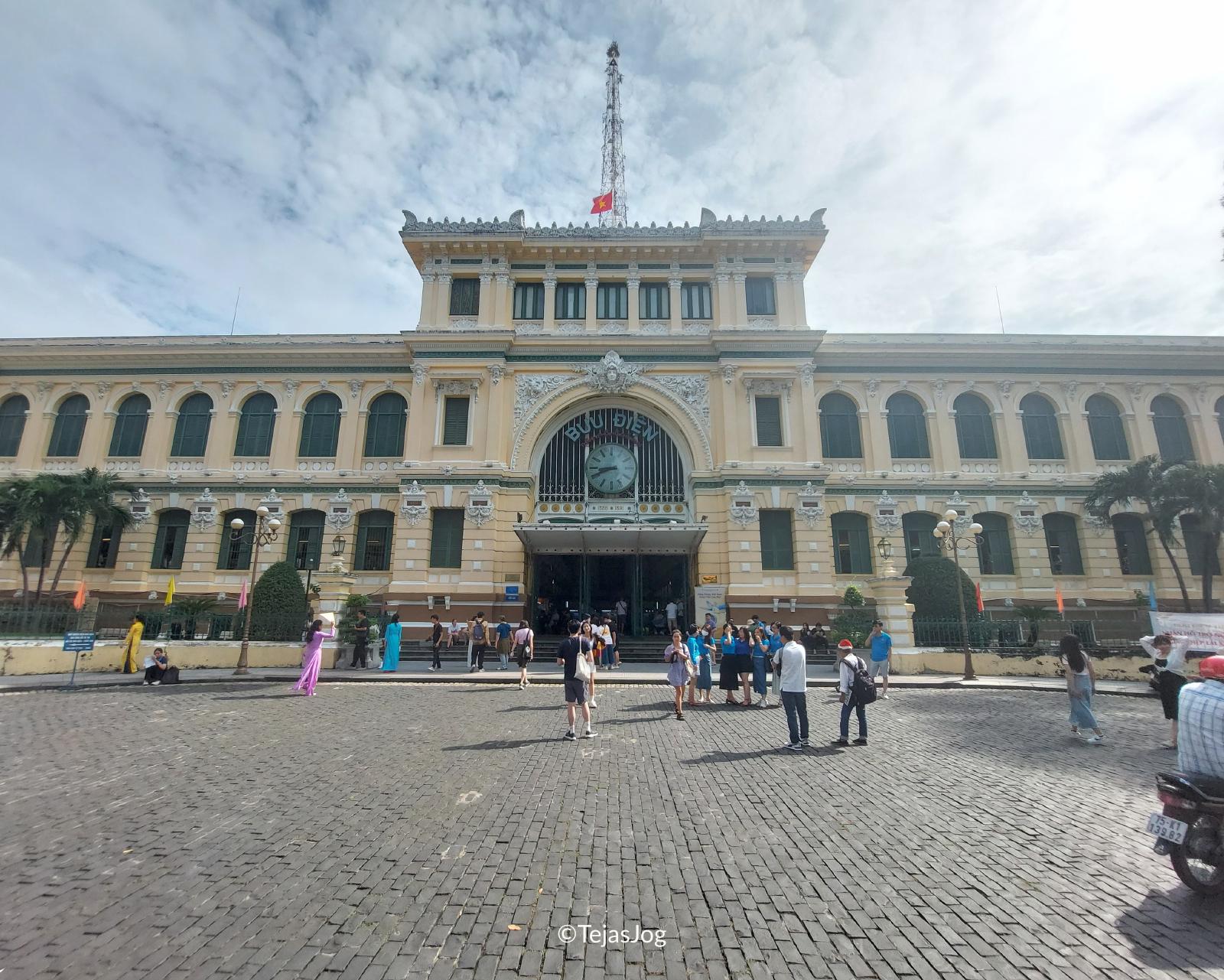
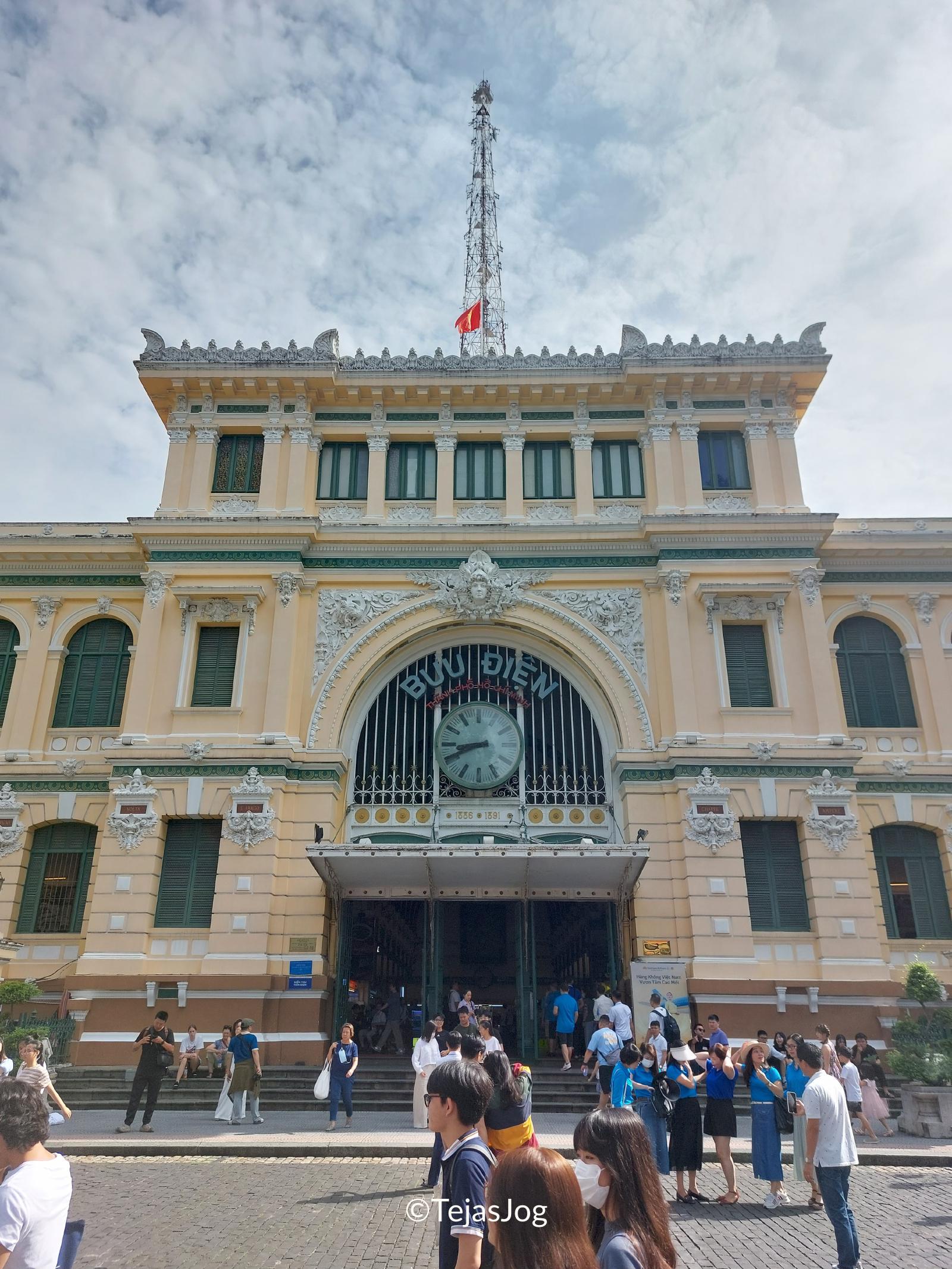
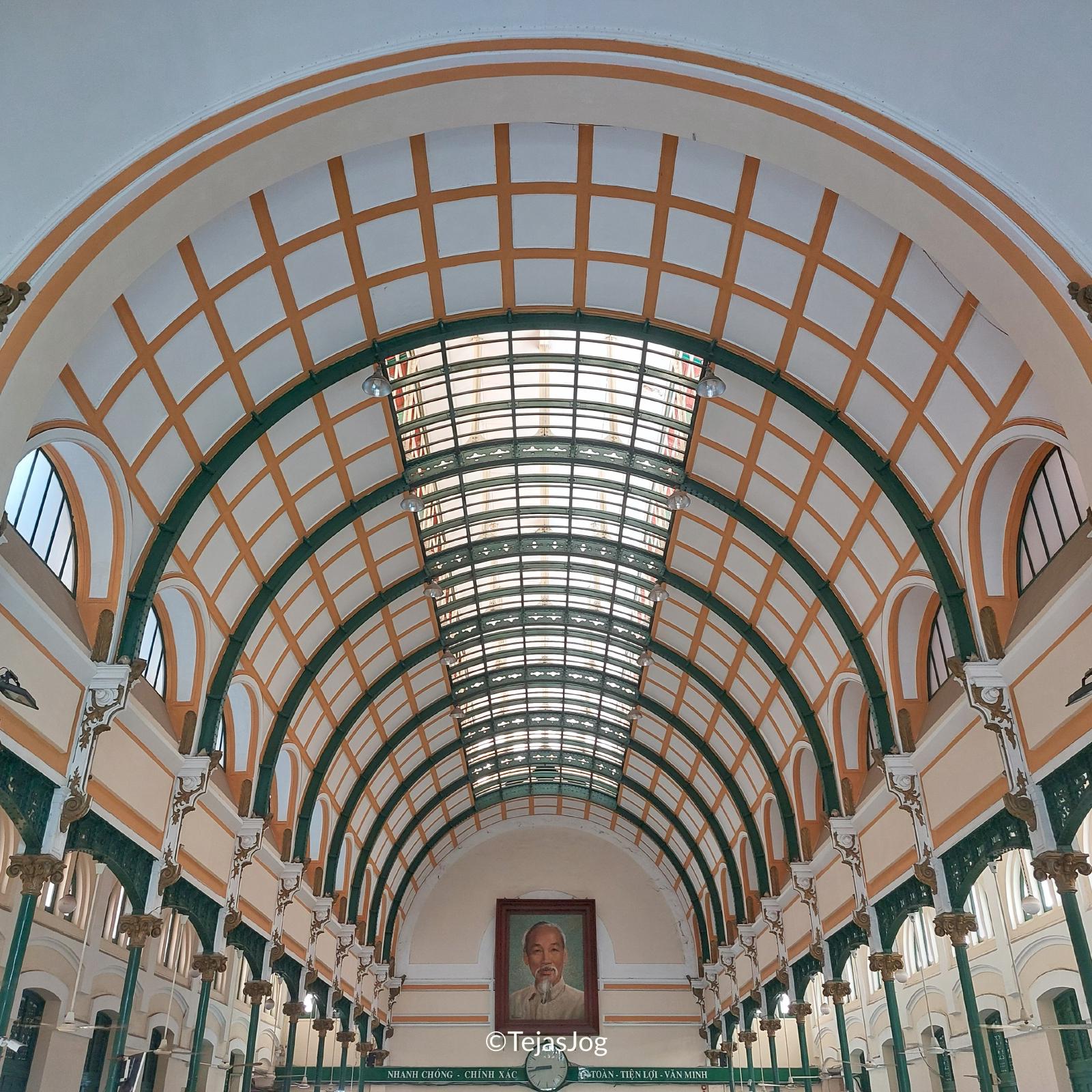
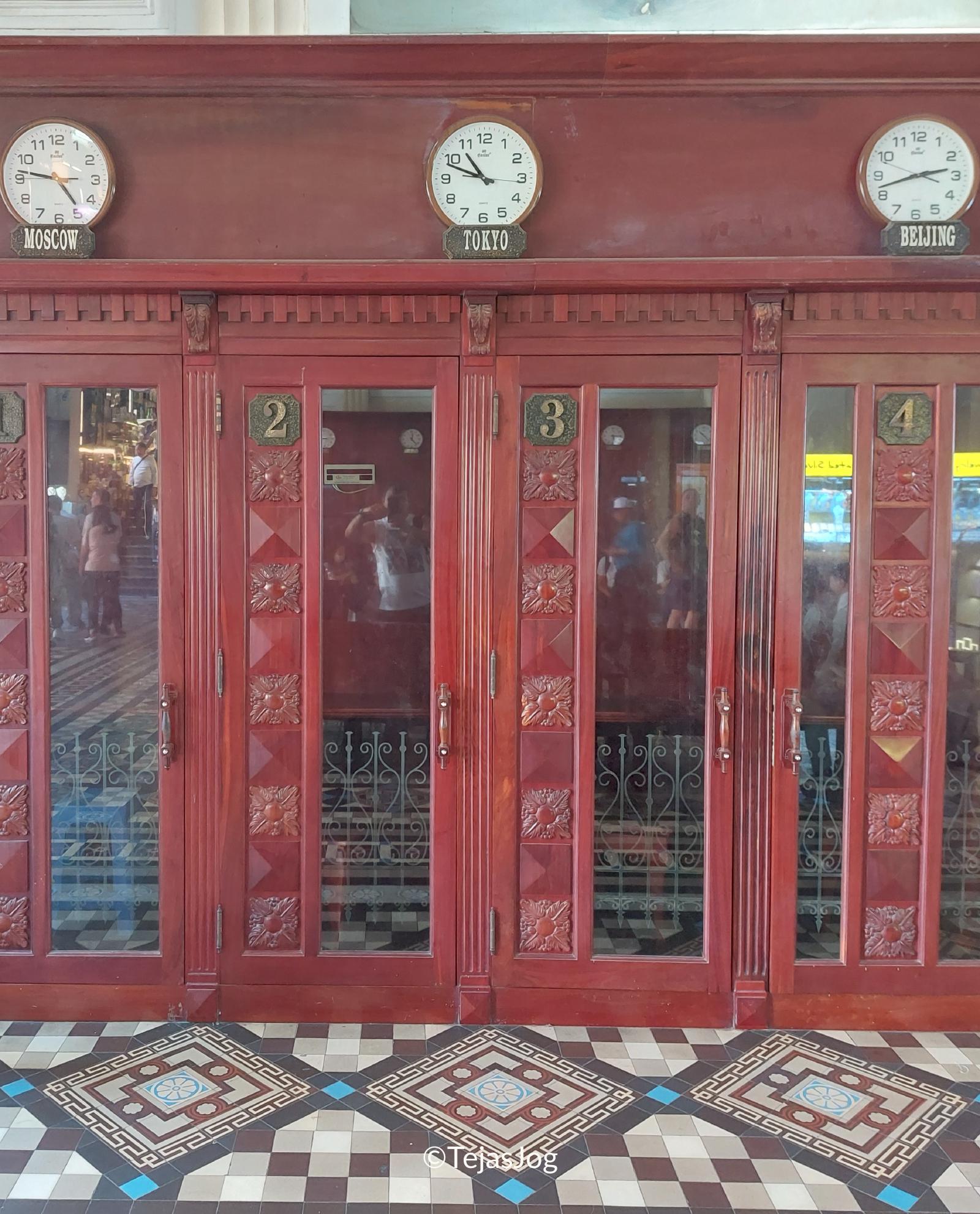
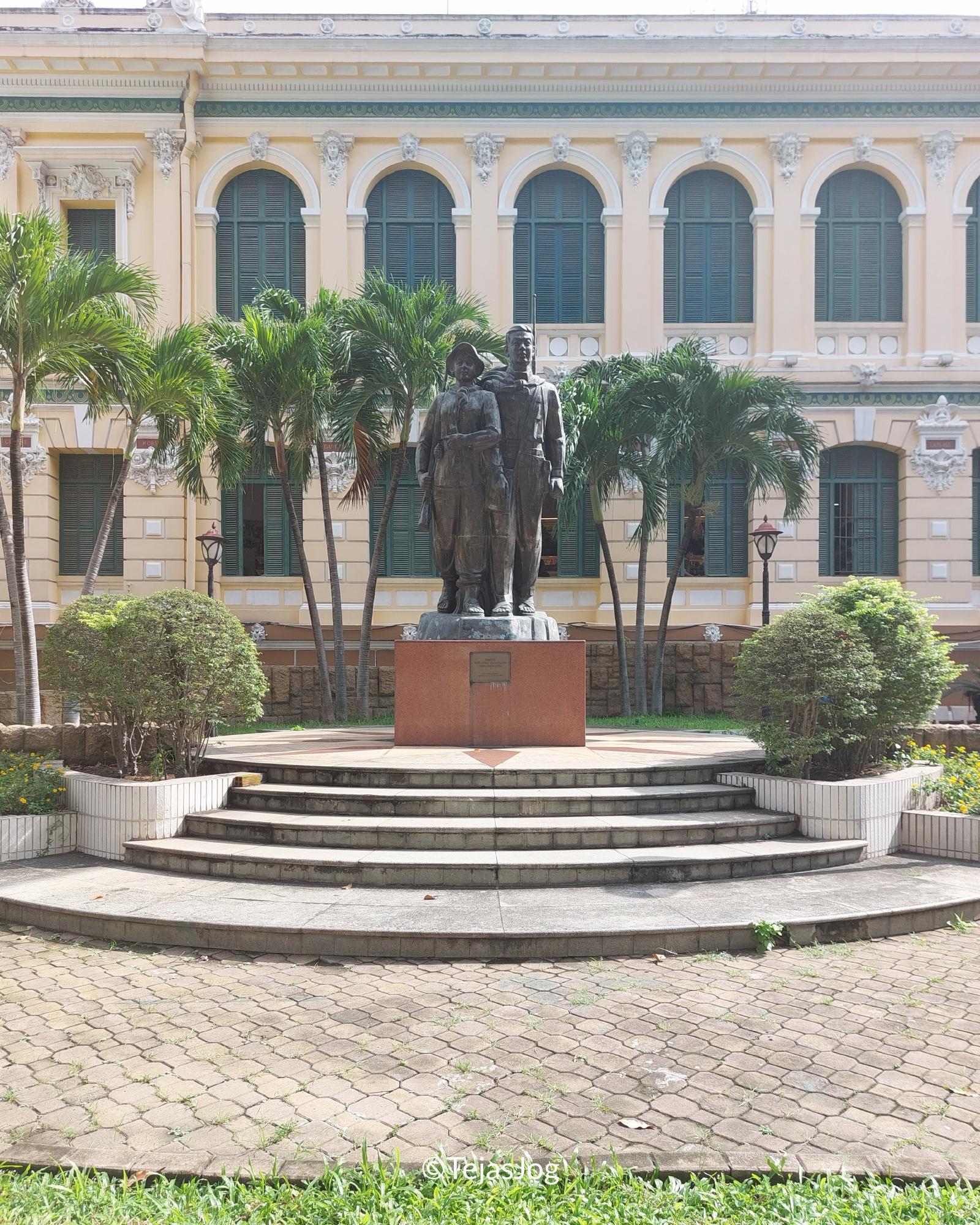
The Saigon Central Post Office, the largest post office in Vietnam, was a fully operational postal hub while serving as a major tourist attraction. It had retained some vintage Features like the antique wooden telephone booths. A bronze statue titled “Giao Bưu”, commemorates the postal and telecommunications workers of the South who served during the resistance wars.
We then walked over to see the Saigon Opera House. It was inspired by the Petit Palais in Paris, with a facade featuring ornate statues, reliefs, and a grand central clock.
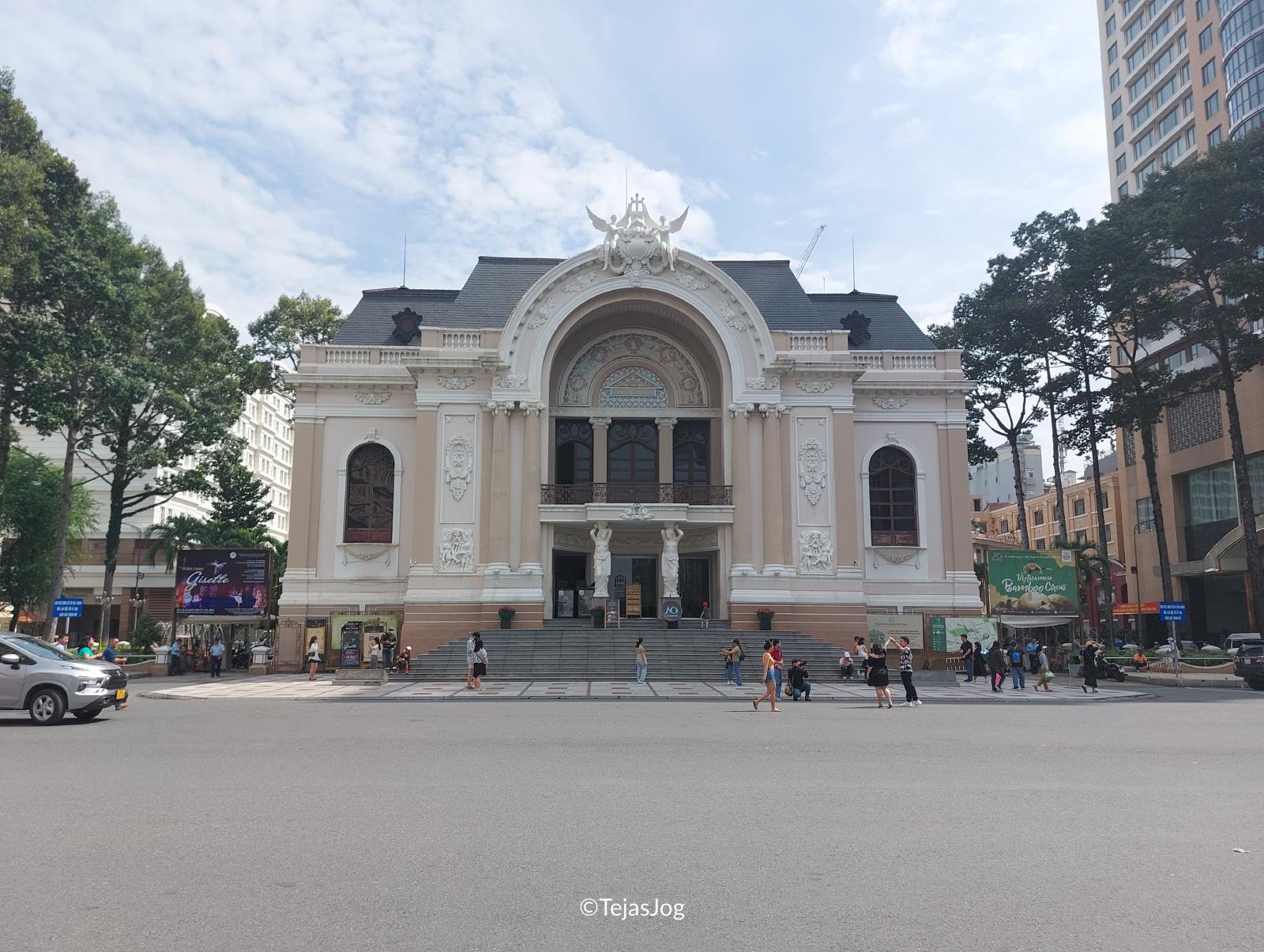
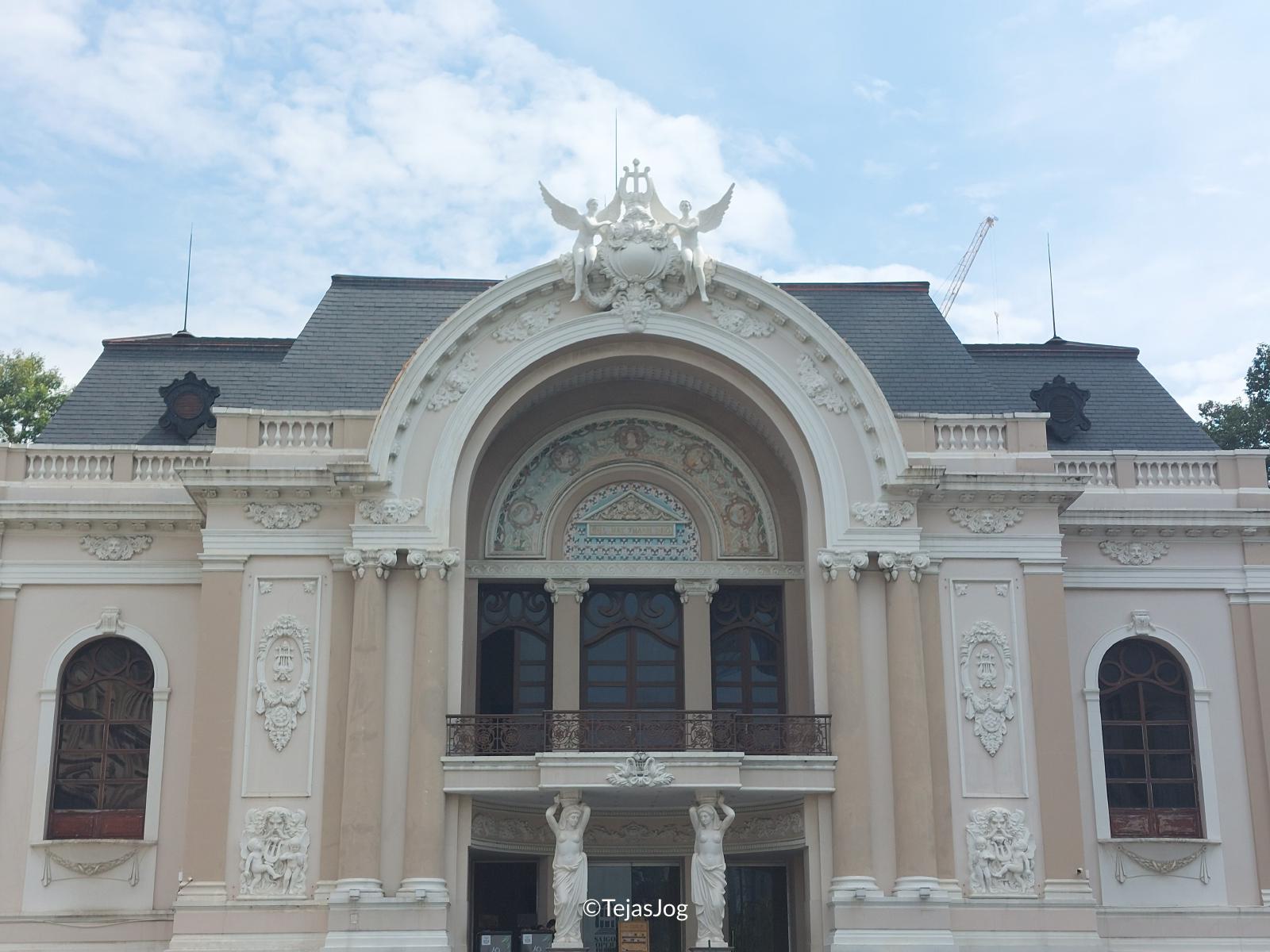
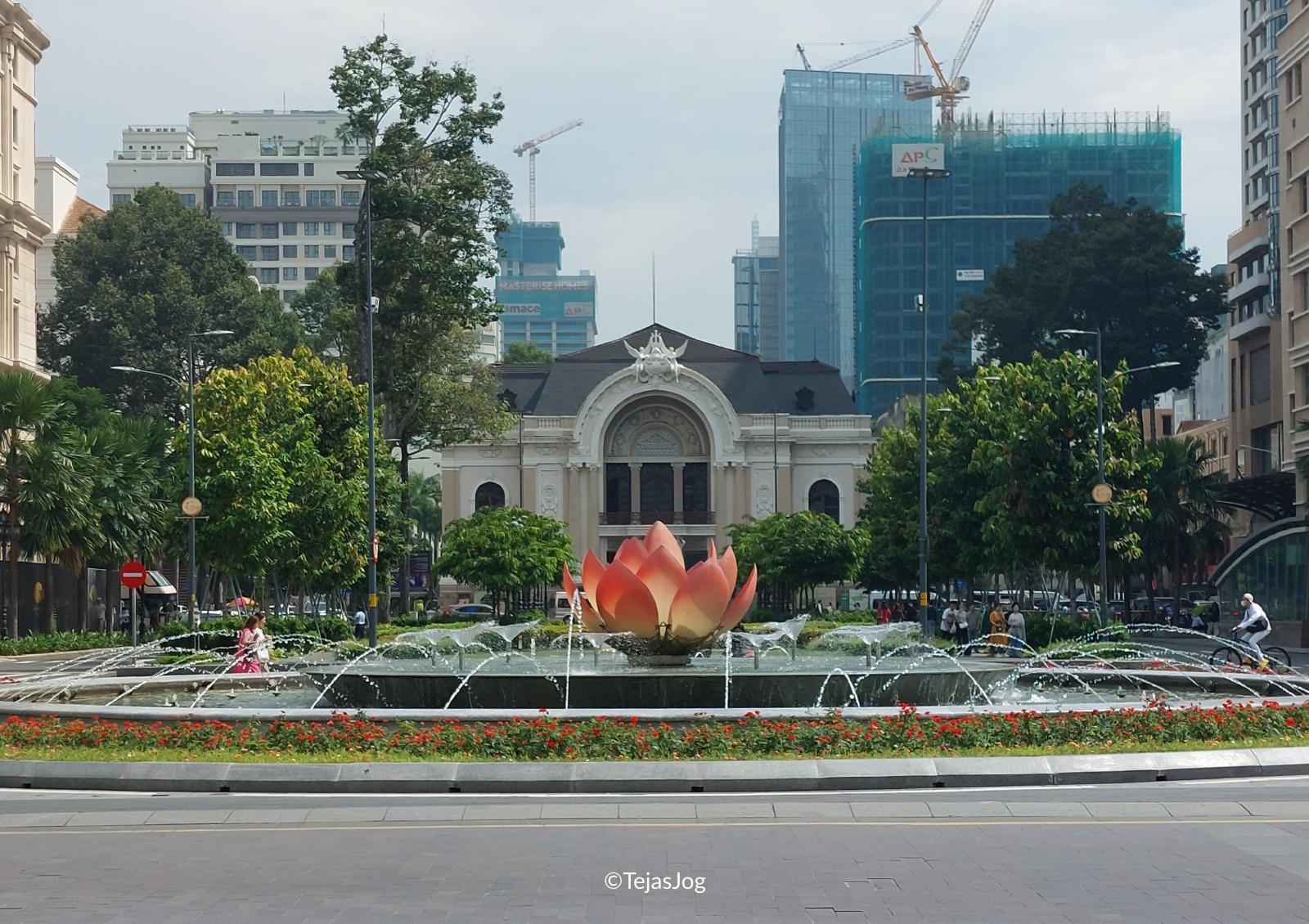
The Willow Tree Roundabout, Bùng Binh Cây Liễu, had a nice fountain in the middle and you could see the Saigon Opera House and Ho Chi Minh City People’s Committee Building around.
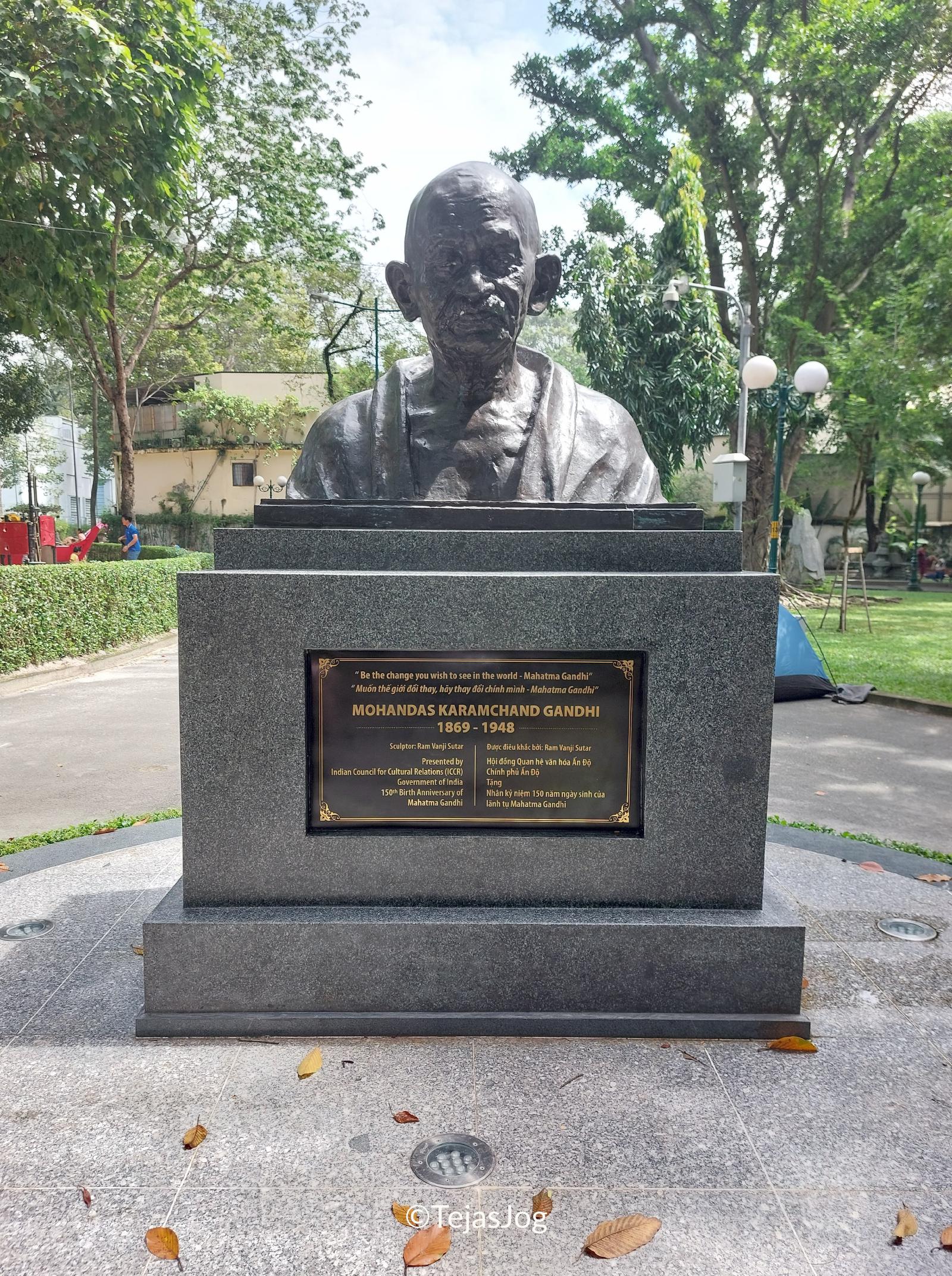
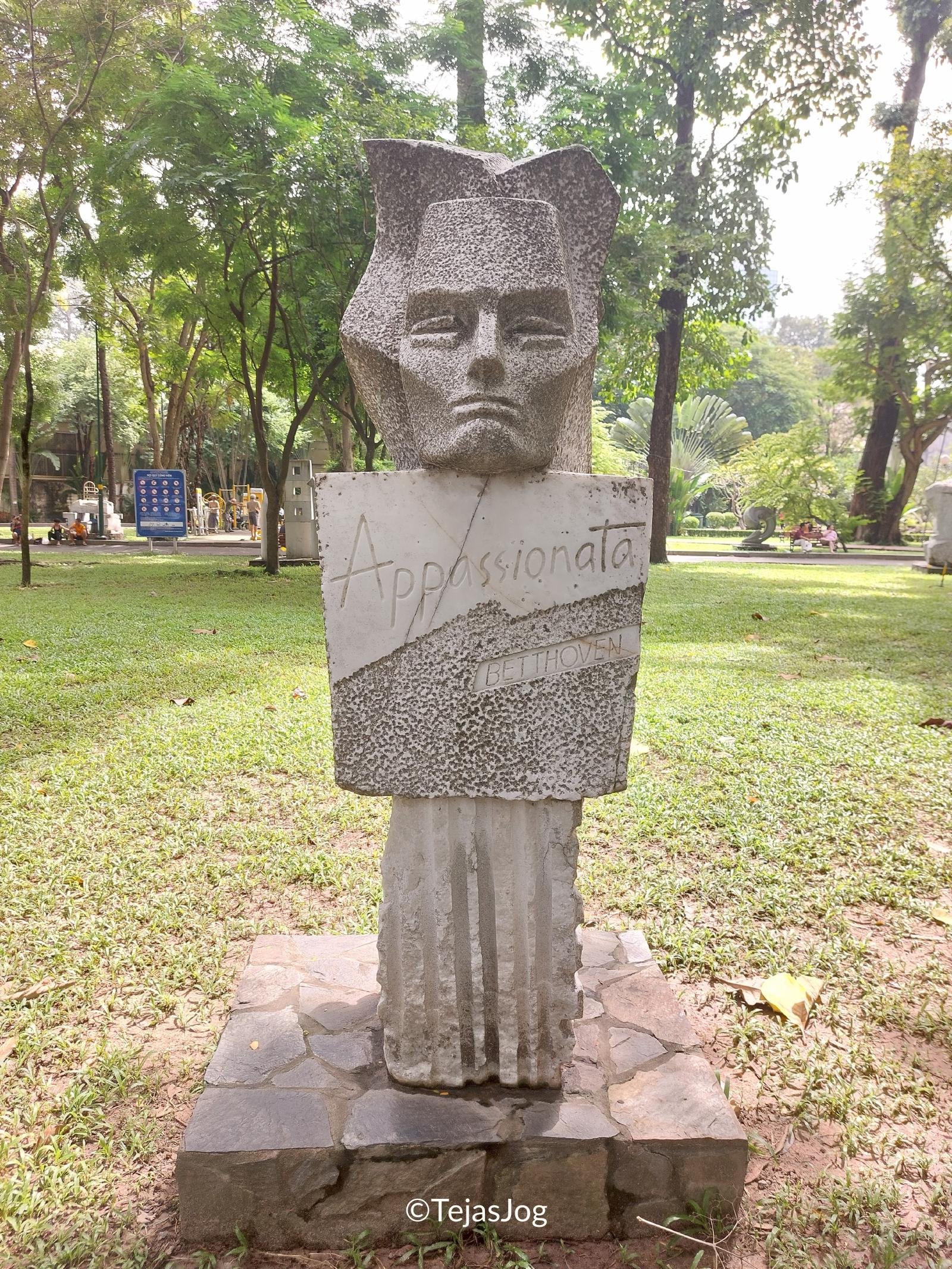
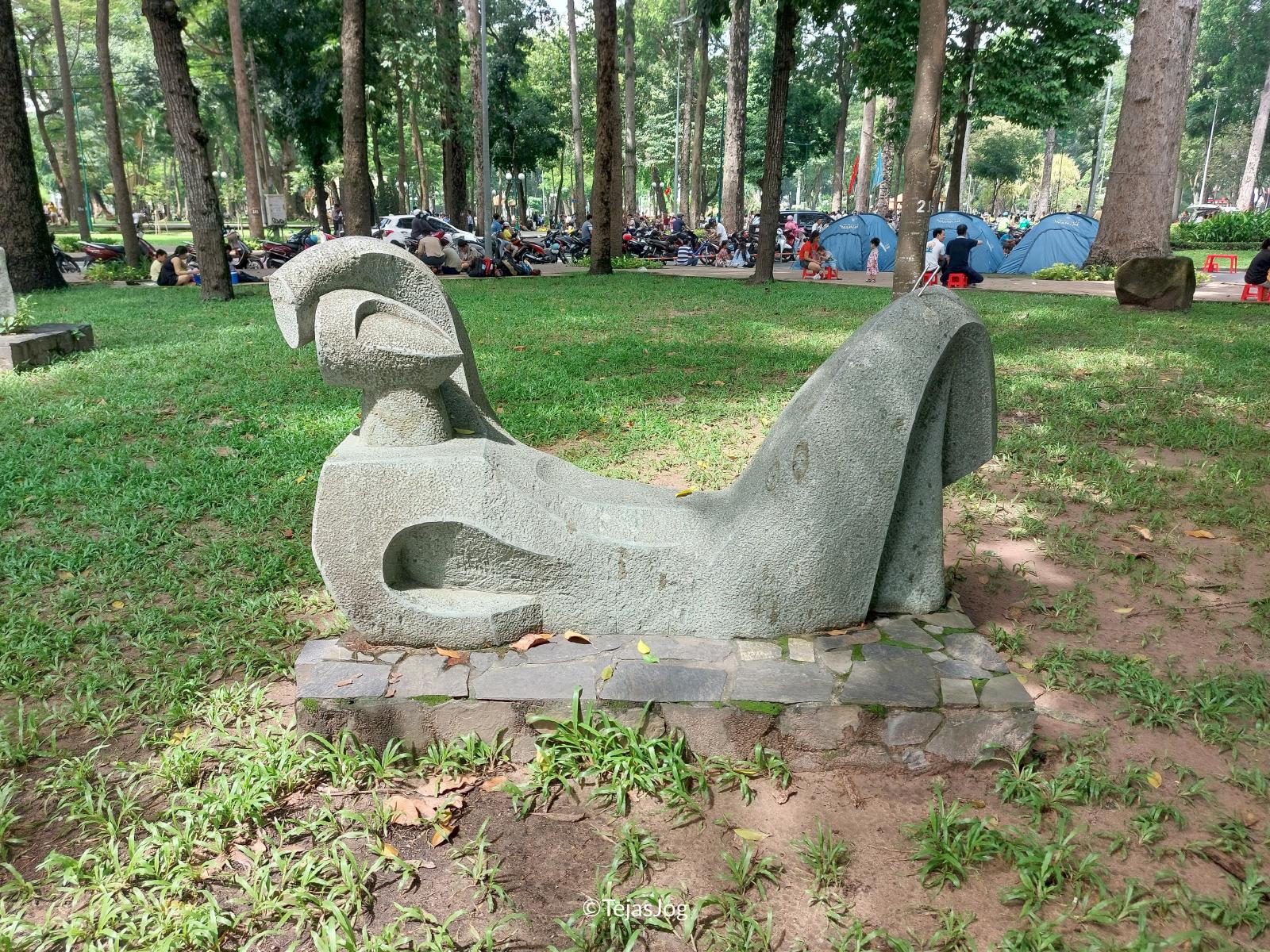
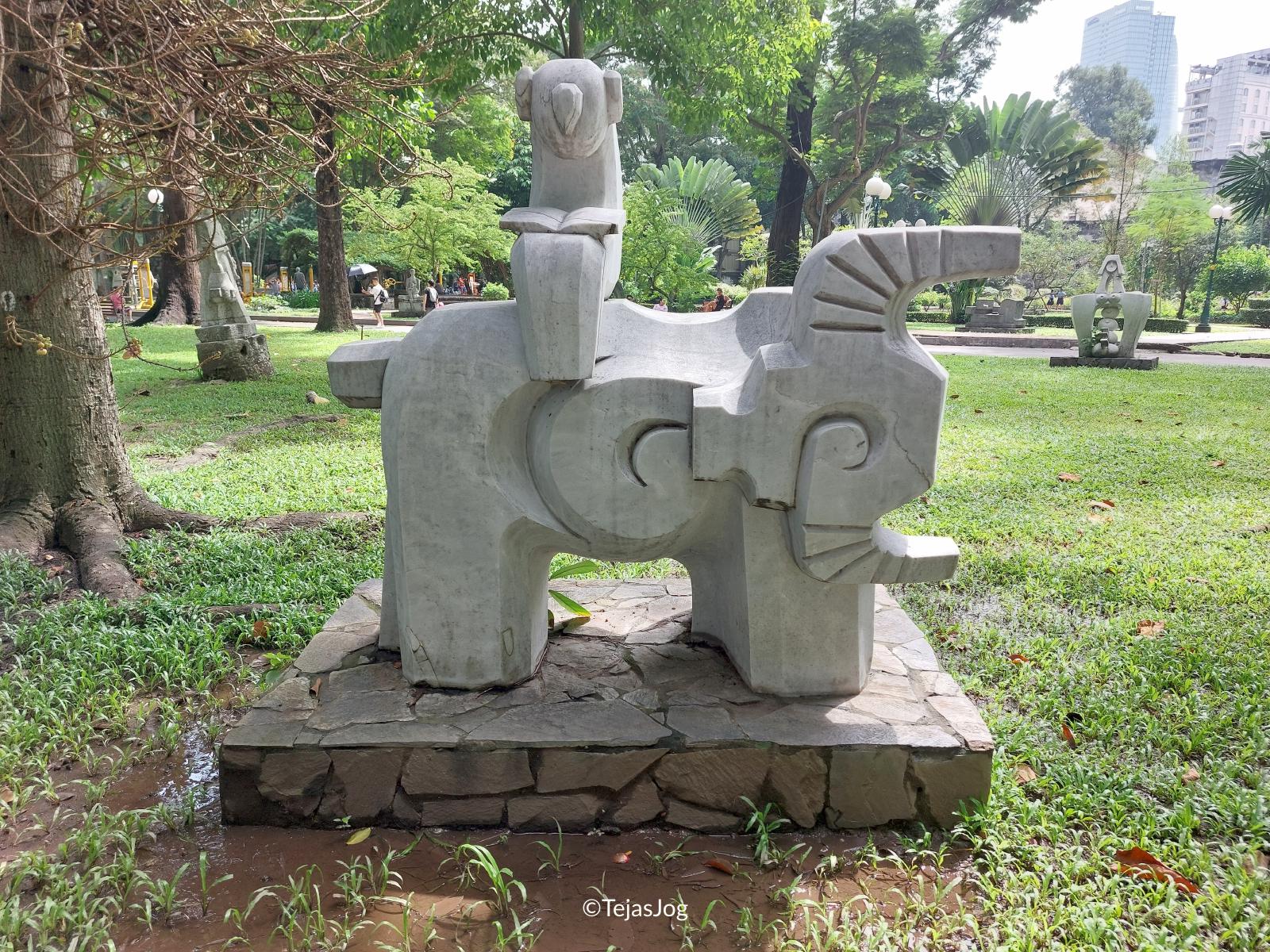
We walked through Tao Dan Park and saw the Mahatma Gandhi Bust symbolizing India-Vietnam friendship. The park also had dedicated Sculpture Garden with many other abstract and interesting pieces.
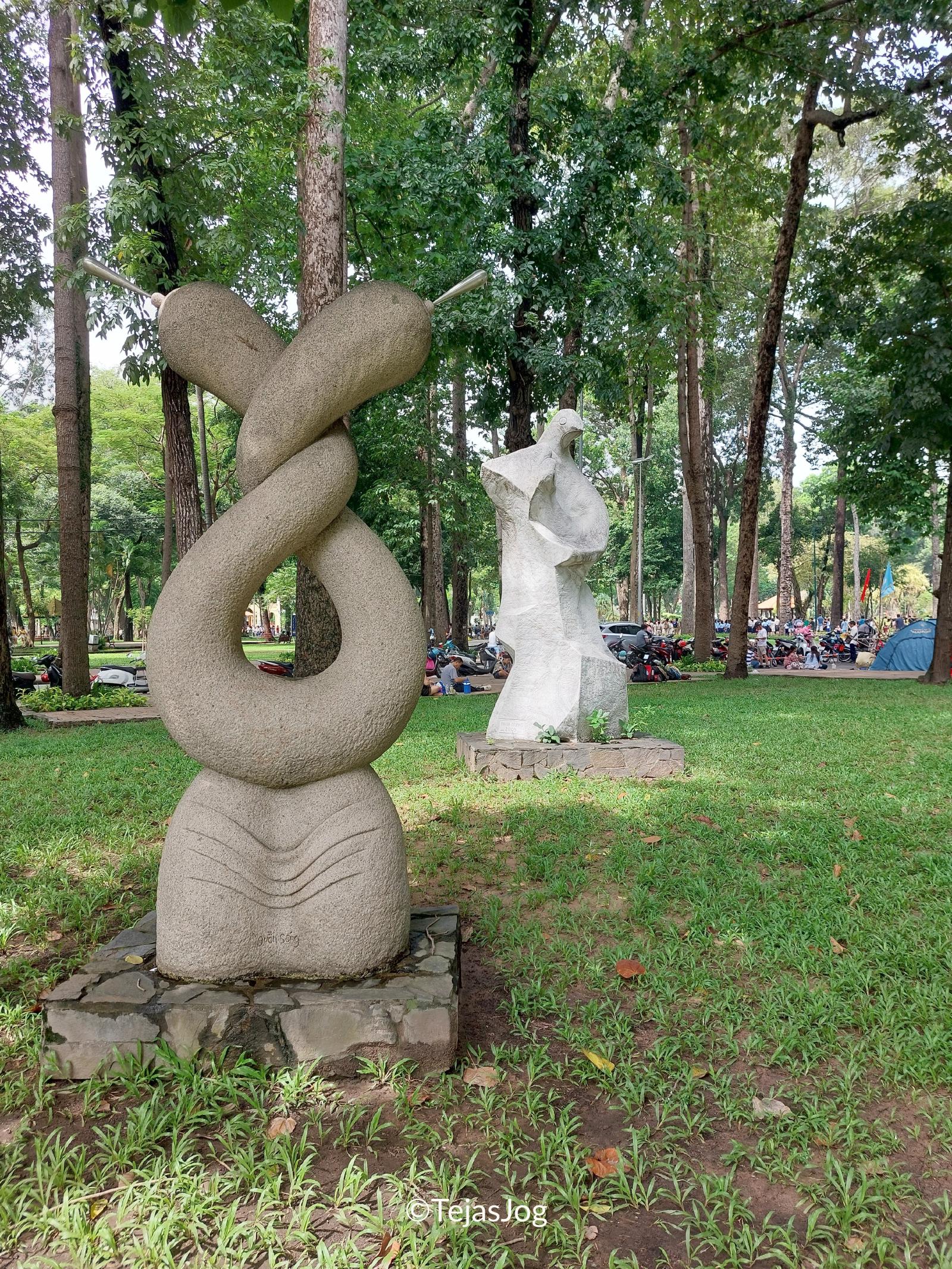
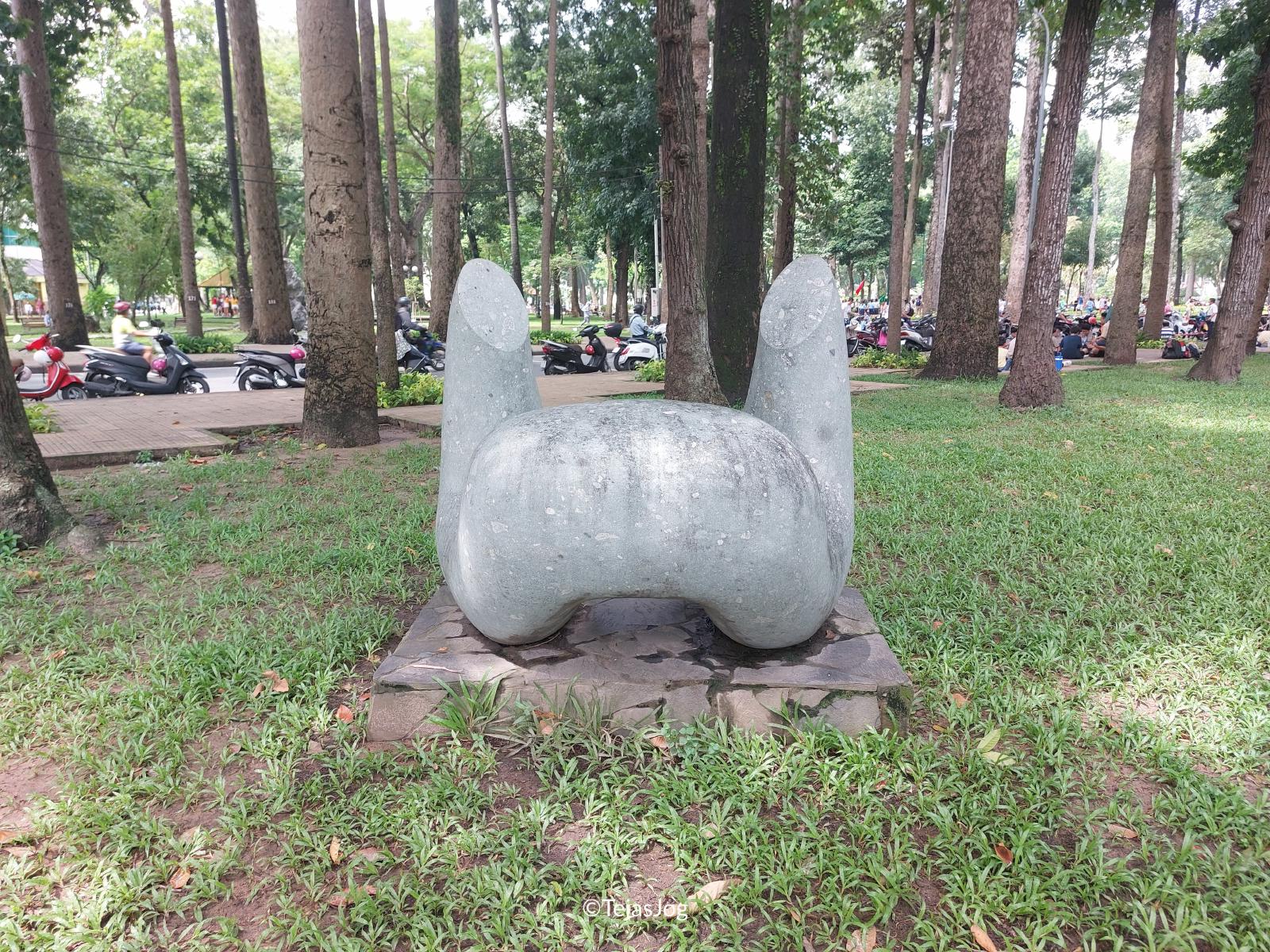
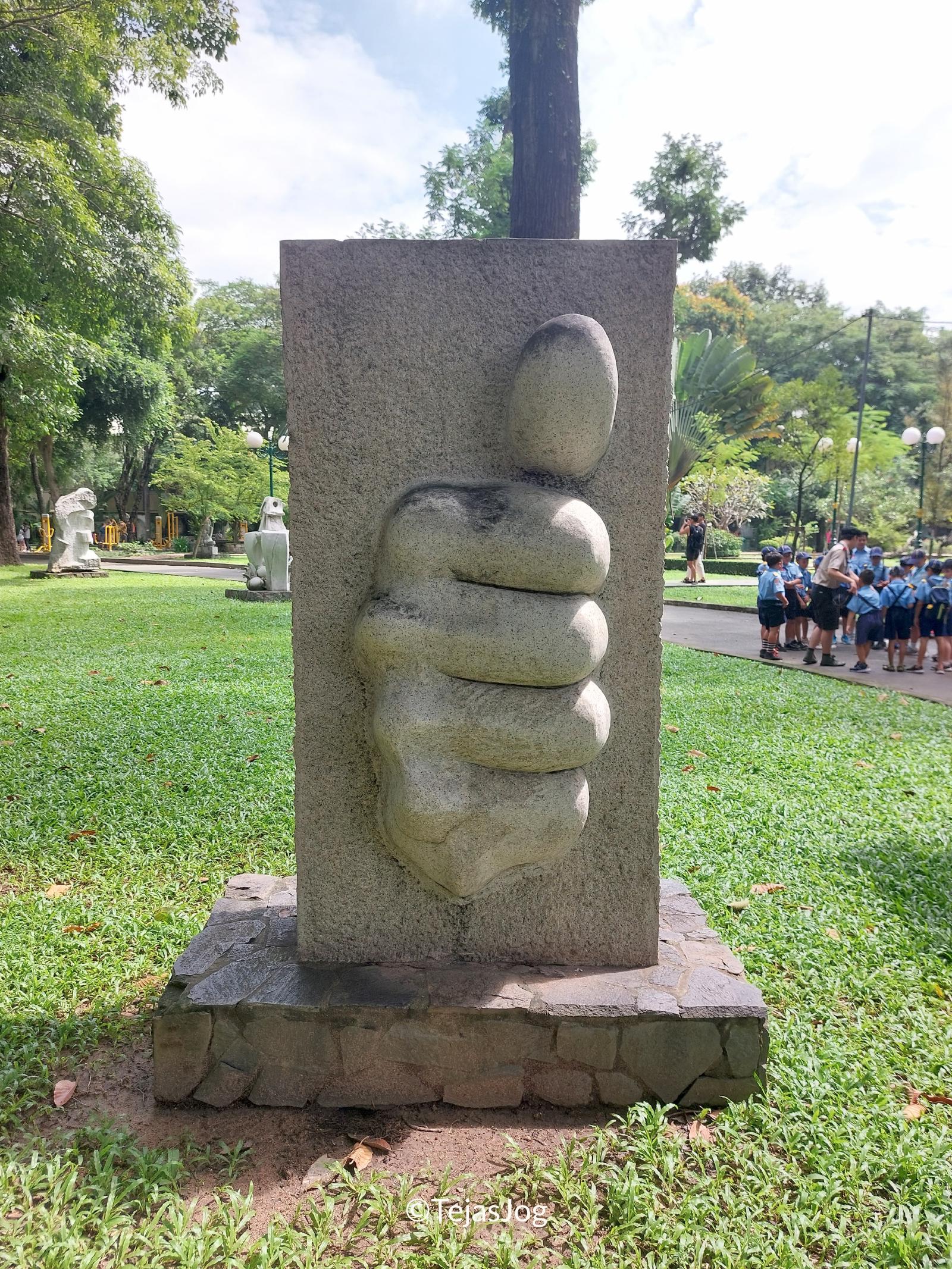
We walked back towards Long Hostel and then decided to go to Phượng Hoàng for lunch. It was a small place and had a local feel to it.
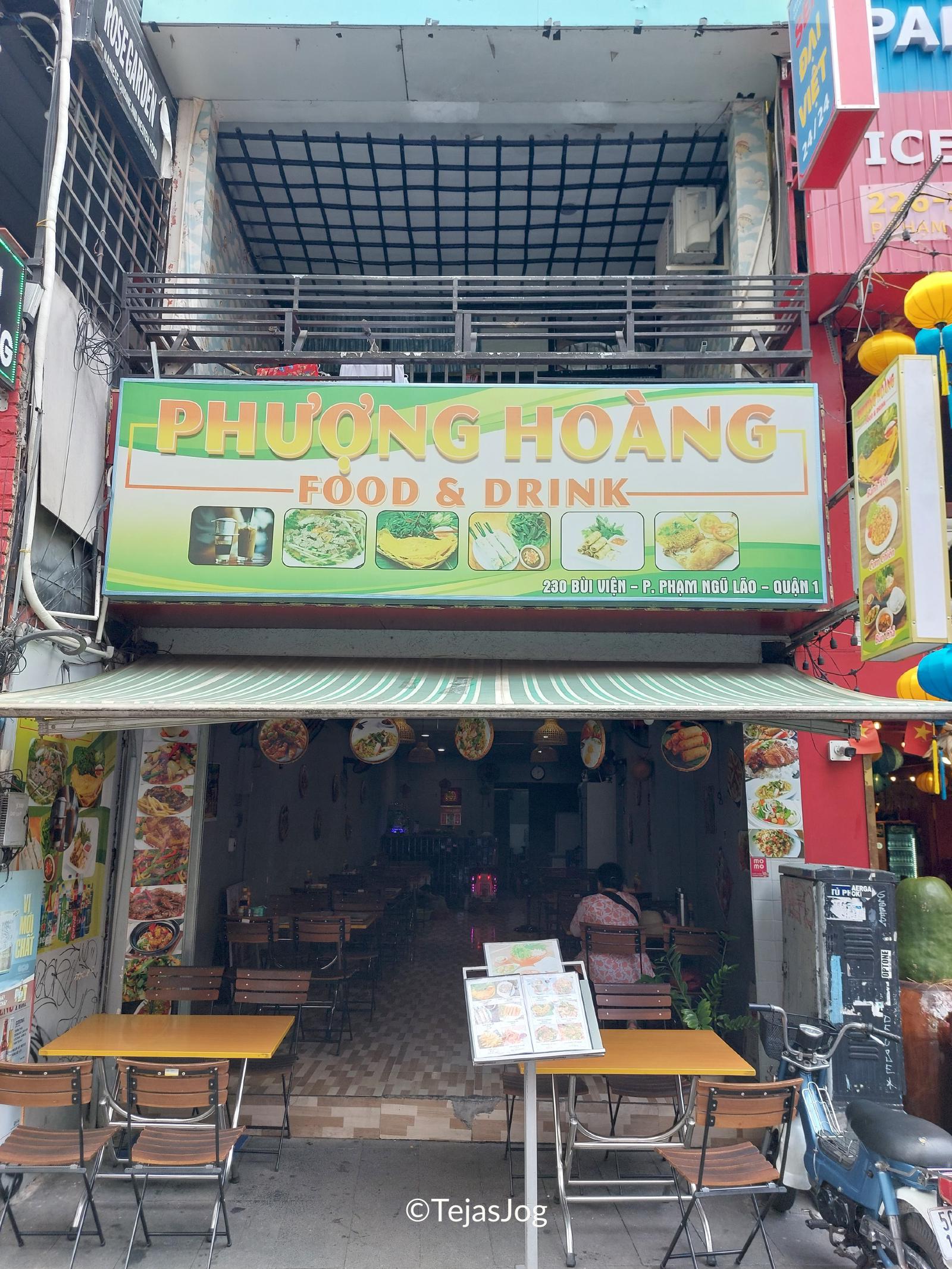
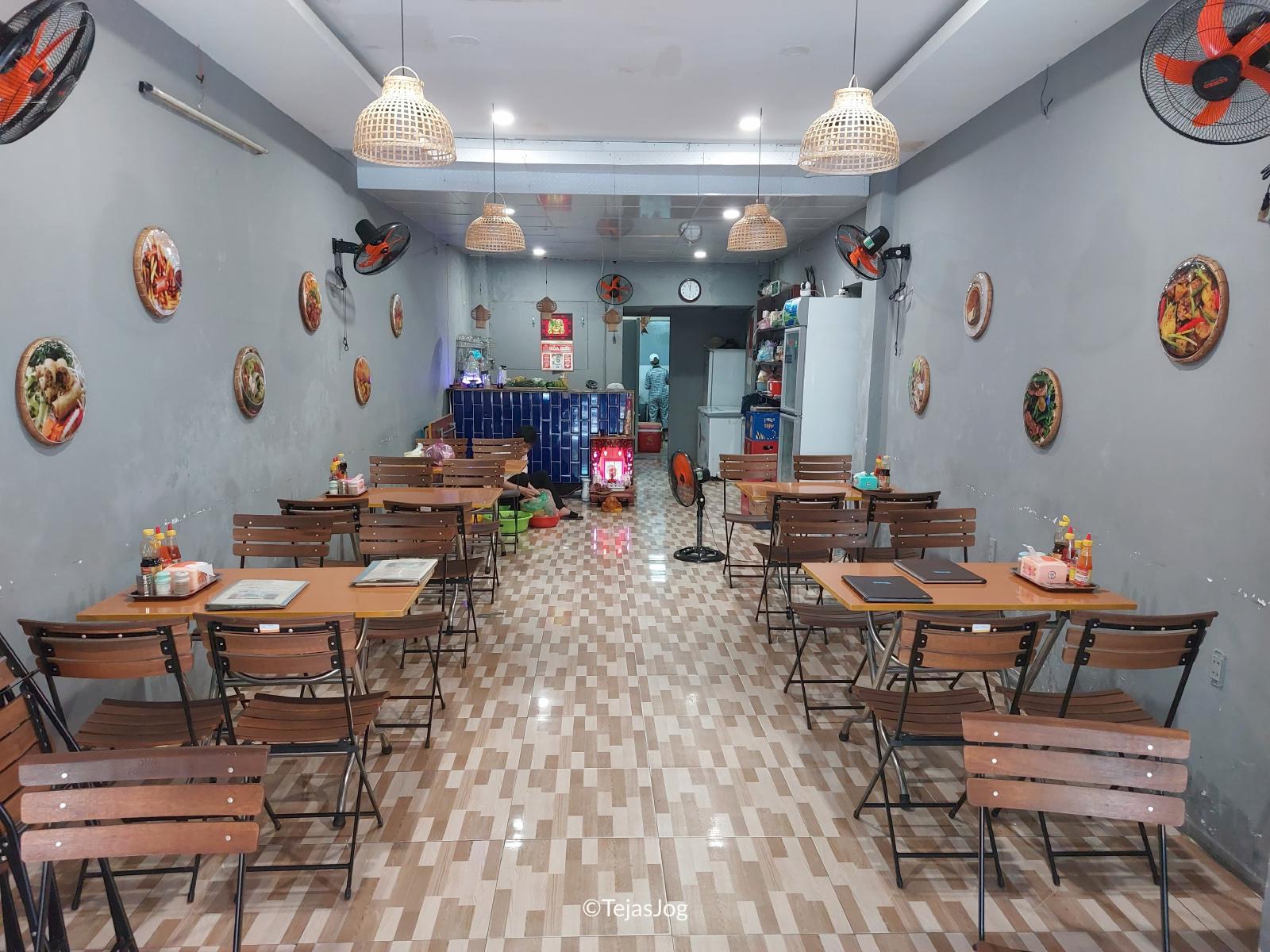
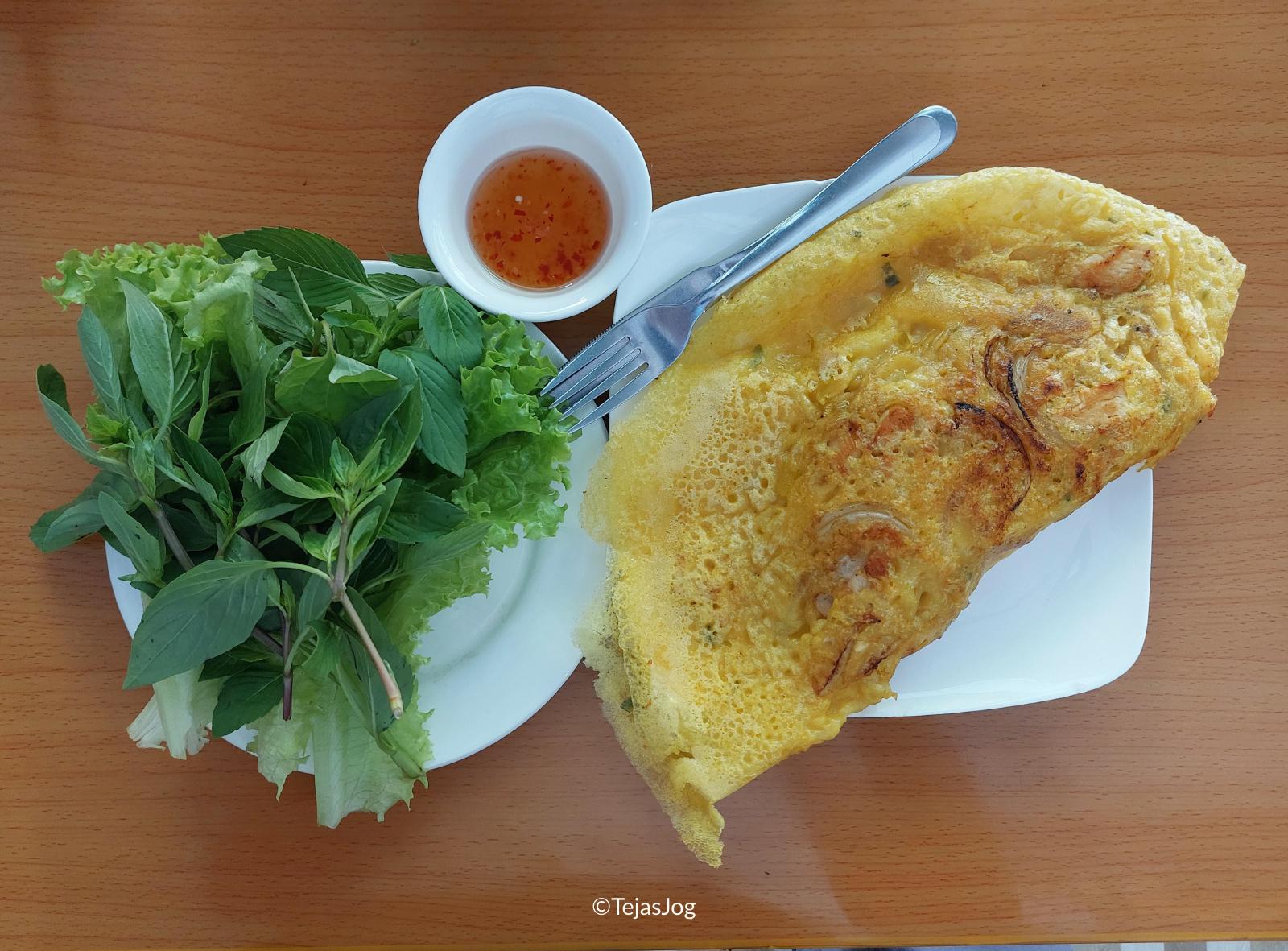
There were lots of options to choose from and the food was freshly prepared and tasty. We enjoyed Vietnamese cuisene for lunch there.
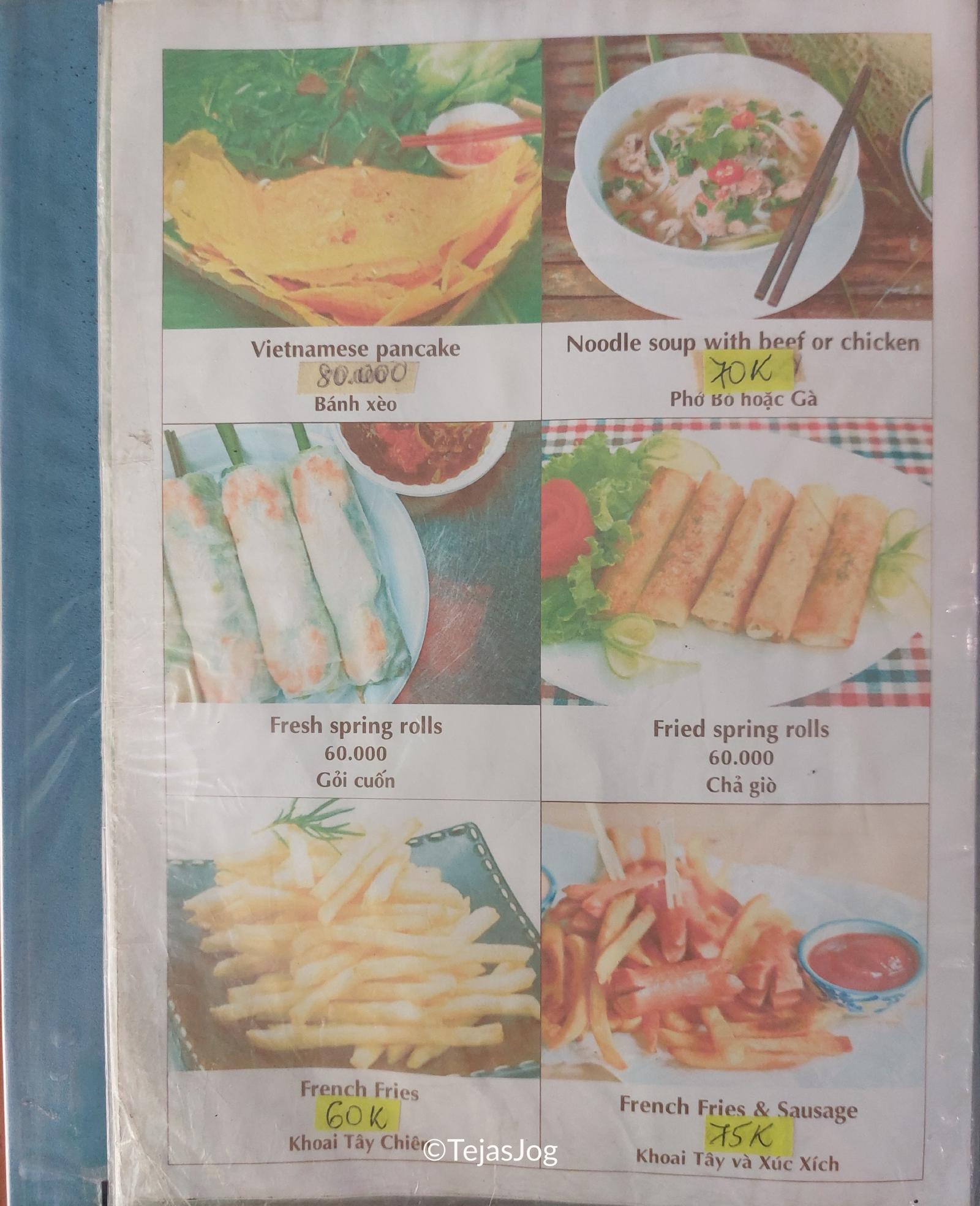
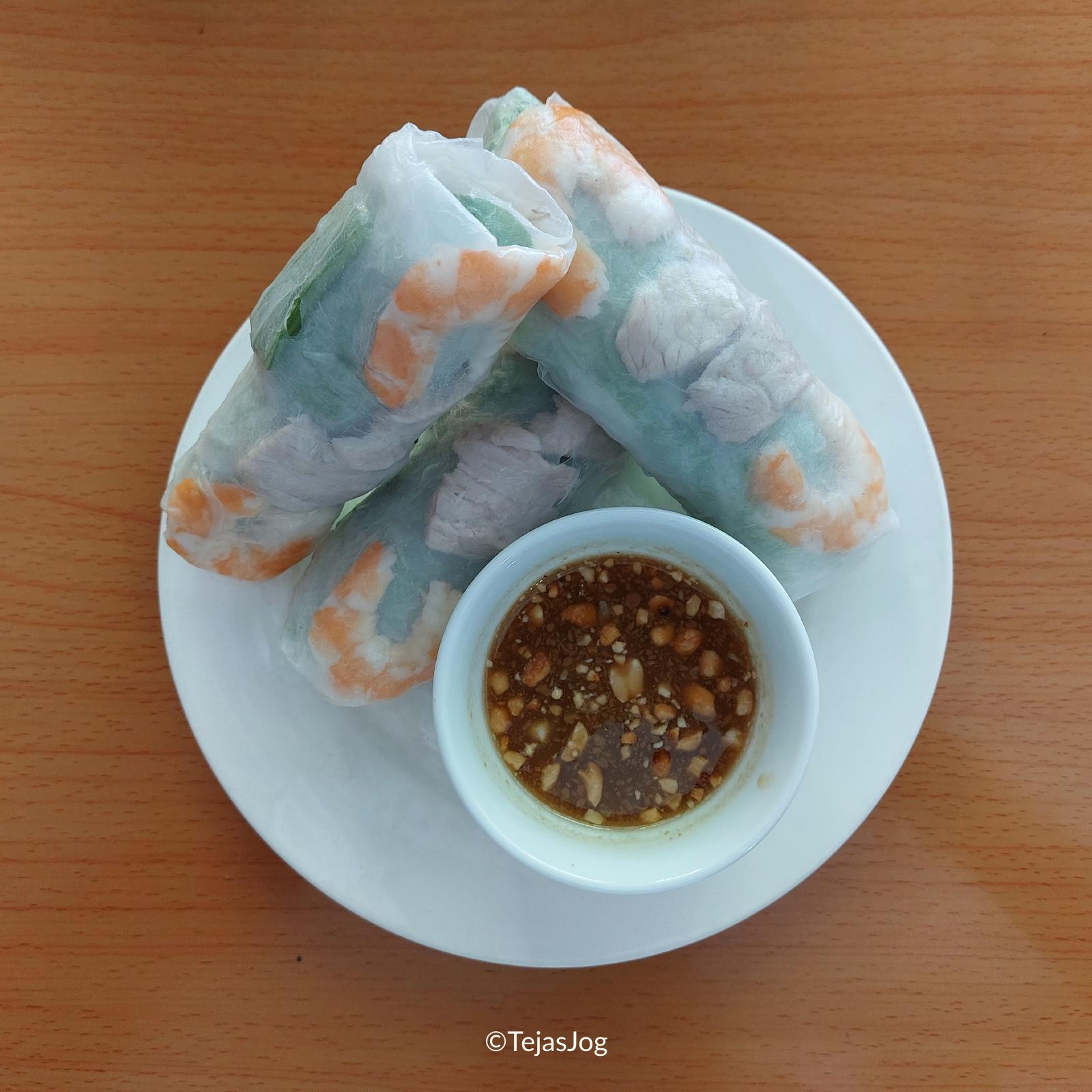
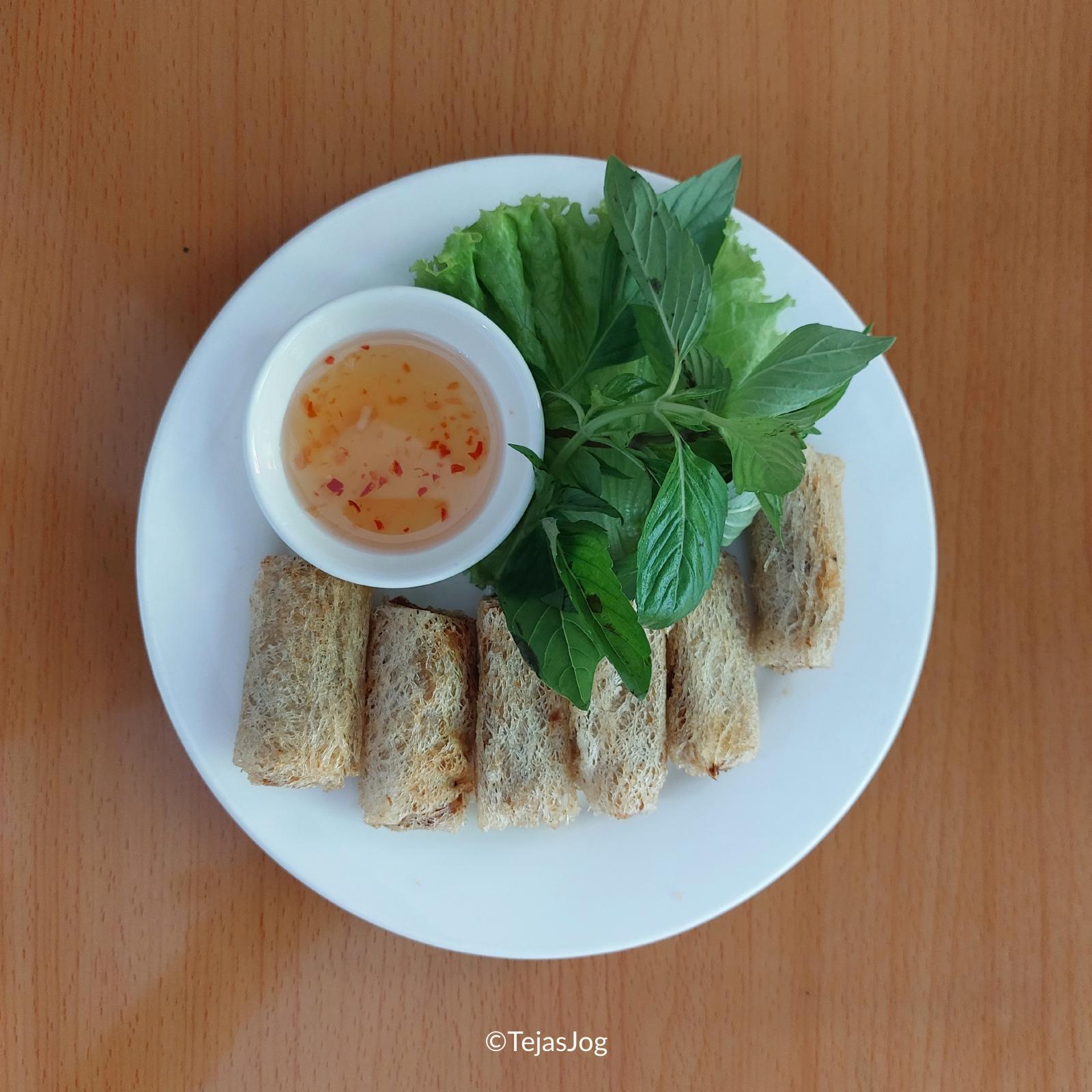
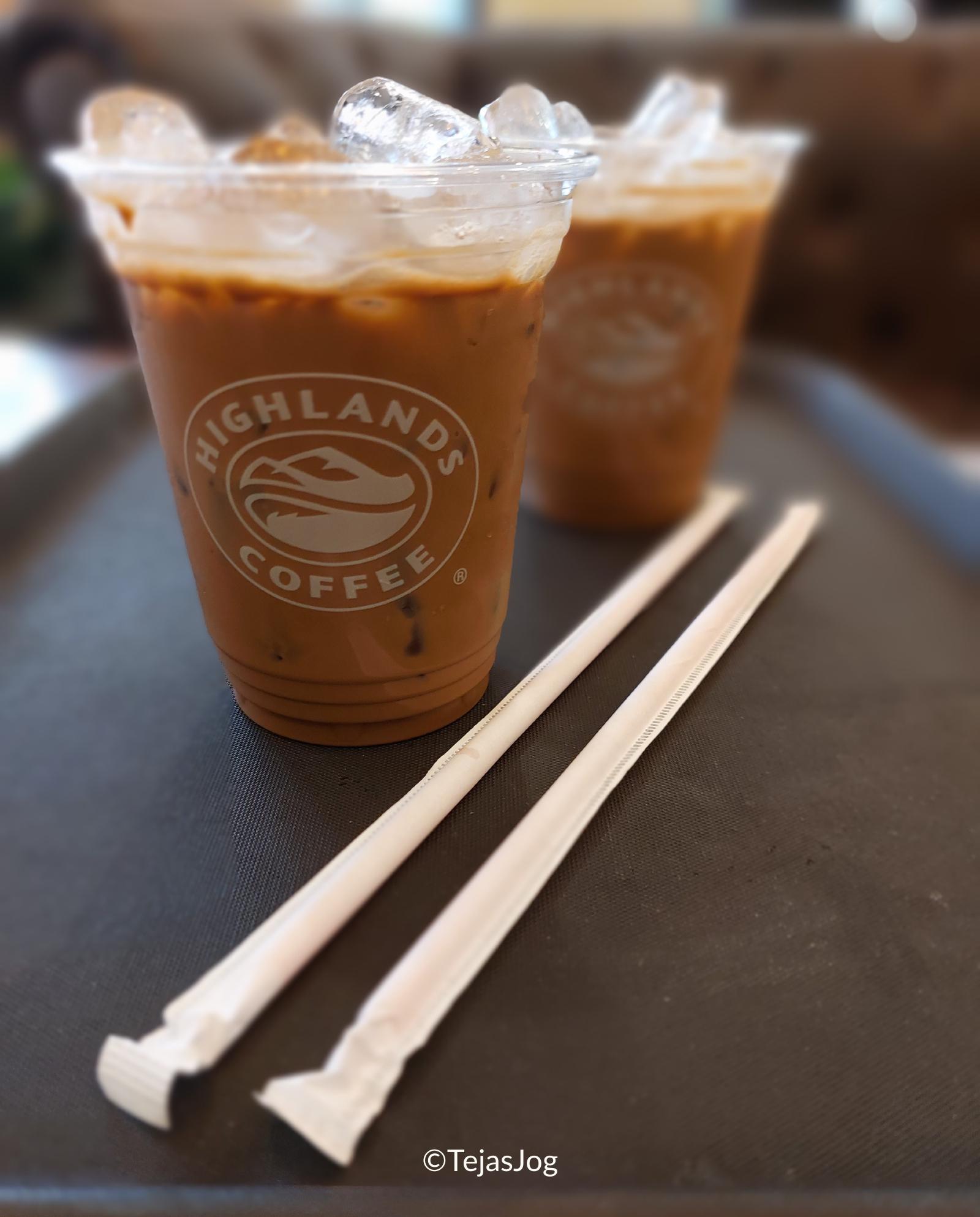
We had some time before we had to go back to the airport so we walked across Ngã năm Cống Quỳnh to Highlands Coffee for our Vietnamese Iced Coffee fix.
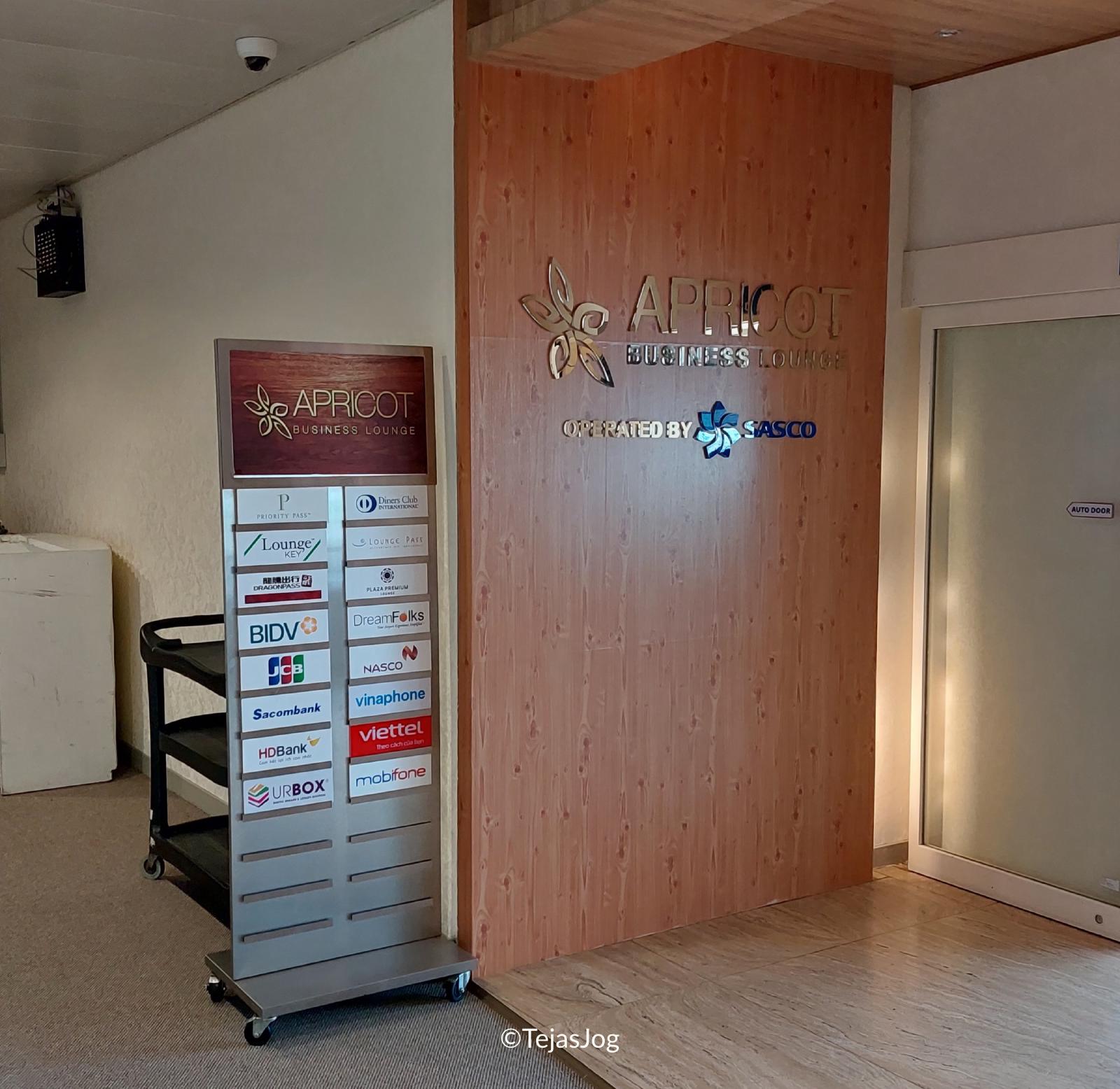
After lunch and coffee, we collected our bags from Long Hostel and took a taxi to the airport. The line for check in were long and it took quite a while for us to get the process completed. Once airside, we visited the Apricot Business Lounge.
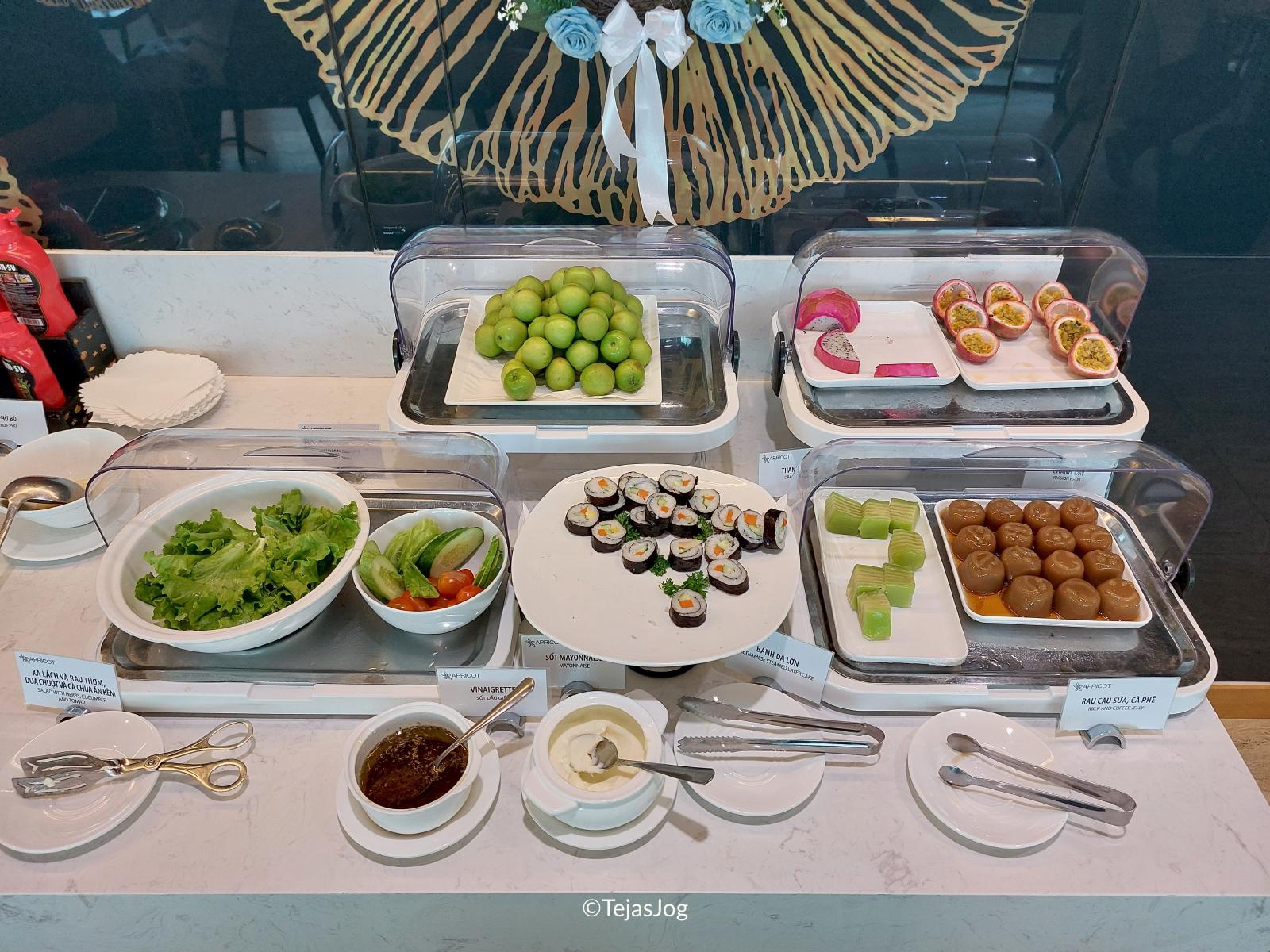
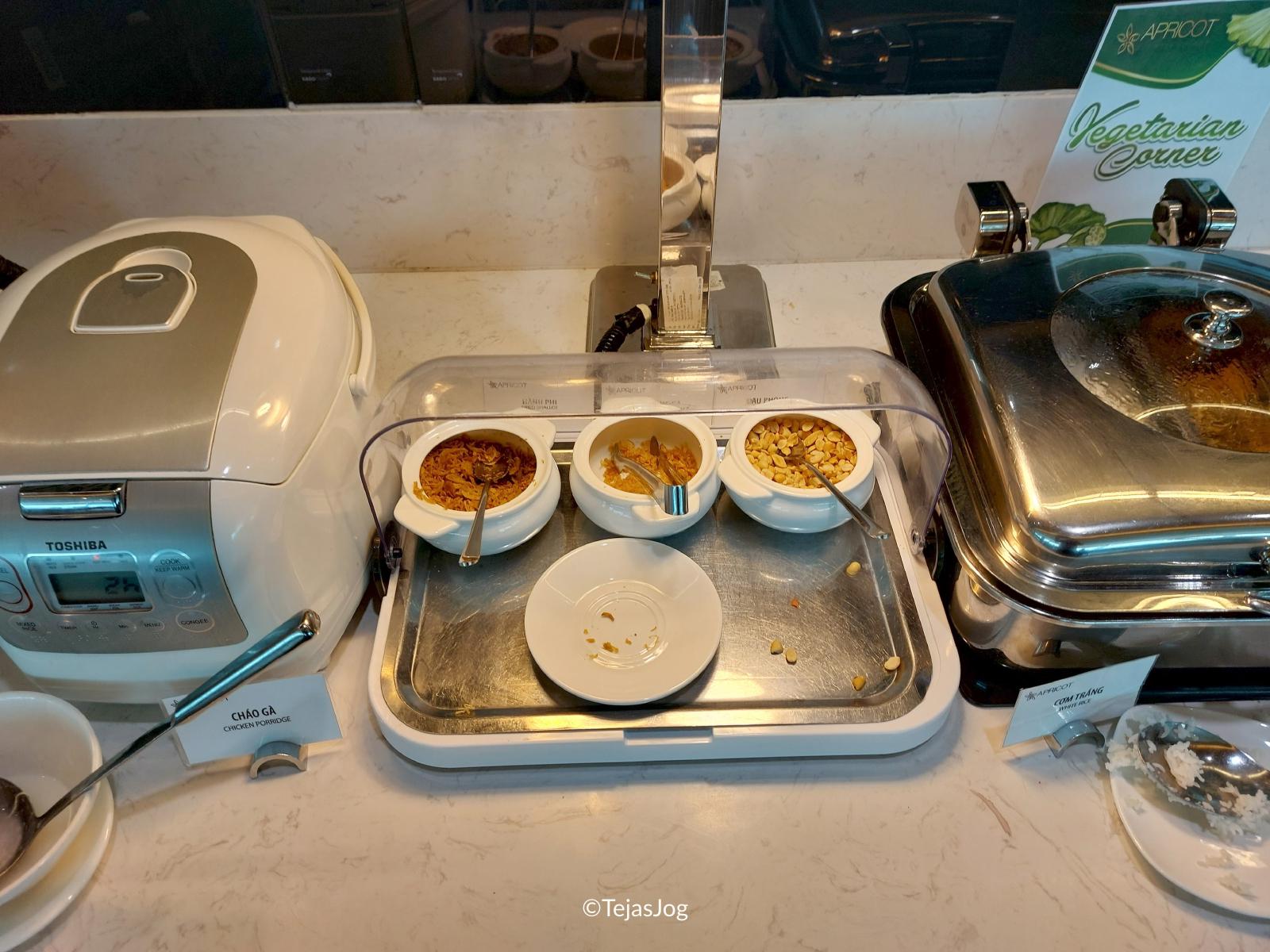
The lounge was not very huge and there were quite a few passengers there. We had a nice dinner at the lounge while we waited for our flight.
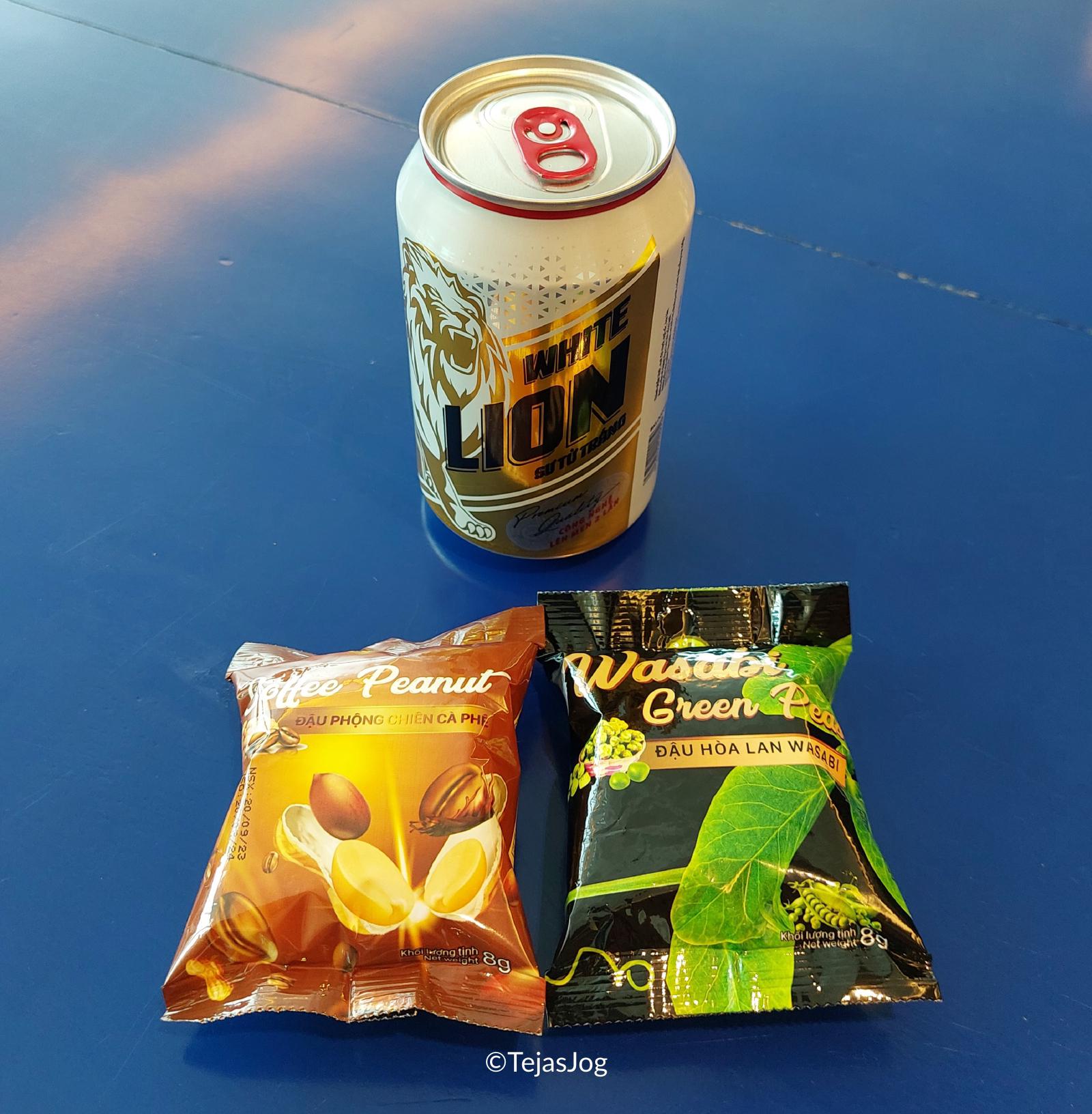
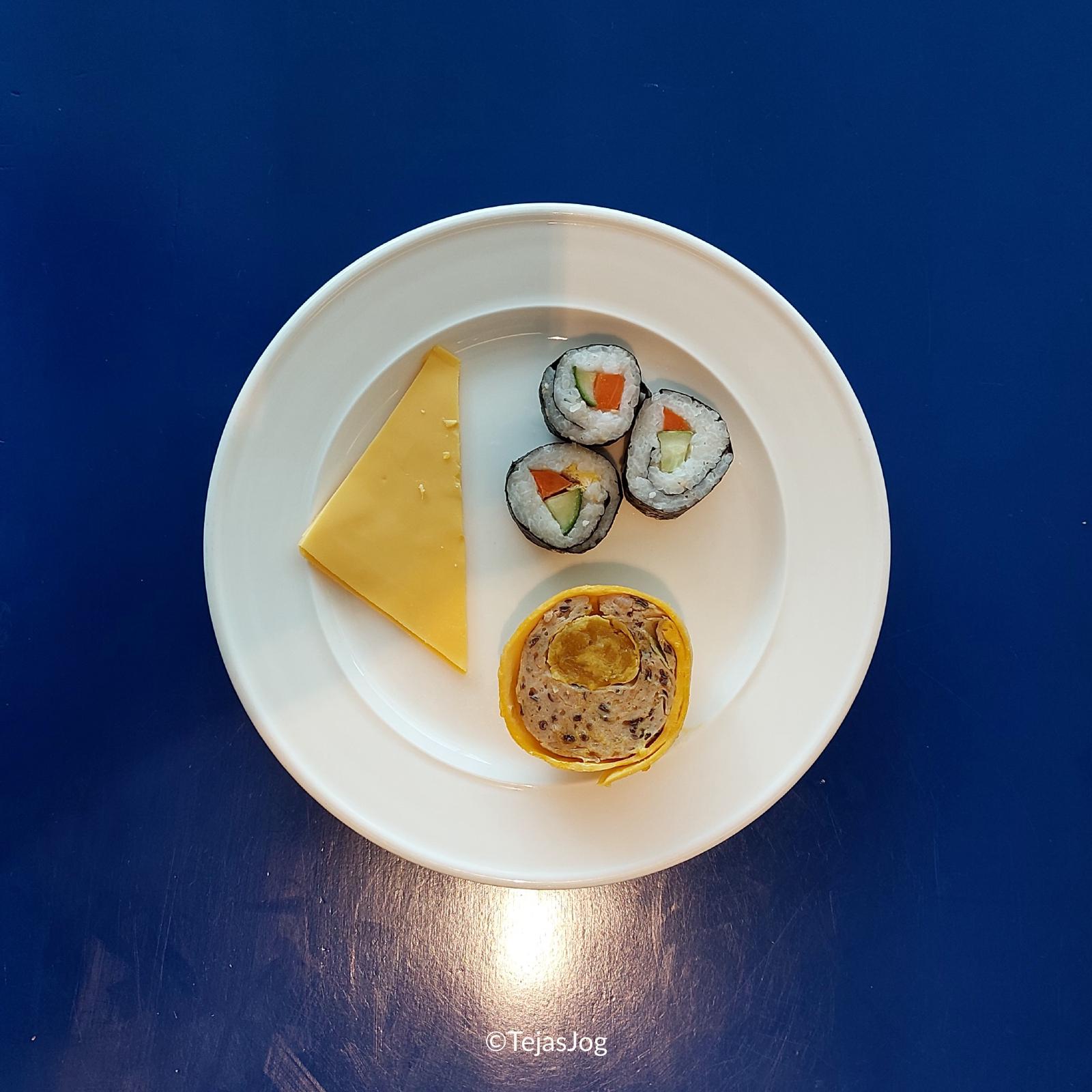
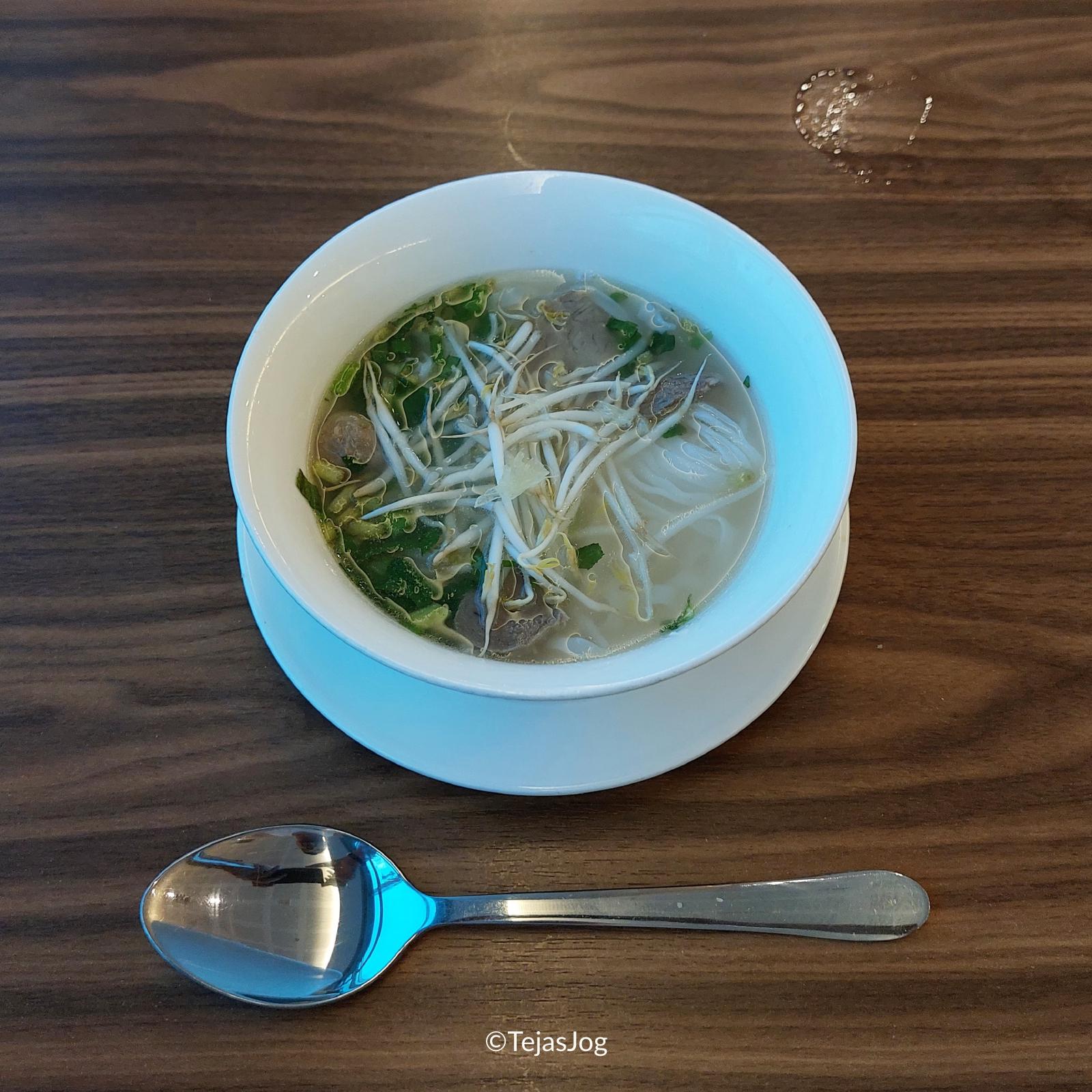
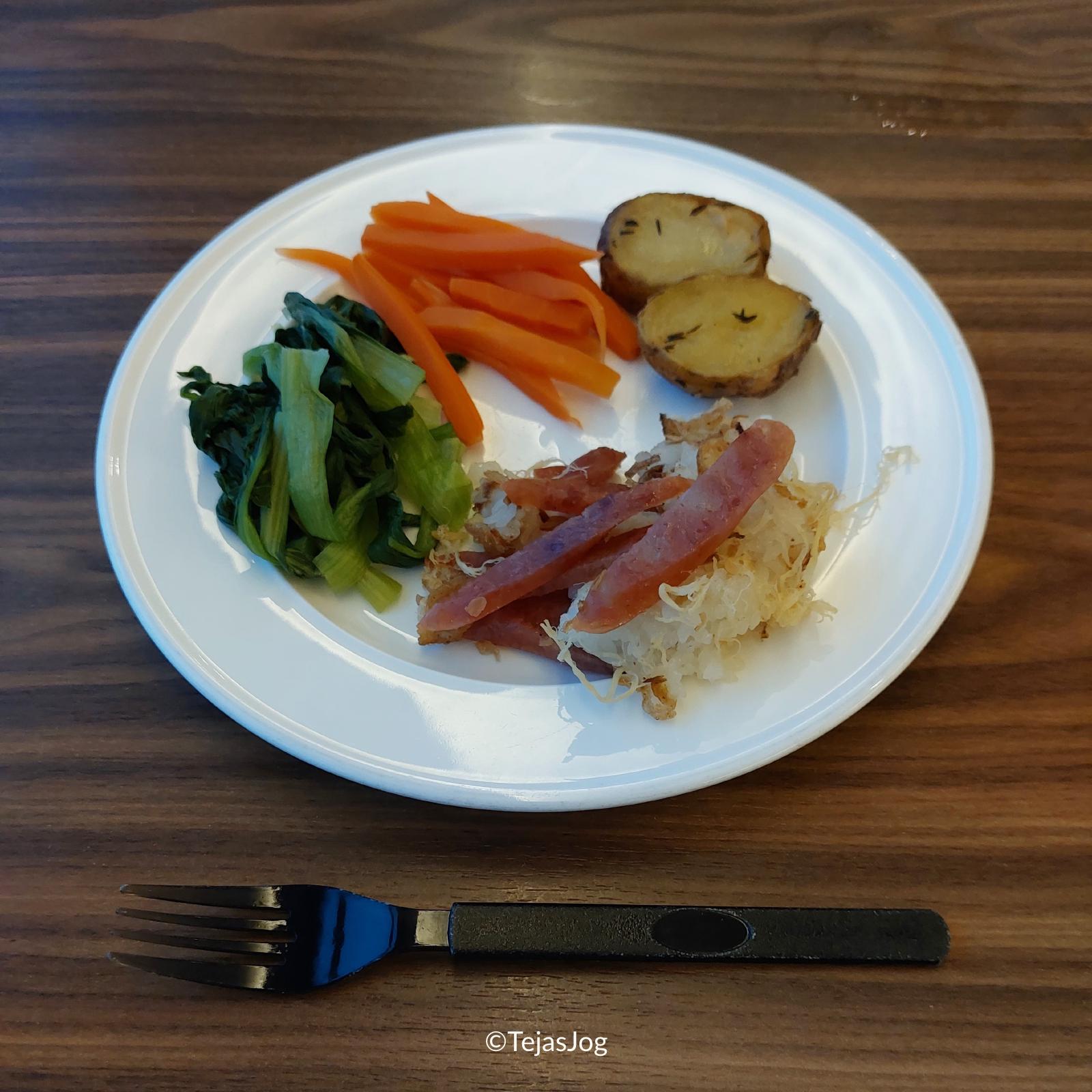
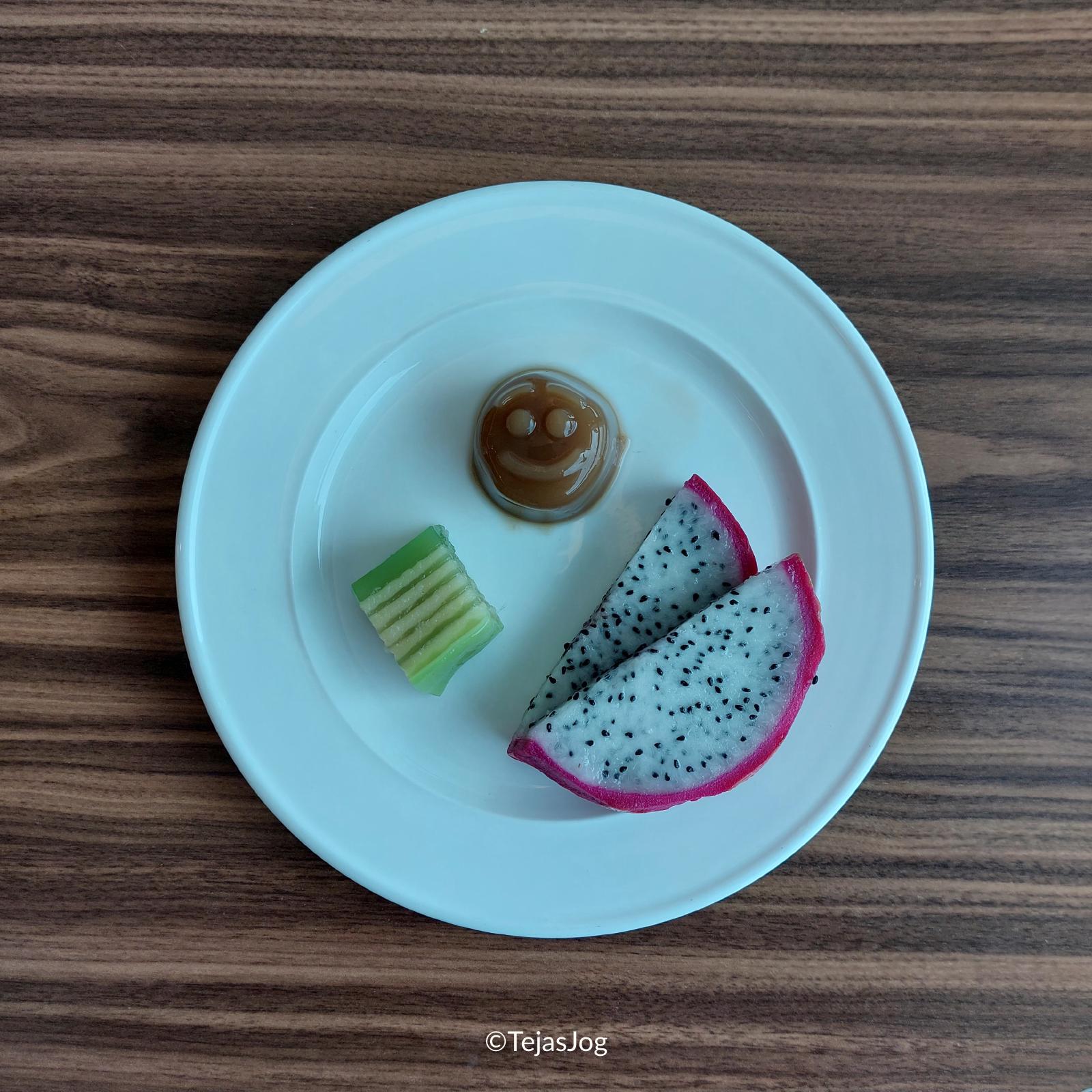
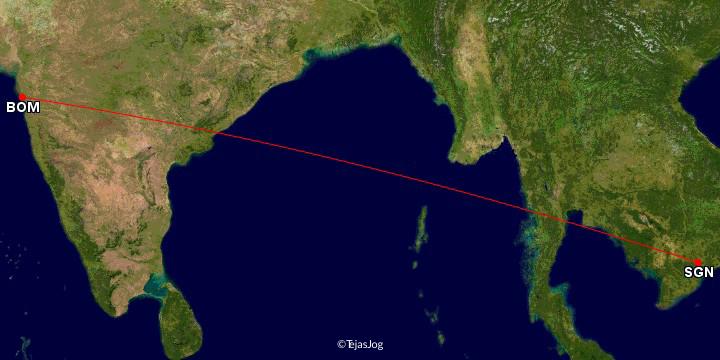
The flight itself was uneventful. We landed in Mumbai and then reached Pune by road. This concluded our 9 day adventure in Indonesia and Vietnam.